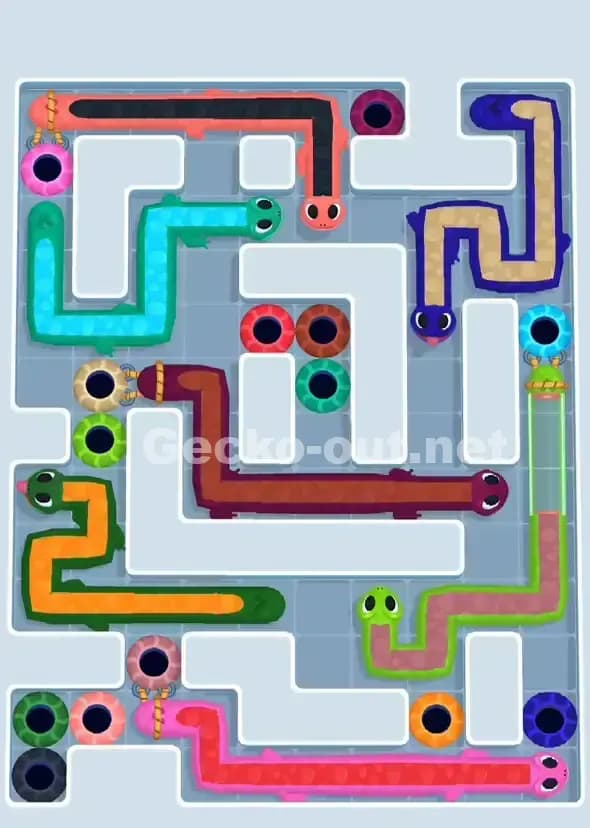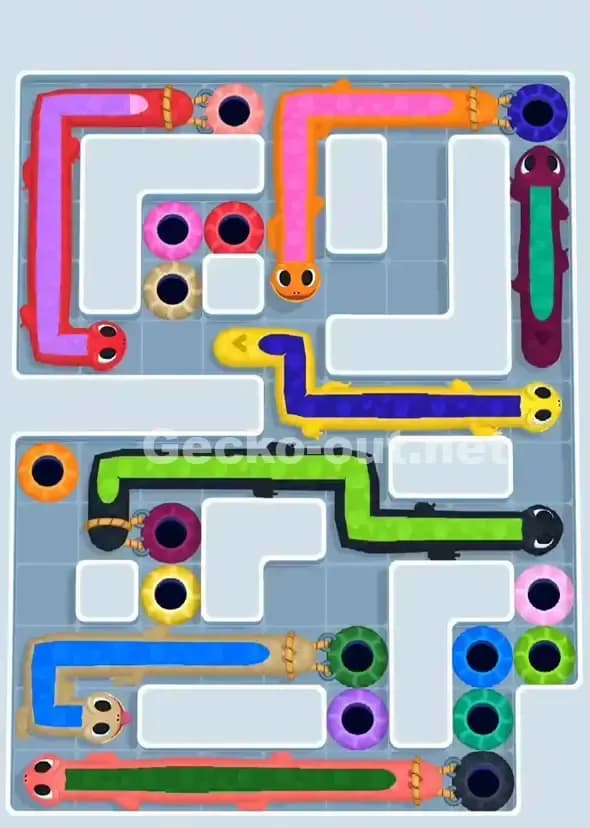
Gecko Out Level 917 Solution Walkthrough | Gecko Out 917 Answer
How to solve Gecko Out level 917? Get step by step solution & cheat for Gecko Out level 917. Solve Gecko Out 917 easily with the answers & video walkthrough.
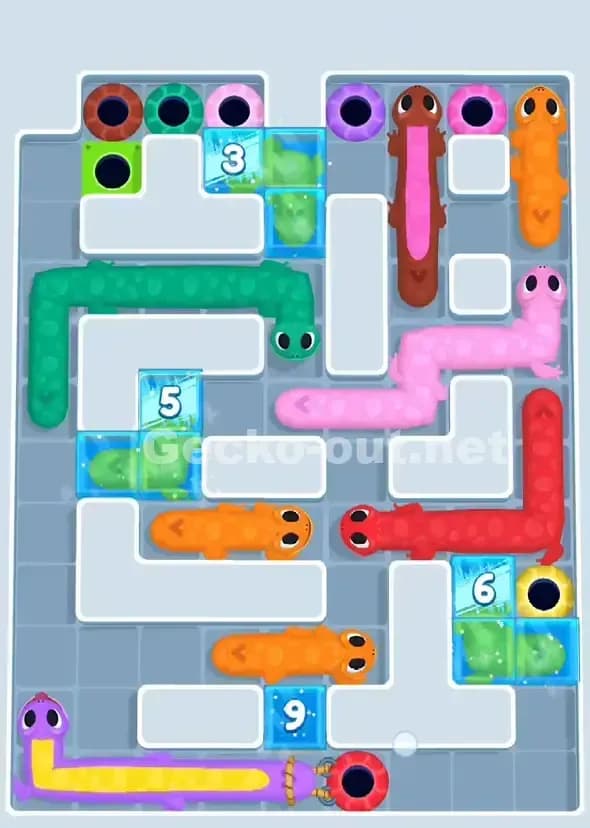
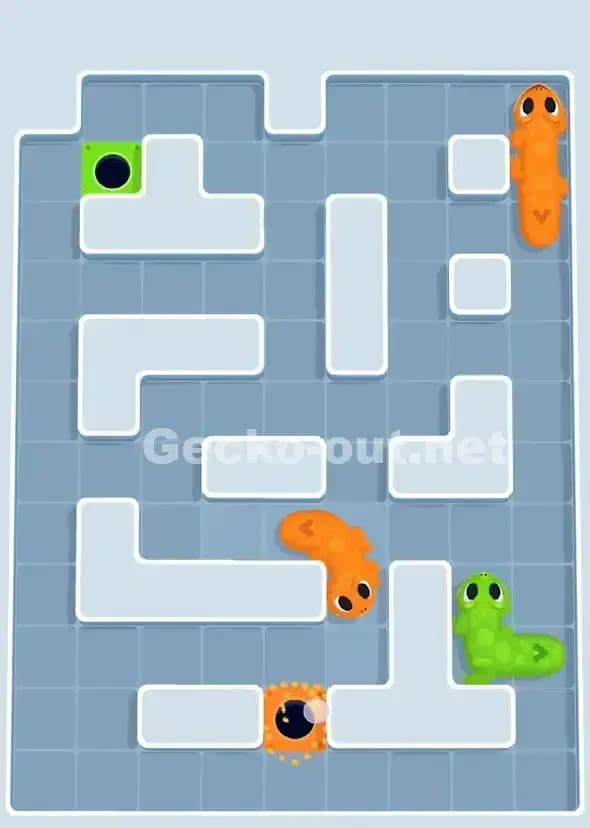
Gecko Out Level 917: Board Layout, Rules, and Win Condition
Starting Board: A Six-Gecko Tangle with Tied Pairs
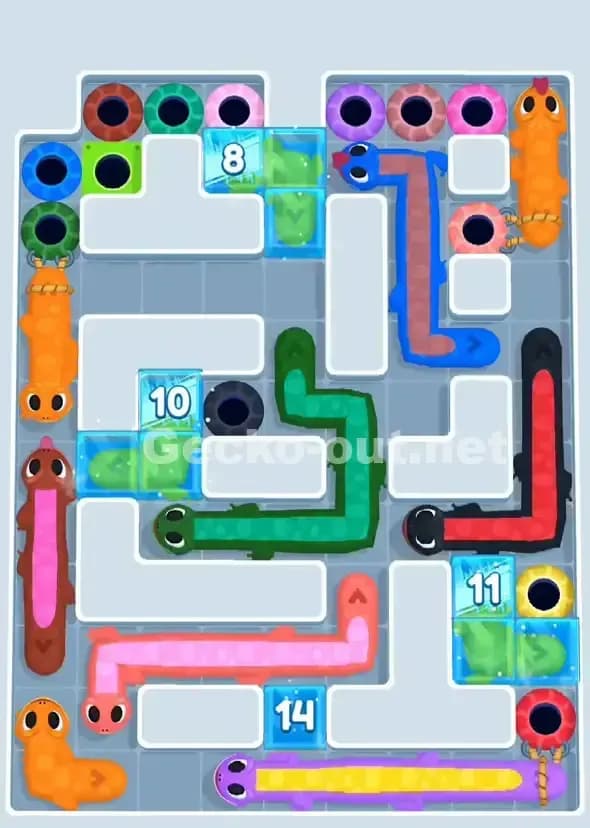
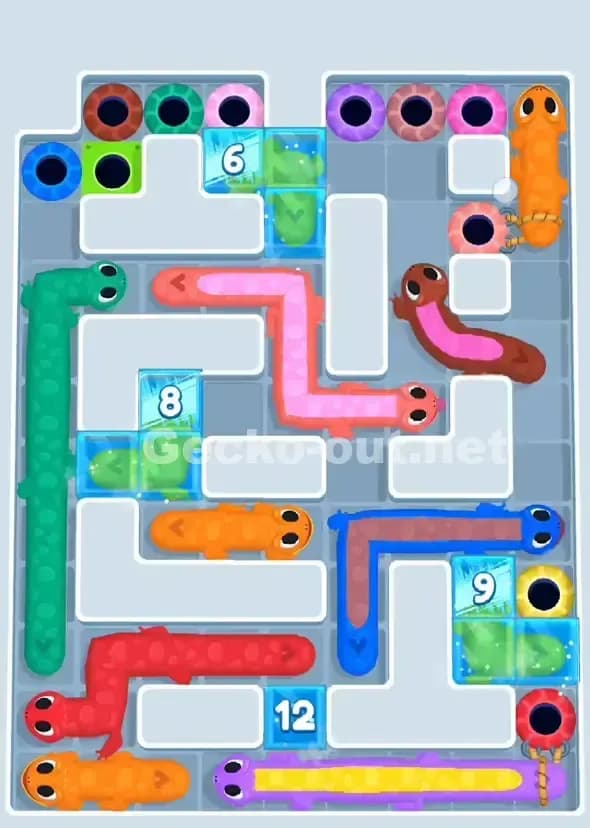
Gecko Out Level 917 throws six geckos at you right from the start, and here's the cruel part—four of them are locked into paired "gang" geckos that move as one unit. You've got red, green, blue, orange, and pink geckos scattered across a dense, maze-like grid filled with white wall barriers. The board is tall and narrow, which means every move you make either opens up lanes or creates bottlenecks. The two free-moving individual geckos (orange and pink) are your lifeline; they can slip through tighter gaps and set up the board for the gang pairs to follow. The timer starts at 8 moves, so you're not drowning in time, but you're not starved either—if you move with intention, you'll have just enough breathing room.
The Win Condition and Timer Pressure
To beat Gecko Out Level 917, every single gecko must reach a hole matching its color before the timer hits zero. The moment you drag a gecko's head, its body snakes along the path you create, and it must reach an open exit of the same hue. The timer is both your enemy and your teacher; it forces you to think ahead instead of guessing. You can't just drag randomly and hope. Each drag counts, so the question becomes: which gecko do you move first, and in what order do you untangle the knot?
Pathing Bottlenecks and Logical Traps in Gecko Out 917
The Central Corridor Gridlock
The biggest bottleneck in Gecko Out Level 917 is the middle section where the green gang gecko, red gang gecko, and blue gang gecko all compete for the same narrow horizontal and vertical corridors. These three paired geckos are long—their bodies stretch across multiple grid squares—so when you move one, it physically blocks the others from advancing. The green gang gecko is particularly troublesome because it's positioned in a way that, if you move it carelessly, it'll wedge itself across the center of the board and lock everyone else in place. You simply cannot ignore which gecko you move first in the opening turns. If you grab green or red without a clear exit path, you'll paint yourself into a corner where the remaining geckos have nowhere to go, and suddenly that timer doesn't feel so generous anymore.
Subtle Problem Spots: The Orange Trap and the Pink Squeeze
Here's a trick that catches most players: the two individual orange geckos on the left and right edges look like they should be easy wins, but they're positioned at the ends of long, winding paths that other geckos need to use later. If you move an orange gecko too early, you commit that corridor to its exit, and now a gang gecko that could've followed that same lane is stuck. It's a false shortcut. The pink gecko situation is even sneakier—it's sandwiched between walls and other geckos, so dragging it requires a very specific path. If you drag it at the wrong moment, say before clearing the center, it'll tangle with a gang gecko's body and you'll get a collision error. You have to earn the right to move pink by clearing adjacent space first.
When the Light Bulb Moment Hit Me
I'll be honest: my first three attempts at Gecko Out Level 917 felt like I was solving a Rubik's cube blindfolded. I kept moving the gang geckos first, thinking "bigger problem, solve it first," and every time I'd hit a wall by turn 5. Then I realized—the individual geckos are your tool, not your problem. You move them strategically to open lanes for the gangs, not the other way around. The second I started with orange and pink, parking them in safe corners instead of rushing them to exits, the whole board suddenly made sense. That shift from "panic and move anything" to "move strategically to create space" is what flipped the level from impossible to totally doable.
Turn-by-Turn Path Strategy to Beat Gecko Out 917
Opening: Establish Safe Zones with the Free Geckos
Start by moving one of the individual orange geckos—specifically, the one on the left side. Drag its head along the left corridor toward its orange exit, but don't commit it to the exit hole yet. Instead, position it in a safe dead-end or corner where it won't block anyone else's path. This is your first "parking maneuver." You're essentially saying, "I know where you're going, but I'm clearing space first." Next, handle the pink gecko the same way. Drag it to a safe spot—ideally, a corner that's away from the central maze. These two moves don't complete exits; they just create breathing room. You've now freed up real estate in the center and left sides of the board, which means the gang geckos can start moving without immediate collision.
Mid-Game: Untangle the Gang Pairs with Precision
Once you've parked the individuals, tackle the gang geckos in this order: green first, then blue, then red. The green gang gecko needs to exit through the center-lower area of the board. Drag its head carefully along the green-coded path (yes, the board usually color-codes the corridors for you), and route it downward and around the other gang bodies. Because you've cleared space with orange and pink, green now has room to snake through without colliding. Once green is moving toward its exit, move the blue gang gecko. Blue has a slightly longer path, but with green out of the way, the center lanes are clearer. Drag blue's head to navigate it around the remaining red and gang bodies, heading toward its blue exit zone on the right side. By the time you move red, both green and blue are either at their exits or close to them, which gives red the most unobstructed path possible.
End-Game: Close Out with Precision Timing
After the three gang geckos are in motion (or safely parked near their exits), bring back your two orange geckos and the pink gecko one by one and drag them directly into their colored holes. Because you've spent the middle turns clearing the board, these final moves are almost trivial—they're straight shots with no obstacles. However, watch your timer. If you're down to two or three moves remaining and you still have more than one gecko loose on the board, stop for a breath, study the paths, and make sure your next drag doesn't accidentally create a new tangle. One miscalculated path in the final seconds could undo all your work.
Why This Path Order Works in Gecko Out 917
Head-Drag Logic and Body-Follow Mechanics
The reason this strategy works is baked into how Gecko Out Level 917's physics function. When you drag a gecko's head, the body doesn't teleport—it follows the exact grid path you traced. So if you move a gang gecko through a narrow corridor, its long body occupies every square along that path until it exits completely. By moving the short, individual geckos first, you're essentially "pre-clearing" corridors so that when the longer gang bodies move later, they don't have to squeeze through impossible gaps. This approach respects the body-follow rule instead of fighting it. You're choreographing a dance where each gecko's movement creates an opening for the next, rather than trying to solve all six geckos simultaneously in a tangled heap.
Reading the Board versus Racing the Clock
With Gecko Out Level 917's eight-move timer, you'll feel pressure to move fast. But the real skill is knowing when to pause. After you move orange and pink to safe spots, spend three seconds reading the central maze. Trace the path green needs to take visually before you drag it. This tiny pause prevents the costly mistakes—like dragging green into a dead end and having to undo it mentally. Once you've made that visual map, commit and move quickly. The timer does pressure you, but it's a fair pressure; it's not a gotcha mechanic. You have enough moves if you use them efficiently, which means sometimes the fastest way to win is to think for a few seconds before each drag.
Boosters: Optional but Useful as a Failsafe
Here's my honest take on boosters in Gecko Out Level 917: you don't need them if you follow this strategy, but an extra time booster is a smart backup if you mess up one drag and realize you've locked a gecko into a bad position. The hammer-style tools (instant exits or path-clearing) aren't necessary because the puzzle is solvable through pure path management. If you find yourself stuck with one move left and one gecko still loose, yes—grab the time booster and take a breath. But frame it as insurance, not a core strategy. The real victory is solving Gecko Out Level 917 with clean, intentional drags and no tools needed.
Mistakes, Fixes, and Logic You Can Reuse in Other Gecko Out Levels
Five Common Mistakes on Gecko Out Level 917 and How to Fix Them
Mistake 1: Moving Gang Geckos First Many players assume bigger problems need immediate attention, so they drag a gang gecko in move one. This locks up the board immediately because the gang body occupies half the board, and nothing else can move safely. Fix: Always move individual geckos first to create space, no matter how small they seem.
Mistake 2: Dragging an Orange or Pink Gecko All the Way to Its Exit Too Early You get excited because it's an easy win, so you commit that gecko to the exit in move two. Now you've used a high-traffic corridor, and a gang gecko that needs it later is stuck. Fix: Park individuals in corners. Complete exits only after the gang geckos are already exiting or near their exits.
Mistake 3: Not Visually Tracing the Path Before Dragging You drag green's head expecting it to follow a certain route, but the maze forces it a different way, and suddenly it's collided with blue. Fix: Trace the path with your eyes first. Know exactly where the head will go before you touch it.
Mistake 4: Leaving Individual Geckos in the Middle of the Board "For Later" You park orange in a central corridor thinking you'll come back to it, but now you can't move other geckos around it. Fix: Park individuals in genuine corners or dead-ends, places so isolated that no other gecko needs to pass through them.
Mistake 5: Panicking When the Timer Gets Low With two moves left and two geckos still loose, you start guessing. One bad drag and you fail. Fix: Take a breath. You've still got room. If both geckos are close to their exits, your next two drags are probably straightforward. Trust the prep work you did earlier.
Reusing This Logic on Similar Levels
This strategy applies beautifully to any Gecko Out level with gang pairs and tight mazes. Whenever you see multi-gecko partnerships blocking central corridors, the "park the individuals first, untangle the gangs second" approach will save you. It's also invaluable for levels with frozen exits or toll gates—those obstacles matter less if you've already cleared the board and have a clear sightline to each exit. On levels with warning holes (exits that close if you don't use them in time), this method helps because you're controlling the order and pacing; you're not rushing.
The Bottom Line: Gecko Out Level 917 Is Beatable
Gecko Out Level 917 looks like chaos at first—six geckos, four of them shackled together, a maze of white walls, and a timer breathing down your neck. But it's absolutely beatable once you flip your mindset from "I'll figure it out as I go" to "I'll move strategically to create order." The puzzle respects smart planning. You don't need luck or boosters; you need to understand that your first few moves are about creating space, not rushing geckos to holes. Every player I've seen beat Gecko Out Level 917 did so using some version of this strategy, because the logic is sound and the puzzle design rewards it. You've got this—go clear that board!