Gecko Out Level 1033 Solution Walkthrough | Gecko Out 1033 Answer
How to solve Gecko Out level 1033? Get step by step solution & cheat for Gecko Out level 1033. Solve Gecko Out 1033 easily with the answers & video walkthrough.

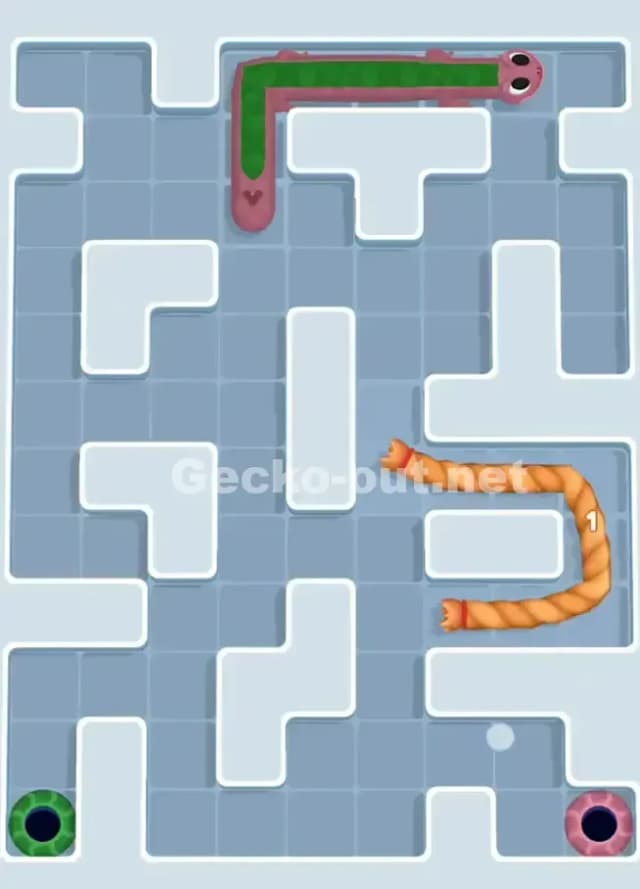
Gecko Out Level 1033: Board Layout, Rules, and Win Condition
Understanding the Board and Starting Positions
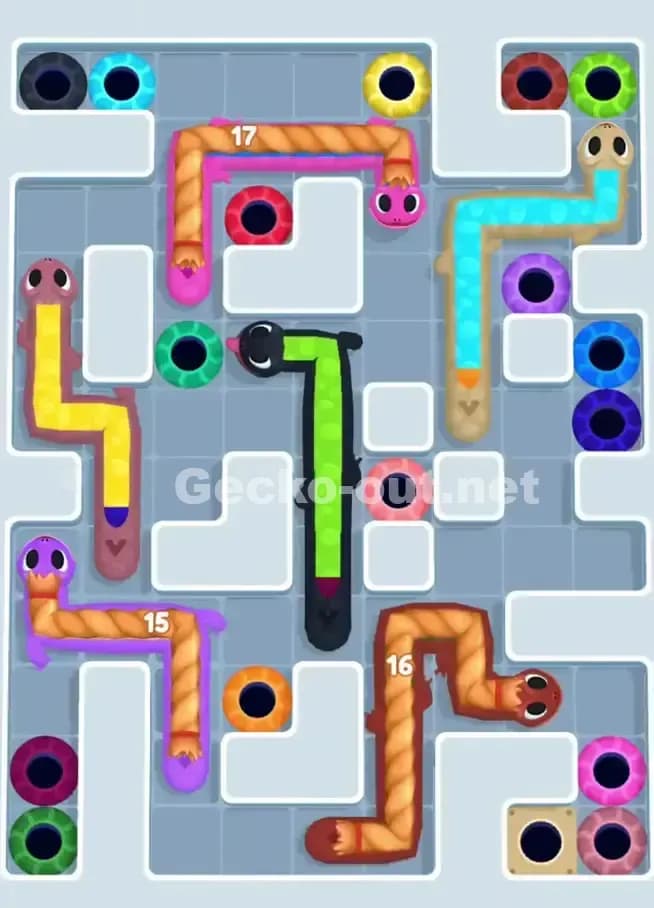
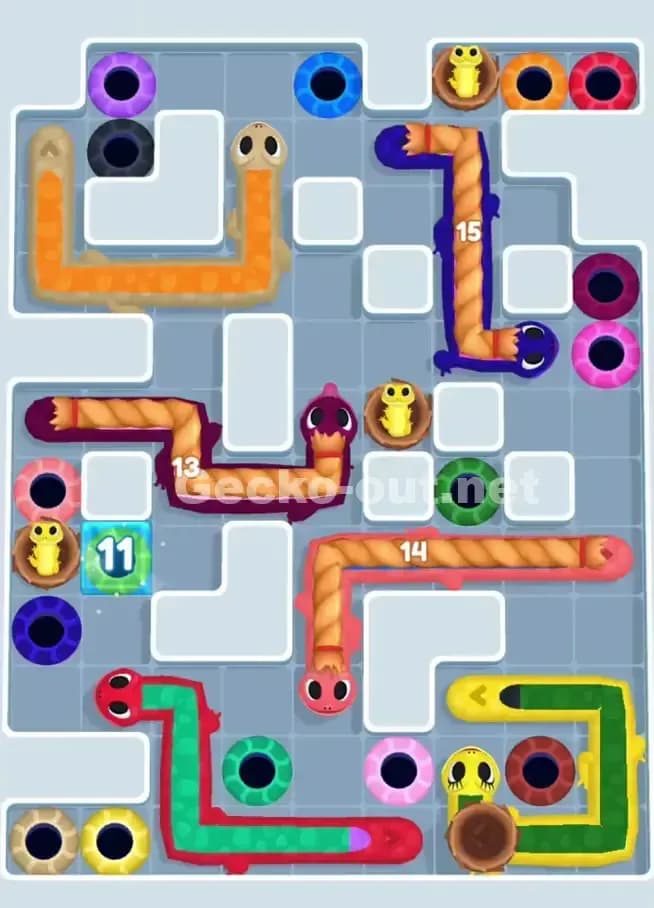
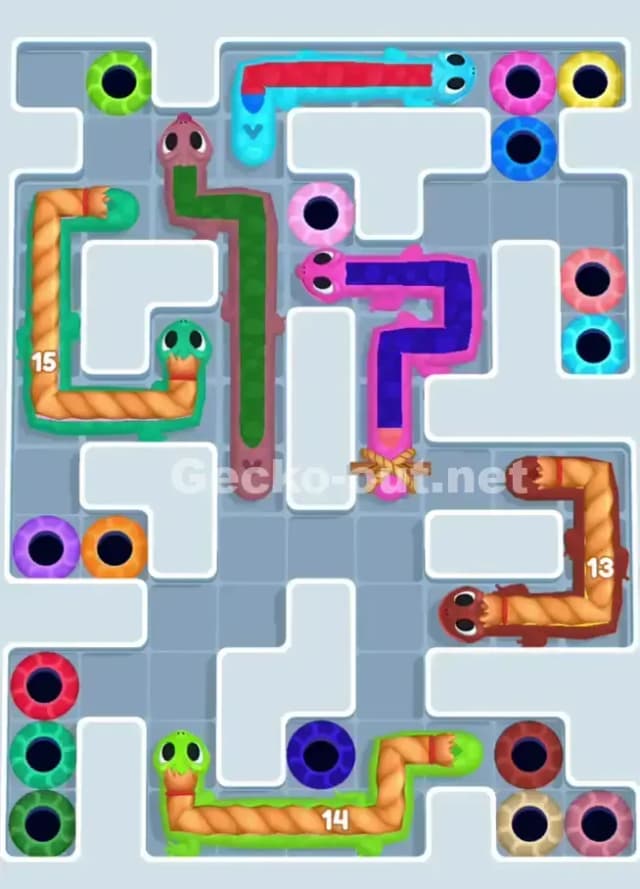
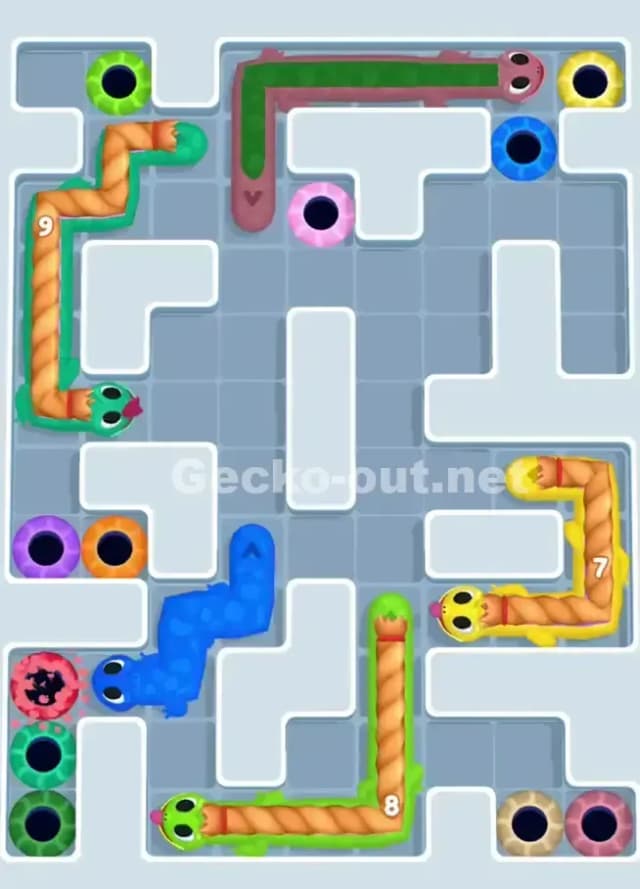
Gecko Out Level 1033 is a dense, multi-colored puzzle packed with seven geckos of different hues sprawled across a highly segmented grid. You're looking at green, cyan, red, pink, magenta, orange, and brown geckos—each one a different length and starting position. The board itself is a maze-like network of corridors with plenty of white walls creating isolated chambers and narrow choke points. There are two gang geckos here (the longer chain-like ones marked as "16" and "15") that move as single units, which immediately signals that this level demands careful sequencing and spatial awareness. The real kicker? You've got a strict timer ticking down, and every second counts. If even one gecko isn't safely in its matching-colored hole by the time the clock hits zero, you fail the entire level.
The Win Condition and Timer Pressure
To win Gecko Out Level 1033, you must guide every single gecko—short ones and gangs alike—to its corresponding colored exit hole without any collisions, overlaps, or backtracking disasters. The timer creates urgency, but it's not a race to button-mash your way through; it's a race to think fast and execute cleanly. Each gecko's body follows the exact path you drag its head along, so one poorly planned route can trap three other geckos behind it. You're essentially untangling a pretzel while the clock whispers threats in the background.
Pathing Bottlenecks and Logical Traps in Gecko Out Level 1033
The Central Corridor as the Primary Bottleneck
The heart of Gecko Out Level 1033 is a single vertical-to-horizontal corridor that funnels at least four geckos toward the center of the board. This is your biggest choke point. The two gang geckos (16 and 15) are particularly problematic here because they're long and rigid; if you route one through the center too early, it'll create a traffic jam that locks out everything else. I'd say the cyan-and-red gang (the one with the arrow symbol) is the worst offender—it needs to move through that middle passage, but it also happens to be one of the geckos you'd think to move first because it's right there. Resist that urge. This is a "move-me-last" gecko for Gecko Out Level 1033.
Subtle Problem Spots and Hidden Traps
First, notice the pink gecko on the right side of the board—it's boxed in by the brown corridor and a series of walls that force it into a very specific path. If you don't clear the brown gecko out of the way first, the pink one becomes completely immobilized, and you'll waste precious seconds trying to untangle the mess. Second, the magenta gang gecko at the bottom-right is another trap. It looks like it has room to move, but its exit is partially blocked by wooden crates and adjacent walls; if you send another gecko through its lane before it escapes, you've created a deadlock. Third, the green gecko on the left is deceptively isolated. Its exit hole is clear, but the path to that exit winds through narrow passages that overlap with routes for the black and purple geckos. One wrong drag here and you've crossed paths that should never cross.
My Personal Reaction and the Breakthrough Moment
When I first looked at Gecko Out Level 1033, I'll admit—I felt overwhelmed. There are so many geckos, so many walls, and the timer is already ticking. My first attempt was a disaster: I moved the first gecko I saw (the green one), then the cyan gang, and within thirty seconds the board was a tangled knot that I couldn't undo. I failed with about half the geckos still stuck on the board. But here's where the logic clicked: I stopped thinking of it as "move all geckos" and started thinking of it as "clear the lanes in reverse order." Once I identified which geckos were blocking which exits, everything fell into place. Gecko Out Level 1033 went from chaos to a clean, methodical puzzle in my next attempt.
Turn-by-Turn Path Strategy to Beat Gecko Out Level 1033
Opening: The Setup Phase
Start by moving the black gecko (the short one in the lower-left area). Its exit is relatively clear, and removing it from the board immediately frees up space and reduces cognitive load. This is a confidence-builder move—you're proving to yourself that you can execute cleanly. Next, tackle the purple and orange geckos on the left side. These two are bunched together, and you want them out before they interfere with the green gecko's path. Move purple first, then orange. As you do this, mentally "park" the green gecko: don't move it yet, even though it's tempting. It's going to need that left corridor you just cleared, but there's other work to do first. Your opening should take about 15–20 seconds, and you should have three geckos already exited.
Mid-Game: Keeping Lanes Open and Repositioning Long Geckos
Now comes the tricky part. Move the brown gecko (the longer one on the right). Route it carefully down and around the right-side walls, avoiding any overlap with the pink gecko above it. This is where patience pays off; take your time dragging the head along the correct path—don't just fling it and hope. Once brown is gone, the path for pink opens up instantly. Move pink next, guiding it through the now-clear right corridor into its magenta exit hole. At this point, about half the board is empty, which is psychologically huge and practically essential for Gecko Out Level 1033.
Now address the blue gecko (the short cyan one in the center). It's small and has a relatively unobstructed path downward. Move it early-to-mid game so it doesn't become collateral damage when the gang geckos start moving. With blue out of the way, you've bought yourself real estate. The green gecko can now safely navigate its left-side route without worrying about a blue body blocking its way. Drag green out; it should glide smoothly to its exit hole.
End-Game: The Gang Geckos and Last-Second Scramble
You're down to the two gang geckos (16 and 15) and possibly the yellow gecko. This is where Gecko Out Level 1033 really tests your planning. The red-and-cyan gang (marked 16) needs to move through the central corridor. Route its head carefully down, then across, then up toward its exit. Watch your timer—if you're below thirty seconds, don't panic, but do move decisively. The magenta-and-purple gang (marked 15) comes next. It's a long gecko, so give its path plenty of space and avoid any last-minute collisions. The yellow gecko (if still present) should have a clear lane by now, so finish it last as a clean exit.
If you're running low on time during the end-game, commit fully to each path without second-guessing. Hesitation costs more seconds than a slightly suboptimal route does.
Why This Path Order Works in Gecko Out Level 1033
Using Head-Drag Pathing and Body-Follow Physics to Untangle
The genius of this strategy for Gecko Out Level 1033 is that it respects the body-follow rule. When you drag a gecko's head, its body must follow that exact path, which means every wall, every corner, every pixel matters. By clearing small, independent geckos first, you ensure their bodies don't create permanent barriers for larger geckos later. The gang geckos are rigid and long, so they need open road. By saving them for last, you guarantee maximum space. This isn't luck—it's systematic untangling based on understanding how each gecko's body occupies the grid.
Managing the Timer: Pause vs. Commit
Gecko Out Level 1033 gives you enough time to win if you're methodical, but not enough time to waste on deliberation. My advice? Use the first 5–10 seconds to visually scan the board and mentally map out your gecko order. Don't touch anything; just look. Once you've committed to a plan, execute it without second-guessing. You don't need to pause during the actual dragging; just keep moving. However, if you realize mid-drag that you've made a mistake, do stop and restart that particular gecko's path—one failed drag is better than three failed drags cascading from one bad choice.
Booster Use and Optional Tools
Honestly, Gecko Out Level 1033 doesn't require boosters if you follow this path order. However, if you're on your second or third attempt and the timer is psychological weight, spending a small amount of currency for extra time isn't shameful—it's a learning investment. I'd suggest using an extra-time booster only if you've already nailed your path strategy but you're just barely missing the timer. If you're failing because your path logic is wrong, no booster will save you. A hint tool could help identify which gecko to move first, but honestly, the logic in this guide should handle that. Save your premium currency for genuinely chaotic levels; Gecko Out Level 1033 is tough but fair.
Mistakes, Fixes, and Logic You Can Reuse in Other Gecko Out Levels
Common Mistakes and How to Fix Them
Mistake 1: Moving gang geckos too early. I see this all the time. Players think big geckos are obstacles to clear first. Wrong. Gang geckos should go last because they need the most open space. Fix: Always move short, independent geckos first. Save chains and long bodies for when the board is emptiest.
Mistake 2: Dragging paths that create unintended intersections. On Gecko Out Level 1033, if you route the black gecko through the center, it blocks the cyan gang's path later. Fix: Before dragging any gecko, trace a mental path to the exit and double-check that it doesn't cross paths with geckos still on the board. Use the white walls as natural dividers to keep routes separate.
Mistake 3: Ignoring the "linked" nature of gang geckos. The two gang geckos on Gecko Out Level 1033 move as single units, but players sometimes forget this and try to route them independently. Fix: Always treat a gang gecko as one long, indivisible body. Test your intended path by mentally extending it from head to tail, ensuring every part fits.
Mistake 4: Panic-dragging when the timer is low. If you're rushing, your paths get sloppy, bodies collide, and you fail. Fix: If time is low, slow down and commit to fewer but cleaner moves. Two perfect exits beat five messy attempts.
Mistake 5: Forgetting which color exits are where. Gecko Out Level 1033 has a lot of holes, and if you're unsure which hole matches which gecko, you'll waste time or drag a gecko to the wrong exit. Fix: Spend those first 5–10 seconds matching gecko colors to exit holes. Visual confirmation prevents disaster.
Applying This Logic to Similar Levels
This Gecko Out Level 1033 strategy scales beautifully to other gang-gecko and knot-heavy levels. Whenever you see a level with long chain geckos, prioritize clearing short, independent geckos first. If you see a level with multiple choke points (like tight corridors), map them out before moving anything. If you notice geckos are linked or partially frozen, always move the "free" ones before the "stuck" ones. The principle of "save long, rigid bodies for last" is universally applicable in Gecko Out puzzle design.
Final Encouragement
Gecko Out Level 1033 is legitimately challenging—I won't sugarcoat it. But it's absolutely beatable with a clear plan and patient execution. You've got the path logic now, you understand the bottlenecks, and you know which gecko to move when. The timer isn't your enemy; it's just the ticking clock that keeps you from overthinking. Trust the strategy, move decisively, and Gecko Out Level 1033 will fall. You've got this.