Gecko Out Level 736 Solution Walkthrough | Gecko Out 736 Answer
How to solve Gecko Out level 736? Get step by step solution & cheat for Gecko Out level 736. Solve Gecko Out 736 easily with the answers & video walkthrough.
Gecko Out Level 736: Board Layout, Rules, and Win Condition
Starting Board: Geckos, Colors, and Key Obstacles
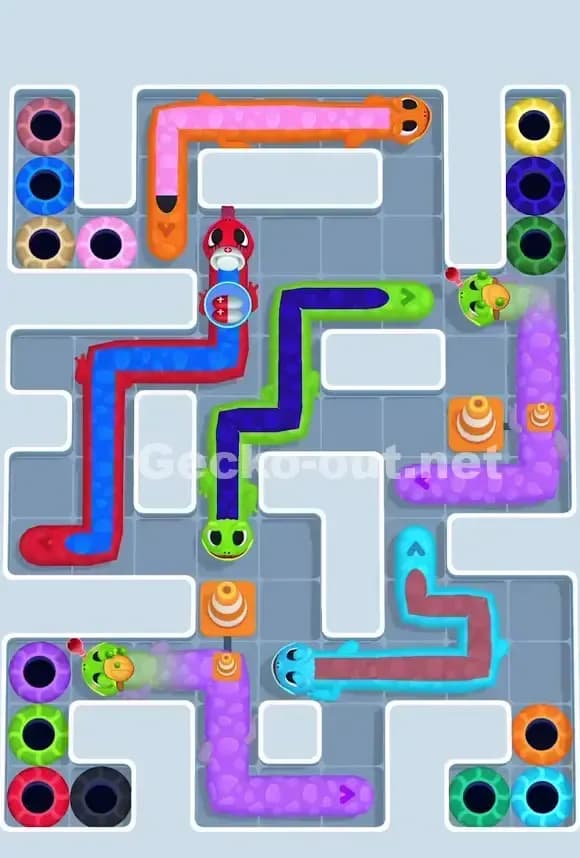
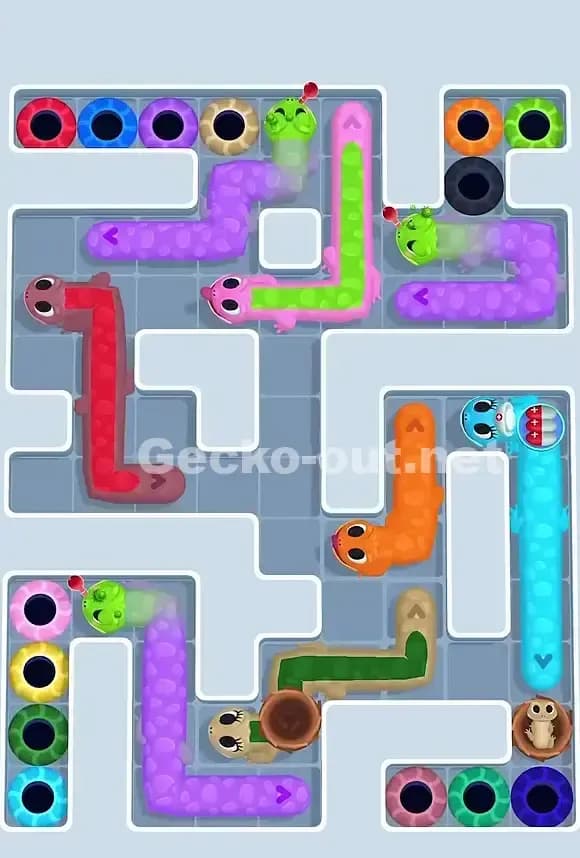
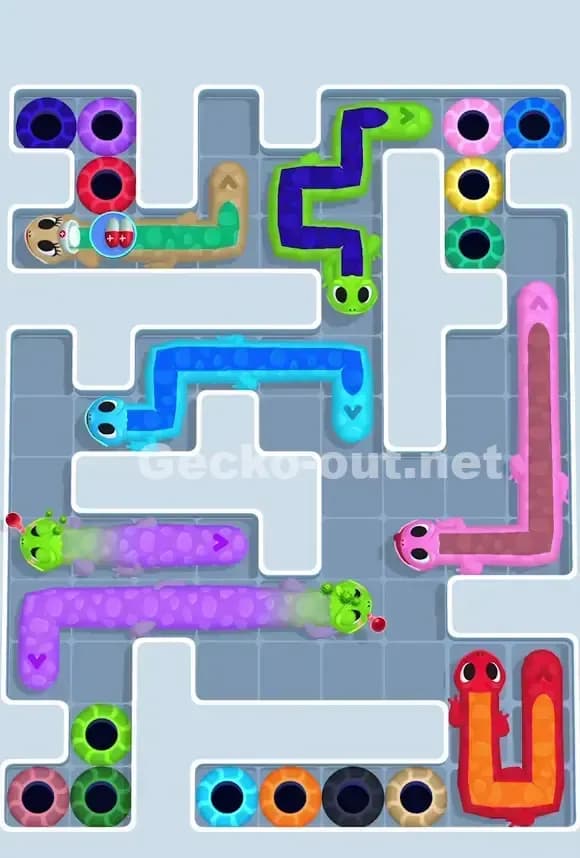
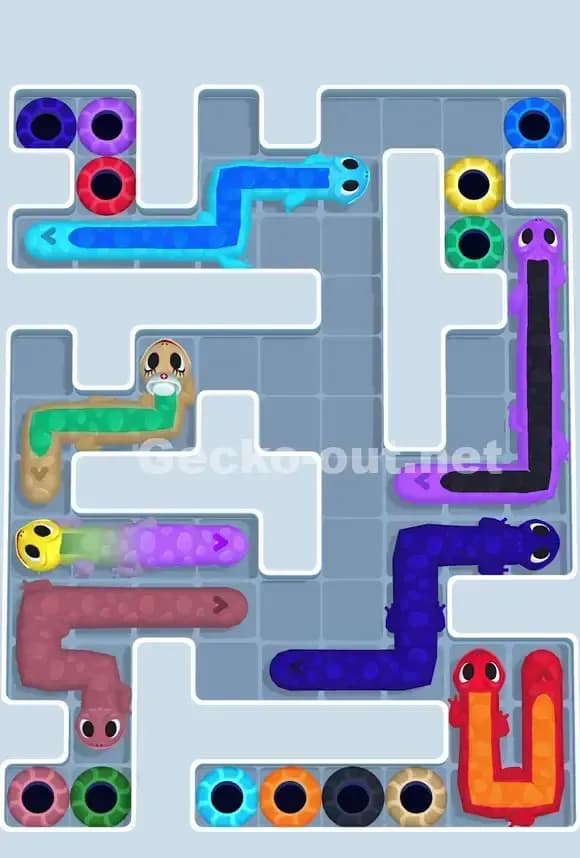
Gecko Out Level 736 is a densely packed puzzle with seven geckos spread across a winding, multi-corridor board. You're dealing with a blue gang gecko (linked pair), a green gang gecko, a purple gang gecko, individual cyan, pink, red, and green geckos, plus a collection of matching colored holes where each gecko must escape. The board is layered vertically with tight choke points, narrow corridors, and several wall obstacles that create natural bottlenecks. What makes Gecko Out 736 particularly tricky is that most geckos are already tangled or positioned in ways that force you to solve them in a specific sequence—move the wrong one first, and you'll jam the entire board.
The layout features a left-side entry zone with cyan and red geckos clustered near the top, a central serpentine path that twists through the middle (where the blue gang gecko sits), a right-side vertical corridor with pink and yellow holes, and a bottom section loaded with the purple gang gecko and several single geckos bunched together. Each gecko's destination hole is the same color, so you can't confuse who goes where—but reaching those holes without creating a traffic jam? That's where the challenge lies.
Win Condition and Timer Pressure
To beat Gecko Out Level 736, you must guide all seven geckos into their matching-colored holes before the timer expires. The timer is typically around 90–120 seconds, which sounds generous until you realize that dragging long gang geckos through narrow corridors takes time and planning. If even one gecko is still on the board when the clock hits zero, the level fails and you restart. This means you can't afford lengthy trial-and-error—you need a clear mental map of which gecko moves first, second, and third, and you need to commit to those paths without hesitation.
Pathing Bottlenecks and Logical Traps in Gecko Out Level 736
The Central Choke Point: The Blue Gang Gecko
The single biggest bottleneck in Gecko Out Level 736 is the blue gang gecko coiled in the center of the board. It's a two-headed, long-bodied gecko that occupies almost an entire corridor, and it blocks both upward and downward traffic. If you don't move it early and move it right, every other gecko behind or around it will be stuck. The blue pair needs to travel up and to the left to reach the blue hole in the upper-left area, but its current position acts like a cork in a bottle. The moment you drag its head in the wrong direction—say, trying to squeeze it down to make room for others—its body will wrap around walls and trap itself or other geckos.
This is the puzzle's crux: solving Gecko Out Level 736 hinges almost entirely on recognizing that the blue gang gecko must move first and only upward, clearing the central lane before anything else shifts. If you try to route other geckos around it or delay its exit, you'll lose critical seconds and likely create an unsolvable board state.
Subtle Problem Spot #1: The Purple Gang Gecko and the Bottom Corridor
The purple gang gecko at the bottom of the board is another long pair, and it's positioned horizontally in a space that looks like it has room to move. Here's the trap: if you drag its head to the right without first clearing the pink gecko that's also nearby, you'll create an overlap. Alternatively, if you route it left too aggressively, it'll wrap around the lower-left corner and jam against the green geckos, making both unmovable. The purple pair needs a very precise, deliberate upward then rightward path to reach its hole on the right side—and you can only execute that path if you've already moved the pink gecko out of the way.
Subtle Problem Spot #2: The Green Geckos' Crowded Corner
In the lower-left, you've got a green gang gecko and a separate green single gecko crammed in tight quarters. Both are green, so they're heading to the same-colored hole area. The green gang is longer and will move second or third, but the single green gecko is shorter and tempting to move first. Don't. If you move the single green first without a clear, open exit path, it'll block the gang gecko's route to the shared green hole, and you'll have wasted a move and precious seconds. The spatial logic here is counterintuitive: the longer gecko sometimes needs to move first to clear space for the shorter one.
Subtle Problem Spot #3: The Cyan and Red Geckos in the Upper Zone
The cyan and red geckos are positioned close together in the upper-left, near their respective holes. They look like they should be among the easiest to solve, but they're actually trapped by the blue gang gecko's current position. You can't safely move them toward their exits until the blue pair has vacated the central corridor—otherwise, they'll collide or run out of path space. This is a secondary bottleneck created by the primary one, and it's easy to overlook if you're in a hurry.
Personal Reaction: Where the Solution Clicks
I'll be honest: the first time I attempted Gecko Out Level 736, I moved the purple gang gecko first because it looked like the biggest problem. Instant regret. Its body tangled, and I lost thirty seconds just undoing that mistake. Then I tried the green geckos, and the same thing happened. It wasn't until I zoomed out mentally and stared at the board without dragging that I realized: everything is locked behind the blue gecko. Once I moved that pair cleanly upward and out, the entire board suddenly breathed. Remaining geckos had clear paths, the timer pressure vanished, and the puzzle unfolded almost naturally. That's when Gecko Out 736 stopped feeling impossible and started feeling like a clever, satisfying puzzle.
Turn-by-Turn Path Strategy to Beat Gecko Out Level 736
Opening: Move the Blue Gang Gecko First
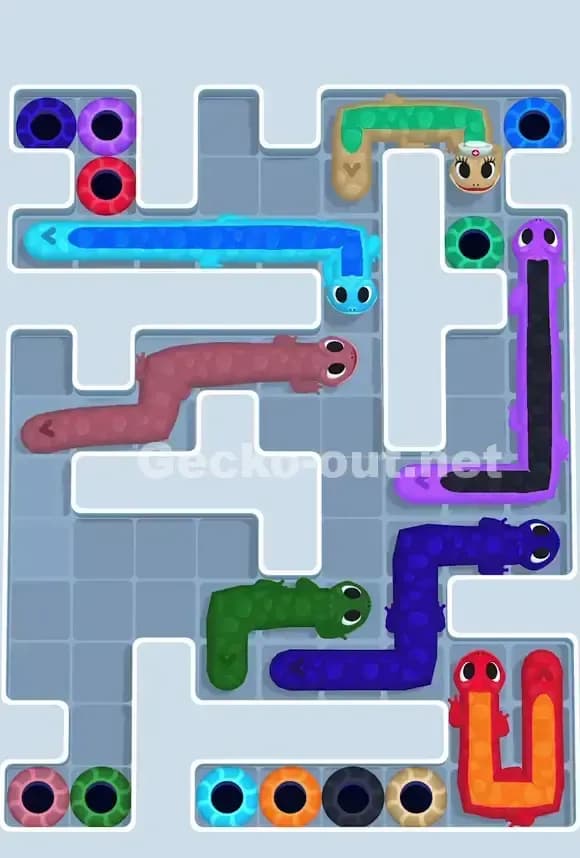
Start by dragging the blue gang gecko's head straight up from its central position. Don't deviate left or right; the path is vertical and clean. Guide it upward through the corridor, then gradually bend the path leftward so the entire two-headed body wraps around the top-left wall and descends into the blue hole in the upper area. This move is your foundation. It takes about ten to fifteen seconds and clears the critical central corridor for everyone else.
Once the blue pair is in the hole, park the cyan gecko in its nearby hole immediately after—it's a short, simple drag with no obstacles. Cyan is done in seconds. This gives you two geckos safely secured and removes a piece of the puzzle so you can focus on the trickier moves ahead.
Mid-Game: Reposition the Green and Purple Pairs Simultaneously
With the blue and cyan geckos secure and the central corridor clear, you now have more freedom. Tackle the green gang gecko next: drag its head upward and to the right, following the cleared pathways, and guide it to the green hole on the left side. This is a longer, winding path, but without the blue pair blocking, it's straightforward. Move deliberately—no rushing—and keep the body smooth and tight.
Next, the red gecko: it's a single gecko and should move quickly upward into its red hole. The timer is still comfortable at this point; you've cleared roughly one-third of the board with two gang geckos and two singles solved.
Now comes the trickiest simultaneous maneuver: the purple gang gecko and the pink gecko. Move the pink gecko first and out of the way—drag it rightward or upward to clear the bottom-right corridor. Once it's in its hole, drag the purple gang gecko's head rightward, let it wrap around the bottom-right corner, and guide it upward to the purple hole on the right side. The two-headed body will follow the path you've drawn, and as long as the pink gecko is already gone, you'll have no collisions.
End-Game: Final Three Geckos and Clock Management
You should have five geckos in holes by the two-minute mark. The remaining two are the green single gecko and the red gang gecko (if you haven't moved them yet—this depends on your exact execution). Move the green single gecko next: it's short, and its path is now completely clear. Drag it to the green hole area and done.
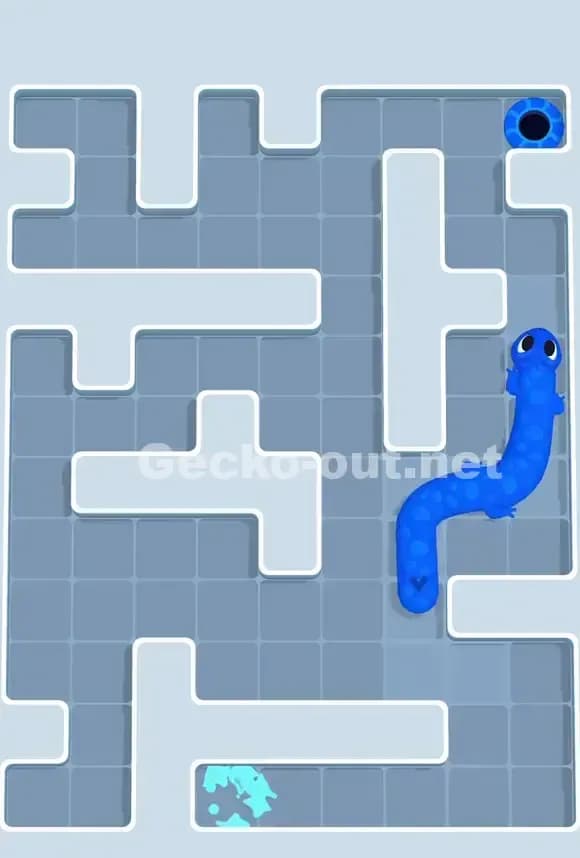
Finally, move the red gang gecko (or whatever single gecko remains). Guide its head toward its matching hole, watching the timer as you go. If you're above forty-five seconds remaining, you have ample buffer. If you're cutting it close, move decisively—don't second-guess the path. Commit to a smooth, body-following trajectory and drag it all the way in.
If by some chance you're down to thirty seconds with one gecko left, don't panic: a straightforward single gecko can usually be solved in fifteen to twenty seconds if you drag in a clean line without hesitation.
Why This Path Order Works in Gecko Out Level 736
Head-Drag Logic and Body-Follow Sequencing
Gecko Out Level 736's solution leverages the core mechanic: the head leads, and the body rigidly follows the path you've drawn. By moving the blue gang gecko first, you're not just solving one puzzle—you're erasing the spatial constraint that makes all other puzzles harder. The blue pair's body currently occupies six or seven grid squares in a critical central position. Once it's gone, those squares become available, and the remaining geckos have exponentially more routing options.
The green gang gecko moves second for the same reason: it's long, it's in a constrained zone, and moving it early opens the left-side pathways for the single green gecko later. Conversely, the pink gecko must move before the purple gang gecko because they're in close proximity and would otherwise overlap.
This sequencing isn't arbitrary—it's a dependency chain. Gecko Out 736 is solvable because there is a valid order, and once you identify it, the puzzle becomes a test of clean hand-eye coordination and calm execution, not blind trial-and-error.
Timer Awareness: When to Pause and When to Commit
Spend the first twenty seconds of Gecko Out Level 736 pausing and reading the board. Identify the bottleneck, map the exit routes mentally, and decide on your gecko sequence. Once you're confident, commit: don't second-guess mid-drag. Hesitation and corrections burn seconds faster than you'd think.
Around the halfway mark (60 seconds remaining), check your progress. If you've got four geckos in holes, you're on pace. If you've got three, pick up the speed slightly—no rushing, but be more decisive. In the final thirty seconds, every move should be fluid and purposeful. If you've reached this point with one or two geckos still on the board and they're in open space with clear paths, you'll finish. If they're tangled, you've likely made an earlier sequencing error, and restarting is faster than untangling.
Booster Strategy for Gecko Out Level 736
For most skilled players, Gecko Out 736 is solvable without boosters on the first or second attempt once you understand the sequencing. However, if you're learning the level or struggling with hand-eye precision, the hint booster can be valuable on your first or second attempt to confirm that the blue gecko move comes first—that single insight cuts the puzzle's difficulty in half.
Time boosters (additional thirty or sixty seconds) are not necessary and frankly aren't worth spending currency on here. Gecko Out Level 736 is tight on time but not impossible; adding ten more seconds doesn't really change the strategy, just gives you a safety net. Better to retry and nail the solution than to rely on a time boost.
A hammer or undo booster is situationally useful if you've made a catastrophic mistake (like tangling the purple gecko irreparably), but again, restarting and executing the correct sequence is faster than using and paying for a correction tool.
Mistakes, Fixes, and Logic You Can Reuse in Other Gecko Out Levels
Common Mistakes and How to Fix Them in Gecko Out Level 736
Mistake #1: Moving the purple gang gecko first. This seems logical because it's visually prominent and in a corner, but it's actually the last pair you should move. The fix: mentally identify the longest gecko(s) in the most central or constrained position and move those first. Long geckos in tight spaces are always bottlenecks.
Mistake #2: Trying to route a gecko around another instead of moving the blocking gecko. For example, trying to squeeze the red gecko around the blue pair instead of just moving the blue pair out first. The fix: if a gecko is physically in the way, move it before attempting to route around it. It's always faster than path-hacking.
Mistake #3: Dragging the cyan or pink gecko early and not considering how it affects the green or purple pairs. The fix: before each move, glance at the geckos below and beside your target. Ask yourself, "Does this move unblock anyone else, or does it block someone?" Move in order of maximum unblocking.
Mistake #4: Drawing a path that wraps a gecko's body around a wall in a way that traps it. For example, looping the blue gang gecko down and around a corner when the direct upward route is available. The fix: always choose the shortest, most direct path first. Geckos in Gecko Out 736 move faster and more predictably when you minimize body wrapping.
Mistake #5: Panicking in the final thirty seconds and dragging wildly. You'll overshoot holes, create new tangles, and waste more time. The fix: take a deep breath, mentally picture the path before you drag, and then drag slowly and deliberately. Slow and steady beats fast and frantic every time.
Reusing This Logic on Similar Levels
Gecko Out Level 736's core insight—solve the longest gecko in the most central position first—applies to any level with gang geckos and tight corridors. Levels with frozen geckos or icy exits also benefit from this logic: frozen elements are immovable bottlenecks, so plan your other geckos' paths around them from the start rather than trying to route them post-hoc.
Levels with toll gates (geckos that require payment or a specific sequence to pass) also respond well to dependency mapping. Identify the gate, solve the geckos that must pass through it first, and work backward from there.
Finally, whenever you see a level with multiple gang geckos of different colors, apply the principle of "unblocking in sequence." Solve the gang gecko that unblocks the most other geckos first, even if it's not the one you'd naturally tackle. This simple rule cascades through the puzzle and often cuts the solution time in half.
Final Encouragement
Gecko Out Level 736 is genuinely challenging, but it's absolutely beatable with a clear head and a solid plan. The board looks like chaos—seven geckos, winding paths, gang pairs, and a tight timer—but it's actually a carefully constructed puzzle where each piece has a place and an order. Once you nail that order and execute it cleanly, you'll sail through Gecko Out 736 and feel genuinely proud. The next time you encounter a similar knot-heavy level, you'll recognize the pattern immediately and solve it faster. That's the beauty of puzzles like Gecko Out 736: they teach you how to think spatially and strategically, and those skills compound across every level that follows. You've got this.