Gecko Out Level 699 Solution Walkthrough | Gecko Out 699 Answer
How to solve Gecko Out level 699? Get step by step solution & cheat for Gecko Out level 699. Solve Gecko Out 699 easily with the answers & video walkthrough.
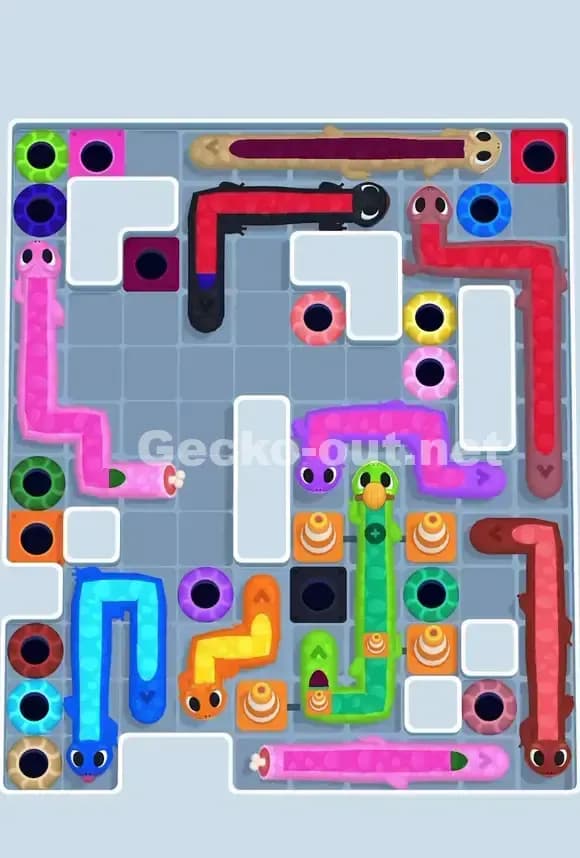
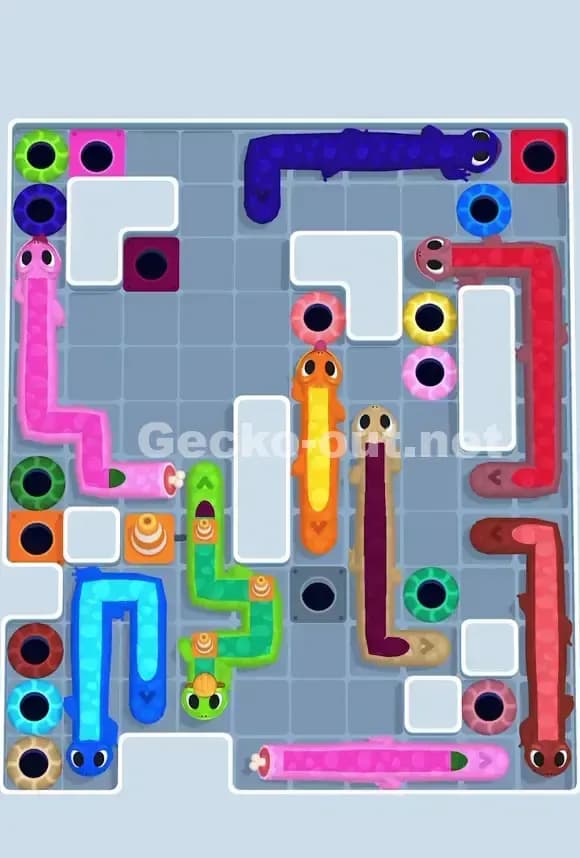
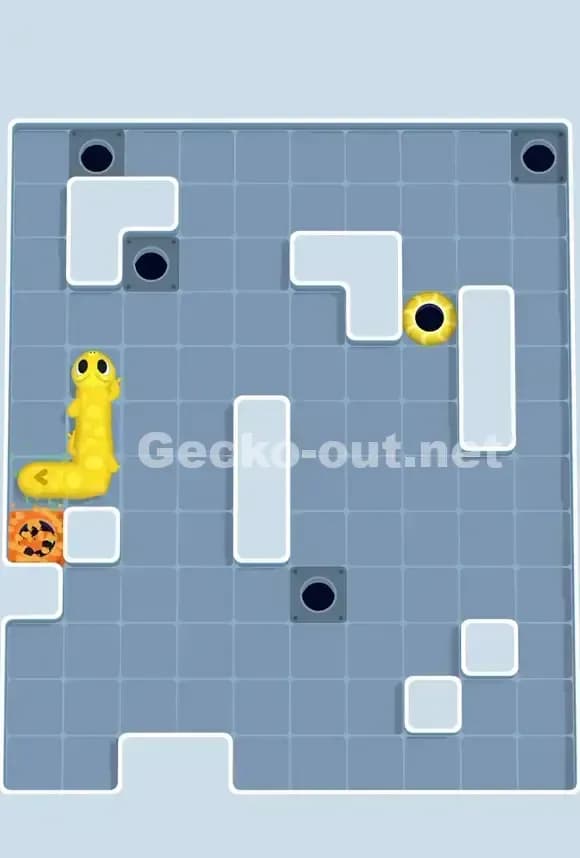
Gecko Out Level 699: Board Layout, Rules, and Win Condition
Starting Board: Geckos, Colors, and Obstacles
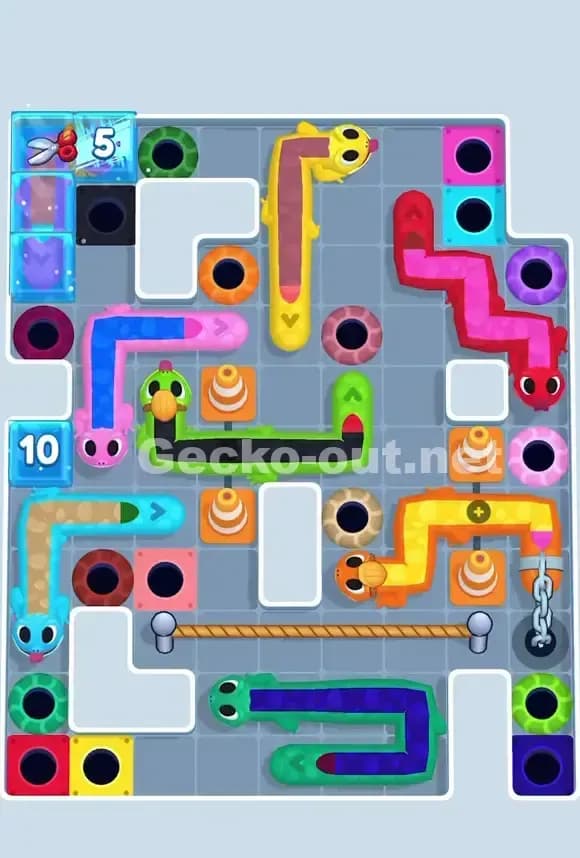
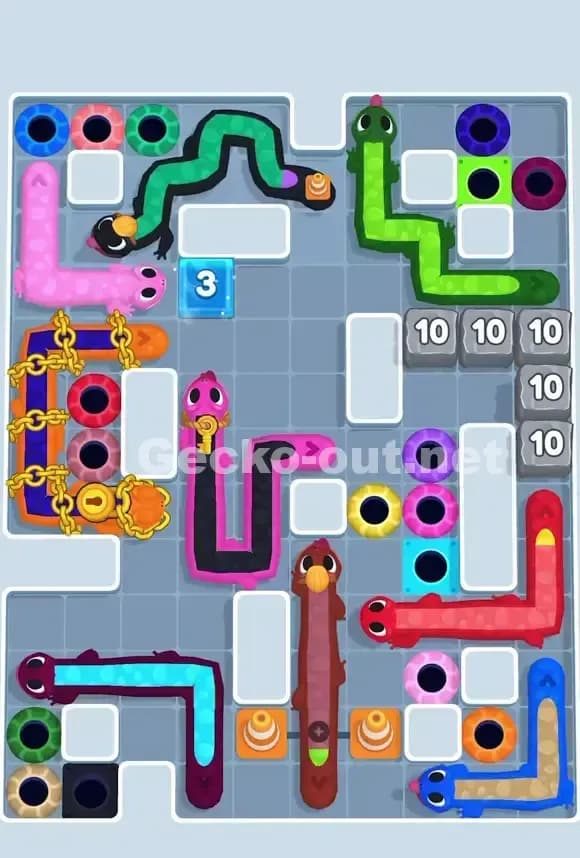
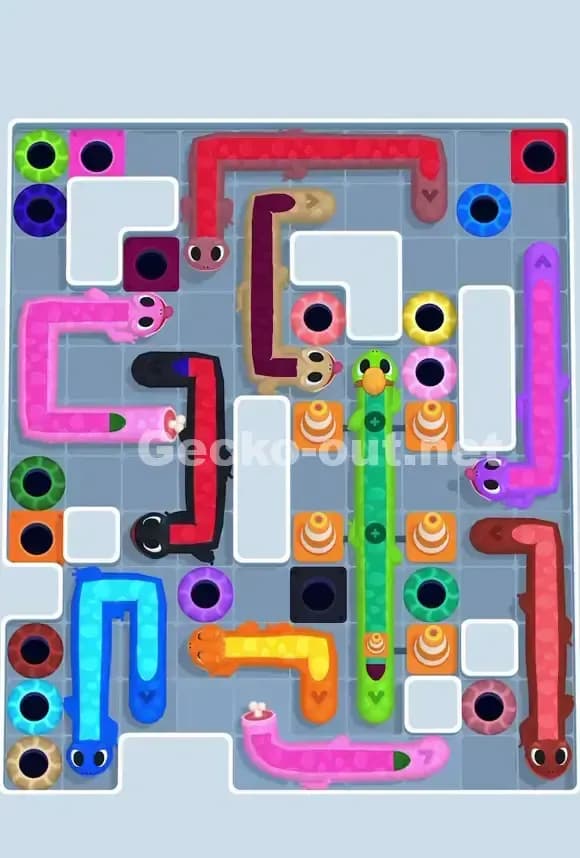
Gecko Out Level 699 is a densely packed puzzle with nine geckos spread across the board in various colors: lime green, magenta, blue, purple, red, orange, yellow, and more. Each gecko needs to reach its matching-colored exit hole before the timer expires. What makes Gecko Out 699 particularly tricky is the sheer number of white wall obstacles that crisscross the grid—they're everywhere, creating a maze-like structure that forces you to think three or four moves ahead. You'll also notice several colored wall sections (maroon, pink, and green borders) that act as locked passages until you've cleared enough geckos to open safe routes.
The board layout feels intentionally claustrophobic. Geckos are stacked in corners and along narrow corridors, which means even a small mistake in pathing can jam up the entire board. The timer is generous enough to complete Gecko Out 699 if you plan methodically, but it's tight enough that hesitation or backtracking will eat your remaining seconds.
Win Condition and Timer Pressure
You win Gecko Out Level 699 by guiding all nine geckos to their exits before time runs out. The crucial mechanic here is understanding that when you drag a gecko's head, its body follows that exact path—it doesn't teleport or skip obstacles. This means every wall, every other gecko, and every locked gate in the route matters. If your path crosses another gecko's body, the move fails instantly. If your path leads into a wall, it stops short. The timer is your constant pressure: it's counting down from the moment the level loads, and the moment it hits zero, any geckos still on the board cause an instant loss.
Pathing Bottlenecks and Logical Traps in Gecko Out Level 699
The Central Corridor Bottleneck
The single biggest chokepoint in Gecko Out 699 is the central vertical corridor running down the middle of the board. Multiple geckos need to use this path, but only one can occupy it safely at a time. The orange and green geckos, in particular, are competing for this same lane. If you move one incorrectly, you'll block the other and trap them both. I found this to be the "aha" moment where I realized I couldn't just solve geckos in random order—I had to sequence them so that the longest, most inflexible geckos got priority in the central corridor first.
Subtle Problem Spots That Trip You Up
The maroon wall lock on the right side: This wall seems to open a path toward the red gecko's exit, but moving the red gecko too early will block the blue gecko's route. You need to clear the blue gecko first, which feels counterintuitive because red seems more urgent visually. The lesson here is that color alone doesn't tell you the correct order—the board geometry does.
The lime green gecko in the top-left: This gecko looks easy to dismiss because it's small and corner-bound, but its body takes up a deceptively long path that snakes under the magenta exit. If you drag it carelessly, you'll lock in its body in a way that blocks the magenta gecko later. Planning its exit path early prevents this silent mistake.
The lower-left blue U-shaped corridor: The blue gecko needs to navigate this tight U-turn to reach its exit hole. The corridor is just wide enough, but you have to drag the head with precision—any slight deviation will collide with the walls. This isn't a fatal mistake, but it eats time as you re-attempt the drag, and Gecko Out 699 doesn't forgive time waste.
The Frustration and the Breakthrough
Honestly, when I first loaded Gecko Out Level 699, I felt overwhelmed. Nine geckos, too many white walls, and no obvious "start here" marker made me want to just start dragging randomly. My first three attempts failed around the 40-second mark when I realized I'd boxed myself in by moving the wrong gecko first. The breakthrough came when I stopped looking at individual geckos and started looking at the routes as a whole—which corridors were shared, which exits were truly separate, and which gecko's movement would unlock space for everyone else. Once I mapped that out mentally, Gecko Out 699 clicked into place.
Turn-by-Turn Path Strategy to Beat Gecko Out Level 699
Opening: Clear the Perimeter First
Start by moving the blue gecko in the bottom-left U-corridor. This gecko's path is the most isolated and doesn't interfere with the central corridor. Drag it carefully through the U-turn and into its blue exit hole. This might seem counterintuitive to start with blue instead of a "main" colored gecko, but it opens up physical board space and gives you confidence that your drag-pathing is steady. With blue cleared, you've eliminated one body from the board and one path from your mental map.
Next, handle the lime green gecko in the top-left. Guide its head downward and to the right, threading it around the magenta wall and avoiding the path that the magenta gecko will later need. This gecko's hole is on the upper-right area, so its path is relatively direct once you commit. Parking it safely lets the magenta gecko move freely.
Mid-Game: Sequence the Central Corridor Carefully
Now focus on the orange and green geckos that need the central vertical corridor. Move the orange gecko first because it's slightly longer and more constrained than the green gecko. Drag its head down the central corridor, being careful not to stray into the white wall mazes on either side. Once orange is out, the green gecko has a clear lane for its exit.
Simultaneously, work the right side of the board. The red gecko's exit is on the far right, and you can clear it now without major conflict. Drag it along the maroon wall path, which will naturally open up once blue and orange are gone. Don't rush this—precision beats speed on Gecko Out 699.
At this point, you should have roughly five geckos left and about 40–50 seconds remaining. This is when you transition to the remaining clustered geckos: the purple gecko, the magenta gecko, and the yellow gecko. These three are spatially closer and their exits are still available. The purple gecko should exit next because its path is the shortest among the three.
End-Game: Sprint the Final Three Safely
With six geckos cleared, you have more board space and less risk of collision. Move the magenta gecko toward its exit hole on the left side. Its body is fairly long, but now that the lime green gecko is gone, there's no risk of interference. Drag it smoothly and don't second-guess yourself—hesitation burns seconds.
The yellow gecko and the remaining colored geckos should follow in quick succession. By this point, you'll have 20–30 seconds left, and the board is mostly open. Move decisively but not frantically. If you're running low on time (under 15 seconds with two geckos left), prioritize the gecko with the shortest, most direct path to its exit. Save the most complex path for last only if you have time cushion.
Why This Path Order Works in Gecko Out Level 699
How the Sequence Untangles, Not Tightens
The key insight is that by clearing perimeter geckos first (blue, lime green), you reduce the total number of bodies on the board and open up the central spaces that multiple geckos need. The body-follow mechanic in Gecko Out 699 means that a gecko's path is locked in as soon as you drag it—you can't retroactively move it to make room. By sequencing from the outside inward, each new gecko has fewer obstacles to navigate around. The maroon and green wall locks naturally align with this order, which means you're not fighting against the level design; you're flowing with it.
Timer Management: When to Pause, When to Commit
Pause briefly after clearing the first three geckos (blue, lime green, orange). Spend 5 seconds visually confirming that the remaining six geckos have clear paths to their exits and that no two are competing for the same corridor. This micro-pause prevents the disaster of jamming up the central corridor with conflicting paths. Once you've confirmed the routes, commit fully. No more pausing. Execute the remaining six moves in steady, deliberate drags—no hesitation, no re-dragging.
Gecko Out 699 rewards confidence. If your path is correct, it'll succeed. If you're unsure, a quick pause is fine, but don't panic-drag and hope for the best. Panic-dragging almost always results in hitting a wall or another gecko, forcing a restart.
Boosters: Optional, Not Essential
For Gecko Out 699, boosters are optional. If you're struggling after 2–3 attempts with the planned sequence, consider spending the extra currency on a +20 seconds booster to give yourself breathing room. However, the base timer is generous enough that with correct sequencing, you don't need it. A hint booster is also available but spoils the satisfaction of solving the knot yourself. I'd recommend saving your resources and beating Gecko Out 699 legitimately—it's absolutely doable without spending.
Mistakes, Fixes, and Logic You Can Reuse in Other Gecko Out Levels
Common Mistakes on Gecko Out Level 699
Mistake 1: Moving the biggest gecko first. Players often assume the largest gecko is the "main" objective. On Gecko Out 699, the longest gecko (often the magenta one) should move mid-to-late, not early. The lesson: prioritize geckos that don't block shared corridors, not geckos that are visually prominent.
Mistake 2: Ignoring wall colors as a sequencing hint. The maroon and green wall sections on Gecko Out 699 are not random. They align with specific exit paths. If a wall color matches a gecko color, that gecko's route is likely reserved. Don't fight the color hints—use them to determine move order.
Mistake 3: Dragging too fast and hitting white walls. The white obstacles are small and numerous. Even a 1-grid misalignment fails the drag. Always drag slowly and watch the path highlight as you pull. Speed is only safe once you've walked through the route mentally.
Mistake 4: Moving clustered geckos simultaneously. Don't try to drag two geckos in quick succession without a pause between. Each drag is atomic—once one gecko is out, confirm the board state before moving the next. Rushing this on Gecko Out 699 causes both geckos to jam into the same space or wall.
Mistake 5: Forgetting that body-follow is absolute. The gecko's body follows the exact path you drag the head through. There's no "optimal body compression" or shortcutting through tight spaces. Every wall and turn in the path must be navigable. Plan your route as if you're drawing it on paper first, then drag.
Reusing This Logic on Similar Levels
This approach—perimeter first, central corridor second, clustered geckos last—works on any Gecko Out level with a similar structure: many geckos, shared corridors, and wall mazes. Levels with "gang" geckos (linked chains) also benefit from this sequence because clearing the perimeter gives you space to maneuver the gang without tangling it further. On frozen-exit levels, this same order helps because you can unblock alternative routes as you go, reducing the pressure on any single exit.
The key transferable logic is: always identify the chokepoint first, then solve outward from the perimeter. This inverts the intuitive "solve obvious ones first" approach but it's almost always more efficient in Gecko Out puzzles.
Final Encouragement
Gecko Out Level 699 is undeniably tough—it's a nine-gecko melee with overlapping paths and scarce board space. But it's not a trial-and-error gauntlet. It's a logic puzzle where every gecko's position and route matter. Once you map out that central corridor bottleneck and commit to the perimeter-first sequence, Gecko Out 699 falls into place within 2–3 attempts. You've got this. Take it slow, drag with precision, and remember: the board is always solvable if you untangle it in the right order.