Gecko Out Level 866 Solution Walkthrough | Gecko Out 866 Answer
How to solve Gecko Out level 866? Get step by step solution & cheat for Gecko Out level 866. Solve Gecko Out 866 easily with the answers & video walkthrough.
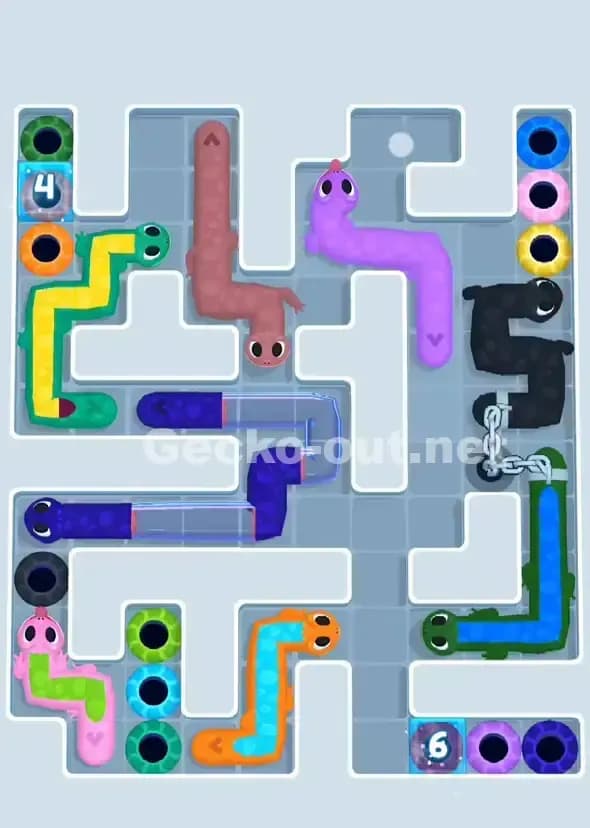
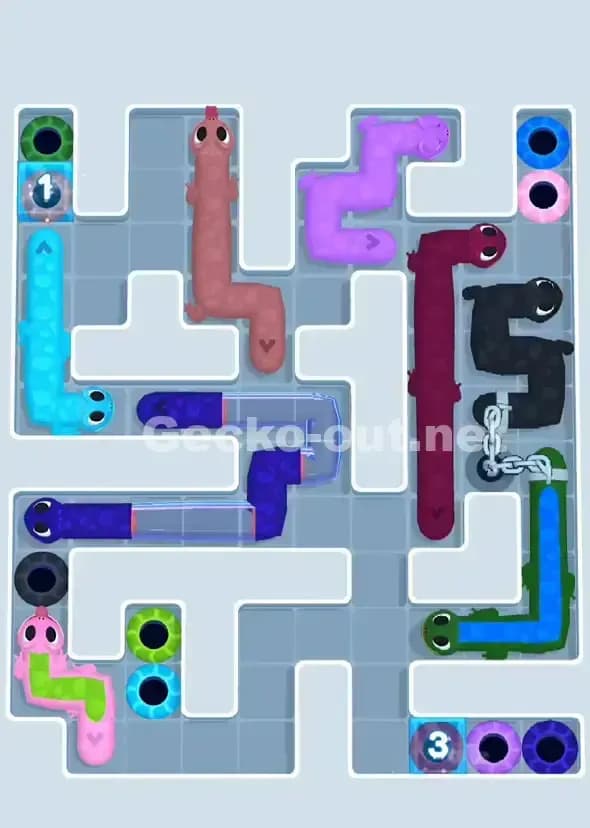
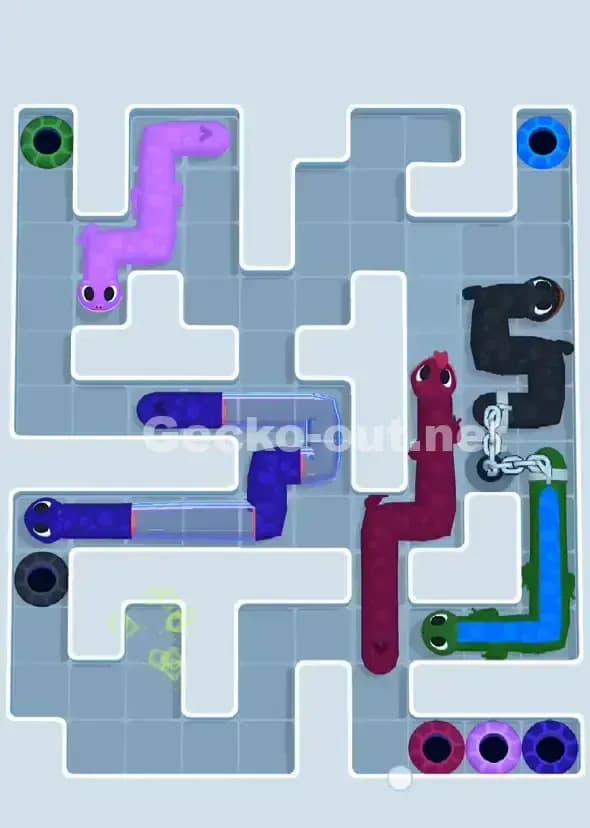
Gecko Out Level 866: Board Layout, Rules, and Win Condition
Starting Board: A Multi-Color Tangle with Seven Geckos
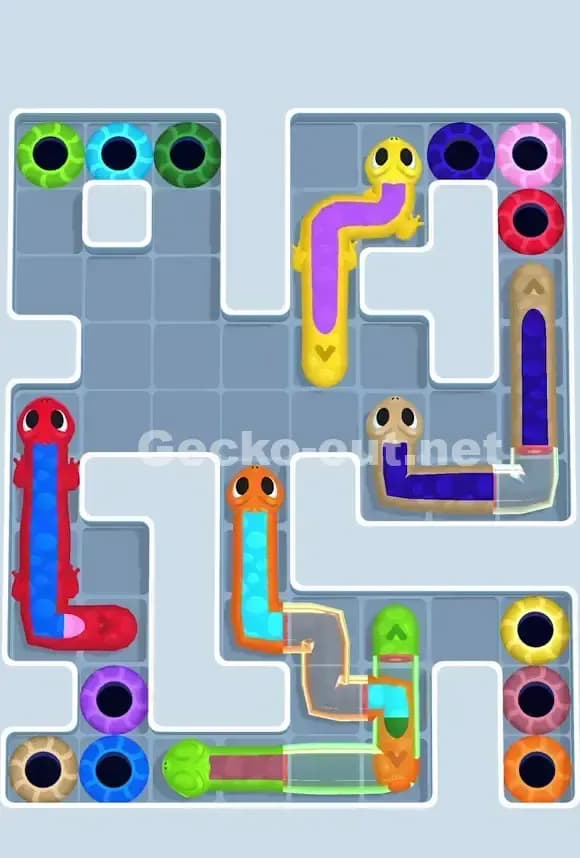
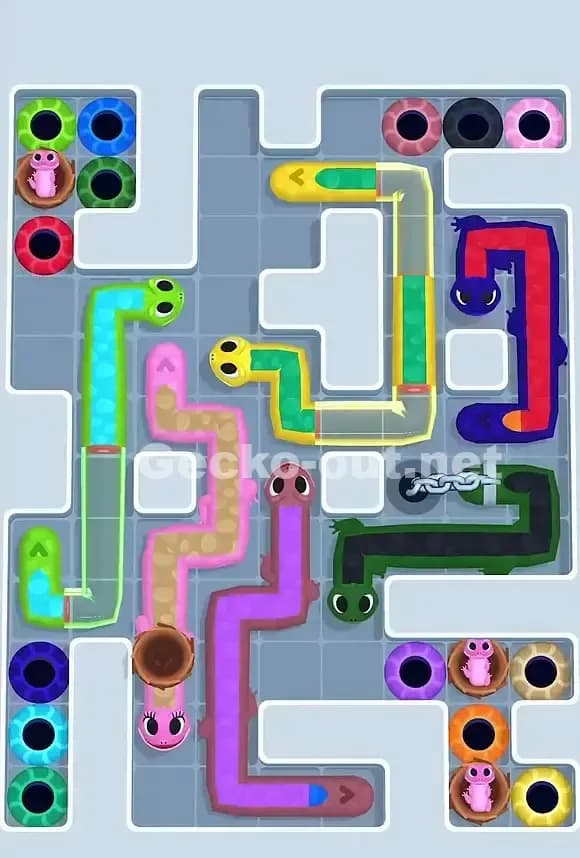
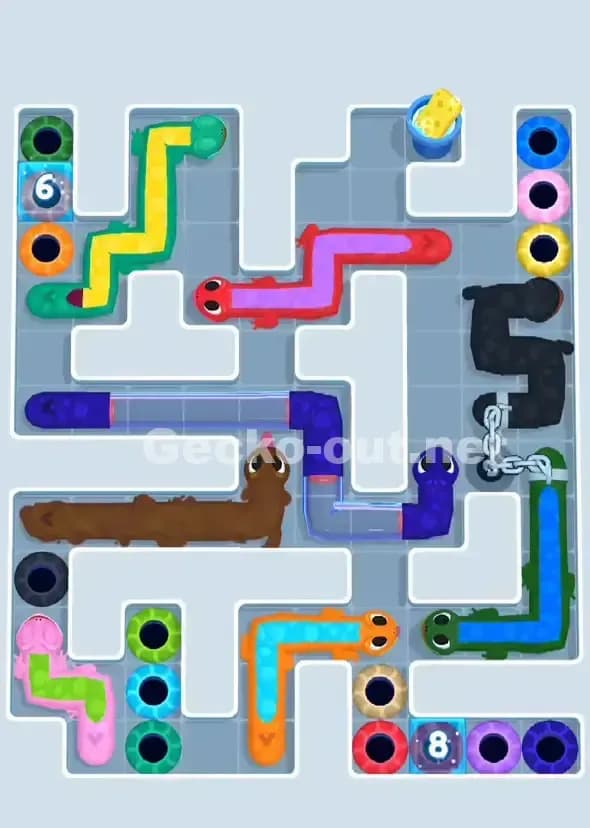
Gecko Out Level 866 is a beast. You're looking at seven geckos in distinct colors—green, yellow, red, blue, brown, pink, and orange—each one coiled or stretched across a deliberately cramped grid. The board itself is a maze of tight corridors and dead-end alcoves, with walls cutting through almost every potential escape route. What makes Gecko Out 866 particularly nasty is that almost every gecko's body is already tangled against another, and several geckos are long enough that they occupy multiple grid sections simultaneously. You've got a strict timer ticking down, and the pressure is real: if even one gecko hasn't reached its matching-colored hole by the time the counter hits zero, the whole attempt fails.
The Win Condition and Why the Timer Matters
To win Gecko Out Level 866, every single gecko must reach a hole matching its color before time runs out. That sounds simple in theory, but the twist is movement mechanics: when you drag a gecko's head, its body follows the exact path you draw, pixel by pixel. There's no "teleport" and no shortcuts. This means every route you create must not only reach the correct exit hole but also must remain clear of walls, other gecko bodies, and any frozen or locked obstacles along the way. The timer pressure forces you to plan your path order carefully—move one gecko wrong, and you might jam three others into an inescapable knot, wasting precious seconds trying to undo the mess.
Pathing Bottlenecks and Logical Traps in Gecko Out Level 866
The Central Corridor Jam
The single biggest bottleneck in Gecko Out 866 is the horizontal corridor running through the middle-left portion of the board. The brown gecko and the blue gang gecko both need to pass through or near this area, and their combined body length is substantial. If you move one before carefully positioning the other, the brown gecko's tail will block the blue gecko's head, or vice versa, creating a deadlock. This corridor is the lynchpin of the entire puzzle: you must clear it strategically before attempting any major moves in the right or upper zones.
Three Subtle Traps That Catch Most Players
Trap One: The Yellow Gecko's Deceptive Path. The yellow gecko looks like it has a straightforward route upward to the yellow hole in the top-right region, but its body is long and curves sharply. If you drag its head too quickly without accounting for the bend, you'll wrap its tail around the corner in a way that blocks the red gecko's escape route below. You need to move yellow deliberately and only after red has some breathing room.
Trap Two: The Pink Gecko's L-Shape Prison. Pink is positioned in the bottom-left corner and is shaped like an L. Many players try to drag it directly upward, forgetting that its tail will catch on a wall segment and refuse to budge. Instead, you must drag pink sideways first, clear the tail obstruction, and only then navigate it upward toward its exit.
Trap Three: The Green and Orange Interlock. On the right side of the board, green and orange are packed so tightly that their starting positions almost touch. If you move green without first moving orange, green's body will immediately collide with orange's head, and the drag will fail. Conversely, if you move orange too far before green has an exit path, orange's tail will block green forever. The only solution is to move orange first along a very specific, narrow route.
Personal Reaction: The "Aha!" Moment
Honestly, Gecko Out 866 frustrated me for several attempts. I kept trying to rush the central corridor and ended up jamming geckos into each other like sardines. But then I realized I was thinking about the puzzle backward—instead of asking "where can I move this gecko?", I should ask "which gecko must move first so all others have a clear lane?" That mental flip changed everything. Once I identified the bottleneck and worked backward from the exits, the solution clicked into place.
Turn-by-Turn Path Strategy to Beat Gecko Out Level 866
Opening: Clear the Right Side First
Start with the orange gecko on the bottom-right. Drag its head along the lower corridor, moving it left and slightly upward into a temporary "parking" position near the center—but not blocking any other gecko's path. This move accomplishes two things: it frees up space for green to eventually escape, and it removes a potential blocker from the right-side traffic jam. Orange should end up in a neutral zone where it can wait safely while you handle the more complex moves ahead.
Next, move the green gecko rightward, then upward, guiding it toward the green hole on the right edge. Green's path should hug the right wall to stay out of everyone else's way. Because orange is now parked in the center, green has just enough room to slip past without collision.
Mid-Game: Unlocking the Central Corridor
Once the right side is clear, tackle the blue gang gecko and the brown gecko. These two are the lynchpin. Move the blue gecko first along the bottom-center corridor, curving it toward the left side where its blue hole awaits. Blue's body is fairly long, so drag it slowly and deliberately, making sure no part of its tail catches on walls or the brown gecko's body.
After blue is safely out or at least positioned so its tail doesn't block the corridor, move the brown gecko. Brown should travel along the now-partially-clear middle corridor, moving left and then downward toward the brown hole. Brown's path will feel tight, but with blue out of the way, there's just enough space.
While you're clearing the center, keep an eye on the yellow gecko up top. Don't move it yet—it needs the red gecko to get out of the way first. Yellow's body curves in a way that will block red's exit if you move it prematurely.
End-Game: Exit Order for the Final Four
With the bottleneck cleared, you should have red, yellow, pink, and possibly orange still on the board. Move red next, dragging it upward from its middle-right position toward the red hole in the upper-center area. Red's path is straightforward once brown and blue are gone.
Immediately after red exits, move yellow. Yellow should now have a clear path upward along the left side of the board toward the yellow hole at the top. Because red is no longer blocking, yellow's curved body can unfold without tangling.
Move the green gecko if it hasn't exited yet (it should have during mid-game, but double-check). Then move pink. Pink requires a sideways-then-upward movement as described earlier, ending at the pink hole on the left edge.
Finally, if orange is still on the board, move it to the orange hole. By this point, the board should be nearly empty, and orange will have a clear shot.
Monitor the timer throughout, especially during the end-game phase. If you're below 15 seconds with two geckos still on the board, you may need to use a time-extension booster (if available) to avoid a last-second failure.
Why This Path Order Works in Gecko Out Level 866
The Body-Follow Rule as Your Ally, Not Your Enemy
Gecko Out 866 is challenging precisely because the body follows the head's path exactly. This seems restrictive, but it's actually the key to solving the puzzle. By moving geckos in the order I've outlined—right side first, then center, then left side—you ensure that each subsequent gecko's path is unobstructed by previous moves. You're not fighting the body-follow mechanic; you're using it to "unstick" the board layer by layer. Each move unlocks the next move rather than complicating it.
Reading the Board vs. Moving Quickly
Gecko Out 866 demands a balance between careful planning and decisive action. Spend the first 10–15 seconds of the attempt reading the board: identify which gecko will block which, and mentally trace the optimal exit paths for each color. Write these paths down if you're playing on a device where you can take notes. Once you've got the plan, commit to it and move quickly—hesitation and second-guessing waste time and cloud your judgment. That said, if you find yourself stuck mid-move (a path is blocked and you didn't expect it), pause, undo, and reconsider. One or two undo actions are better than panic-dragging your way into an unrecoverable knot.
Boosters: Optional, Not Mandatory
Gecko Out 866 is solvable without boosters if you follow the strategy above. That said, if you're running low on time—say, you're down to 8 seconds with two geckos left—a time-extension booster is a reasonable safety net. Don't rely on it as a crutch, though. A hammer-style "break a wall" booster is not useful here because walls are part of the puzzle's design. A hint booster might help if you're truly stuck, but working through the logic yourself is more satisfying and builds your skills for harder levels.
Mistakes, Fixes, and Logic You Can Reuse in Other Gecko Out Levels
Five Common Mistakes and How to Fix Them
Mistake 1: Moving the Longest Gecko First. Players often start with the gecko that looks most threatening (usually the brown or blue gang gecko). This is backward. Start with short geckos or geckos with clear exit paths, so you have room to maneuver the longer ones later. Fix: prioritize geckos by exit clarity, not by size.
Mistake 2: Not Parking Geckos Strategically. Many players move a gecko all the way to its exit immediately, forgetting that this leaves its body sprawled across the board. Fix: sometimes it's better to move a gecko partway, "park" it in a neutral zone, and move other geckos first. Once you have more space, you can complete the first gecko's journey.
Mistake 3: Dragging Paths Too Fast. Gecko Out 866 has tight corners and narrow corridors. If you drag too quickly, it's easy to miscalculate and have a gecko's body collide with a wall. Fix: drag slowly and deliberately, especially around corners. It takes a few extra seconds, but it saves time spent undoing failed moves.
Mistake 4: Forgetting About Tail Obstruction. Every gecko has a tail, and it occupies board space just like the head and body. Many players focus only on the head's path and forget to mentally trace where the tail will be. Fix: always trace the entire gecko's path, from head to tail, before you drag.
Mistake 5: Not Respecting the Timer. Players often move slowly and cautiously early on, then panic as time runs out and make rushed, error-prone decisions. Fix: move with purpose and steadiness from the start. The timer is generous enough if you don't waste it on undos. Check your remaining time after every third move.
Reusing This Logic on Similar Levels
Gecko Out 866 teaches you a universal principle: in any level with multiple tangled geckos, identify the bottleneck first, then work outward from areas of high traffic to areas of low traffic. If you encounter a level with gang geckos (linked pairs), apply the same strategy—move the gang as a unit, respect the space it occupies, and clear the corridor before moving adjacent single geckos. On levels with frozen exits, treat them like normal holes but add an extra step of clearing the path before you move the gecko (so the frozen exit is no longer an obstacle). Gecko Out 866's emphasis on path planning and reverse-order thinking will serve you well in the 860s, 870s, and beyond.
Conclusion: You've Got This
Gecko Out Level 866 is genuinely tough, but it's not unfair. It's a puzzle that rewards planning, patience, and a clear head. Once you understand the bottleneck and commit to the path order I've outlined, you'll see the solution crystallize in front of you. The sense of accomplishment when all seven geckos slip smoothly into their holes is absolutely worth the effort. Good luck, and remember: read first, move decisively, and trust the logic. You'll beat Gecko Out 866.