Gecko Out Level 696 Solution Walkthrough | Gecko Out 696 Answer
How to solve Gecko Out level 696? Get step by step solution & cheat for Gecko Out level 696. Solve Gecko Out 696 easily with the answers & video walkthrough.
Gecko Out Level 696: Board Layout, Rules, and Win Condition
Starting Board: Multiple Geckos, Locked Exits, and Choke Points
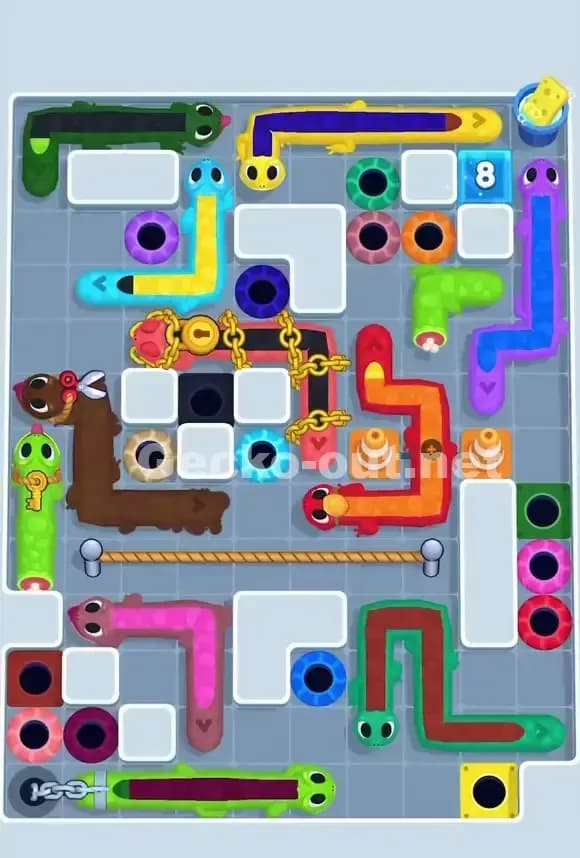
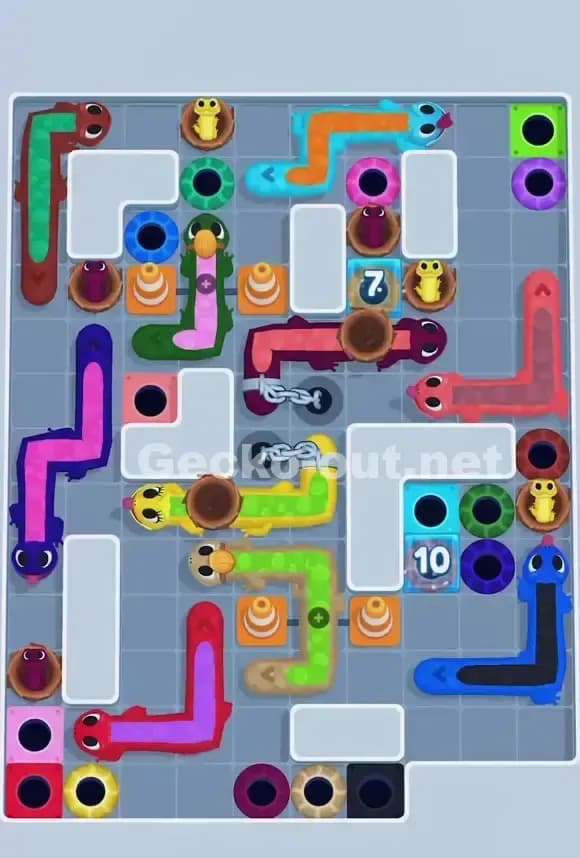
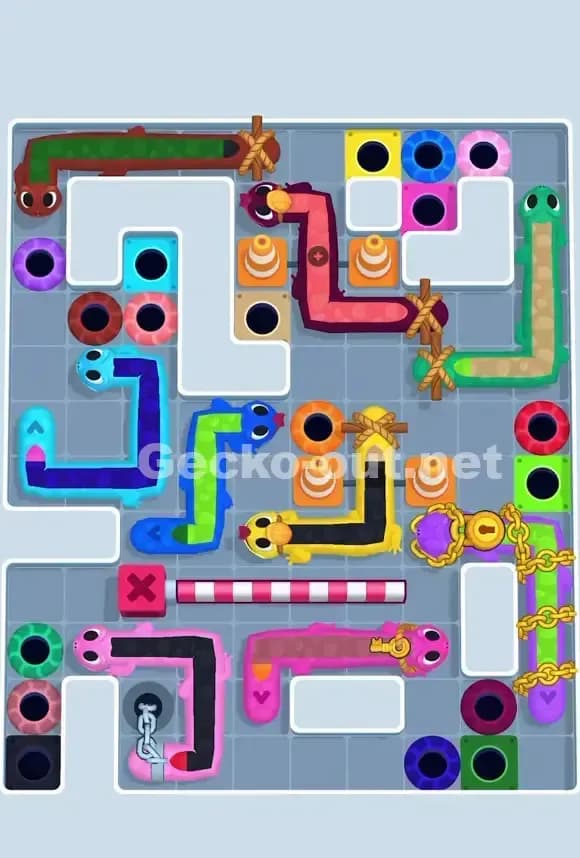
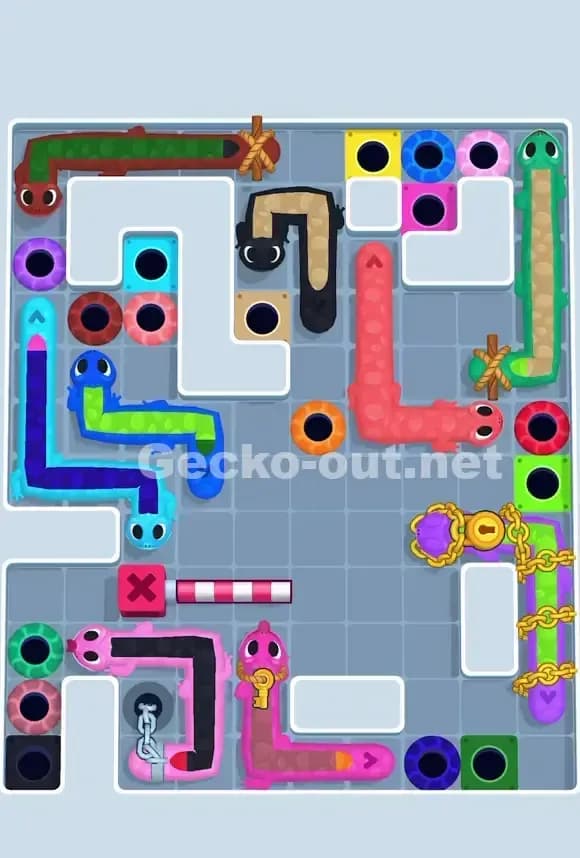
Gecko Out Level 696 is a tightly packed puzzle that'll test your spatial reasoning and planning skills. You're working with roughly a dozen geckos spread across the board in multiple colors—reds, blues, greens, oranges, pinks, cyans, and purples—and each one needs to find its matching colored hole to escape. What makes this level brutal is the sheer density of obstacles: white barrier walls carve the board into disconnected sections, multiple geckos are linked together in gangs (meaning they move as a single long unit), several exits are locked or frozen with visible padlocks and chains, and there are toll gates and warning holes scattered throughout that'll trap you if you're not careful. The board feels like a mechanical lock where every piece has to move in exactly the right sequence, or the whole thing jams.
Win Condition and Timer Pressure
Your goal is straightforward: drag each gecko's head along a path to guide its body safely to a hole of the same color before the timer runs out. The challenge isn't just finding a valid route for one gecko—it's finding routes for all of them simultaneously without any overlaps, without them crossing locked exits, and without letting the timer hit zero. This is where Gecko Out Level 696 becomes devilishly tricky. The drag-path mechanic means the gecko's body follows the exact trajectory you draw, which sounds simple until you realize that a long gecko's tail might be occupying critical pathways that other geckos need to use. You're essentially solving a three-dimensional puzzle in two dimensions: you have to think not just about where each gecko is going, but where its body will be during transit, and how that blocks or unblocks routes for the rest.
Pathing Bottlenecks and Logical Traps in Gecko Out Level 696
The Critical Bottleneck: Center-Right Corridor and Linked Gang Geckos
The single biggest bottleneck in Gecko Out Level 696 is the center-right area where you'll find a gang of linked geckos (look for the chained or connected heads) that form an L-shaped or zigzag blob across multiple tiles. This gang is your traffic jam. Because these geckos are linked, they move as one massive unit, and their body occupies a ton of real estate. If you don't route this gang out early and cleanly, every other gecko on the board gets stuck waiting. I learned this the hard way on my first few attempts—I kept trying to clear the smaller, isolated geckos first, thinking I'd have an easier time. Wrong. By the time I was ready to move the gang, their massive length had nowhere to go because I'd already placed other geckos' bodies in their path. The solution is counterintuitive: move the gang first, or at least identify their exact exit path before moving anything else.
Subtle Trap One: Frozen or Toll-Gated Exits
Gecko Out Level 696 includes at least one or two exits that are visibly locked—you'll see padlocks, chains, or ice crystals on them. These holes are red herrings that waste your time if you're not paying attention. You might drag a gecko's head all the way to what looks like its color match, only to discover the exit is blocked and your gecko is now stranded in a dead end. Before you commit to any path, scan the board for exit indicators: is that hole actually accessible, or does it have a lock or warning symbol? This sounds obvious, but when you're under timer pressure and squinting at a crowded board, it's easy to miss.
Subtle Trap Two: White Barrier Walls Creating One-Way Corridors
The white walls aren't just visual barriers—they're the skeleton of the puzzle. Gecko Out Level 696 uses them to create narrow corridors and dead ends. I noticed that some walls form U-shaped or spiral patterns that look like they offer multiple routes but actually trap you in a corner once you commit. You need to pre-trace potential paths with your eyes before dragging, imagining the gecko's body flowing along the corridor. If a wall blocks the exit of a corridor on both sides, that's a trap, and any gecko you send down that path is wasting precious time turning around.
Personal Reaction: The "Aha" Moment
Honestly, Gecko Out Level 696 frustrated me for a solid five minutes. I kept restarting and failing at the 5-second mark, watching the timer tick down while two or three geckos were still on the board. Then I took a step back, put my controller down, and actually looked at the board as a whole system instead of treating each gecko as an individual puzzle. That's when it clicked: I wasn't failing because I couldn't find individual paths—I was failing because I was solving them in the wrong order. The moment I realized the gang gecko had to move first, everything else unraveled beautifully. Gecko Out Level 696 went from "impossible" to "totally doable" just by reordering my approach.
Turn-by-Turn Path Strategy to Beat Gecko Out Level 696
Opening: Secure the Gang and Clear the Center
Start by moving the linked gang gecko out of the board entirely. This is non-negotiable. Identify which color hole they match, trace a path from their current position that avoids all walls and other geckos, and execute that drag cleanly. Don't park them temporarily—get them out. Once the gang is gone, you've reclaimed a huge chunk of board space. Next, tackle any isolated geckos in the center of the board. These are your "free" moves because they're not blocking anyone yet. Move one central gecko at a time toward its matching hole, being careful not to place their body in a corridor another gecko will need later. For example, if you have a cyan gecko in the middle and a cyan hole in the upper-left corner, drag that gecko out via the least congested route possible. Think of the opening phase as clearing rubble: you're removing the biggest obstacles and the easiest wins to shrink the visual clutter and buy yourself breathing room.
Mid-Game: Choreograph Multi-Gecko Exits and Avoid Body-Blocking
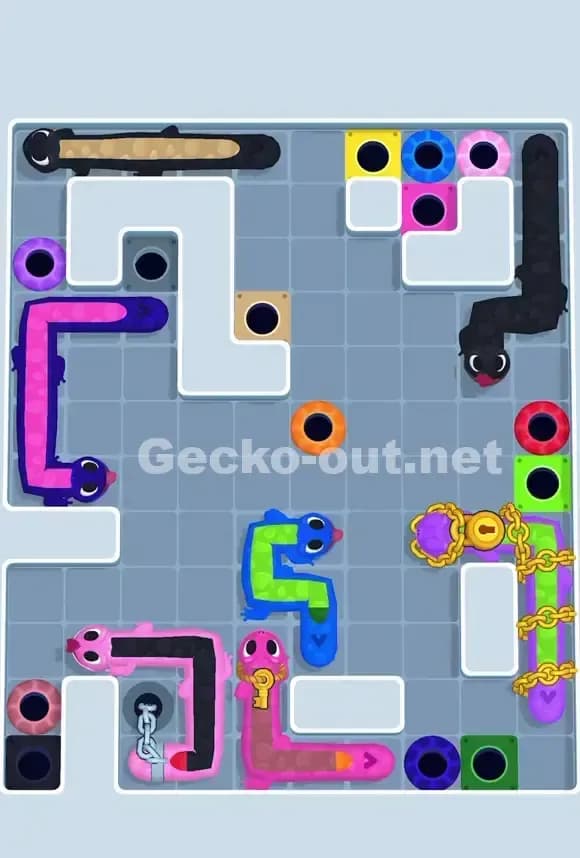
Once the center is clearer, you'll have multiple geckos remaining in different regions. Here's where the choreography matters. Identify the geckos that share corridors or pathways—for instance, a green gecko and a blue gecko that both need to cross the same horizontal tunnel. You can't move them simultaneously, obviously, so you'll have to move one first, park it safely in a holding zone (like a corner where its body won't interfere with the other gecko's path), and then move the second gecko. The key insight is this: a gecko doesn't have to move all the way to its hole immediately. You can drag it partway, stopping it in a safe location, and leave its body there while you move other geckos around it. This is your "temporary parking" strategy, and it's essential for Gecko Out Level 696. Be ruthless about planning these intermediate positions. Visualize where each gecko's body will rest and whether it blocks any critical pathways.
End-Game: Exit Order and Timer Management
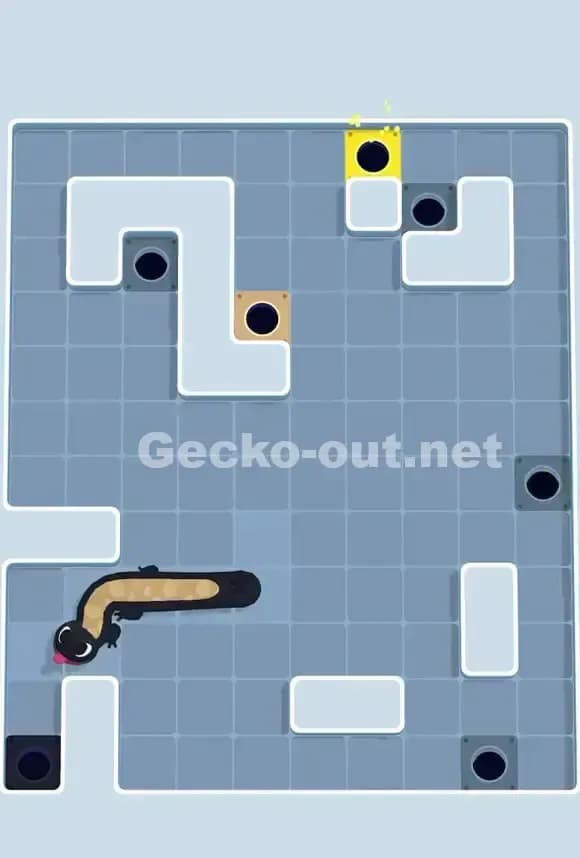
As the board empties, you'll have a handful of geckos left and fewer than 30 seconds on the clock. Don't panic—this is actually the easiest phase if you've done the setup right. Exit the geckos in order of their distance to their holes: closest first, farthest last. This maximizes your safety margin. If a gecko is already three tiles away from its hole, move it now. If a gecko is on the opposite side of the board, leave it for last so you have time to navigate the full path without rushing. Watch the timer religiously during this phase. If you're at 10 seconds and three geckos are still on the board, you might need to accept a booster (like extra time), but if you're at 15+ seconds with only two geckos left, you're golden—just move deliberately and avoid panic-dragging.
Why This Path Order Works in Gecko Out Level 696
Body-Follow Pathing and Untangling Instead of Tightening
Gecko Out Level 696's core mechanic is that the body follows the head's path exactly, creating a "tail" that occupies multiple tiles. The genius of the "gang first, isolated second, end-game last" strategy is that it respects this mechanic instead of fighting it. By removing the gang early, you eliminate the longest, most cumbersome tail from the board, freeing up the corridors it would otherwise block. Each subsequent gecko you move doesn't have to contend with that massive obstacle, so you're actually untangling the knot instead of making it worse. If you tried to move geckos in random order, you'd eventually find yourself in a situation where a gecko's body is lying across a corridor that another gecko desperately needs, and you'd have no choice but to restart. Gecko Out Level 696 punishes poor sequencing, but it rewards strategic thinking.
Pausing to Read vs. Committing to Speed
The timer in Gecko Out Level 696 creates pressure to move fast, but speed isn't the real win condition—correct sequencing is. I recommend a hybrid approach: spend the first 20–30 seconds pausing and reading the board, mentally rehearsing the first three to four gecko movements without touching anything. Once you've got that plan locked in, commit to fast, confident drags. This prevents the dreaded "undo spiral" where you make a mistake, restart, and lose momentum. For Gecko Out Level 696, a calm, planned approach beats frantic clicking every single time.
Booster Strategy: When to Use Extra Time or Hints
Gecko Out Level 696 doesn't require boosters if you execute the strategy correctly, but they're useful insurance. If you find yourself with two geckos left and only five seconds on the clock, using an extra-time booster is a reasonable call—it's not cheating, it's acknowledging that you've already solved the puzzle logically and just need a few more seconds for execution. A hint booster can also help if you're stuck identifying the gang gecko or the optimal exit routes, but I'd recommend trying the logic yourself first. Gecko Out Level 696 is designed to be solvable, and the satisfaction of cracking it without boosters is worth the extra attempts.
Mistakes, Fixes, and Logic You Can Reuse in Other Gecko Out Levels
Common Mistake One: Moving Geckos to Holes Too Early
Players often drag a gecko all the way to its hole immediately, locking its body in place prematurely. Fix: Move geckos in a sequence that opens up the board gradually, not one that fills up corridors. On Gecko Out Level 696, wait until the end-game phase before moving geckos to their final holes.
Common Mistake Two: Ignoring Locked or Chained Exits
You spot a hole that matches a gecko's color and go for it, only to discover it's frozen or padlocked. Fix: Scan all holes on the board at the start and mark which ones are accessible. For Gecko Out Level 696, visually flag locked exits so you don't waste time routing geckos toward them.
Common Mistake Three: Not Pre-Tracing Paths Before Dragging
You drag a gecko head into a corridor without visualizing whether there's an exit. Fix: Use your eyes first, your controller second. Trace the intended path with your finger on the screen before committing to a drag. Gecko Out Level 696 has several U-shaped dead ends; pre-tracing saves you from these traps.
Common Mistake Four: Parking Gecko Bodies in Critical Corridors
You move a gecko halfway to safety and leave its body blocking a major pathway. Fix: Identify which corridors are shared and only use them when it's that gecko's turn to exit. Plan temporary parking spots in corners or dead ends where bodies won't interfere.
Common Mistake Five: Underestimating Gang Gecko Complexity
You treat linked geckos like regular geckos and move them whenever. Fix: Prioritize gang geckos. Their size makes them the first mover on Gecko Out Level 696. Once they're out, everything else becomes dramatically simpler.
Reusing This Logic on Similar Levels
Any Gecko Out level with linked geckos, frozen exits, or multiple choke points should be tackled using this same framework: remove gangs first, isolate central geckos second, handle perimeter geckos last. The principle is universal. If you're facing a level with even tighter packing than Gecko Out Level 696, the "temporary parking" technique becomes even more critical—you might need to shuffle geckos through three or four intermediate positions before they reach their holes.
Final Encouragement
Gecko Out Level 696 is genuinely challenging, and it's okay if it takes you a few attempts to see the pattern. But I promise you that once you understand the sequencing logic and the body-follow mechanic, you'll beat it decisively. The level isn't unfair; it's just asking you to think ahead. That's the whole beauty of Gecko Out. You've got this.