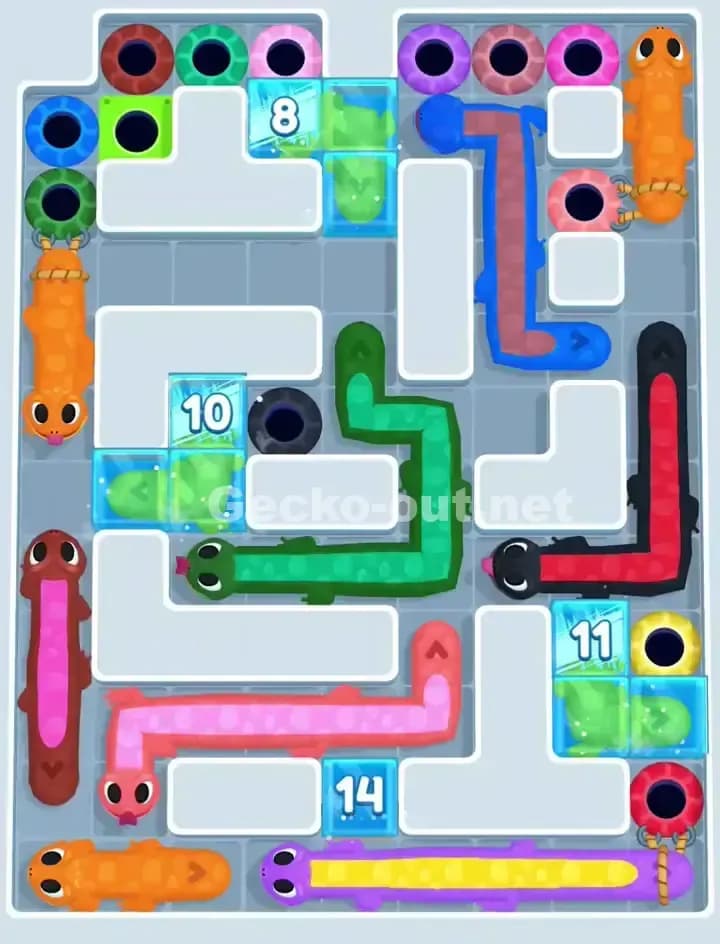
Gecko Out Level 1162 Solution Walkthrough | Gecko Out 1162 Answer
How to solve Gecko Out level 1162? Get step by step solution & cheat for Gecko Out level 1162. Solve Gecko Out 1162 easily with the answers & video walkthrough.


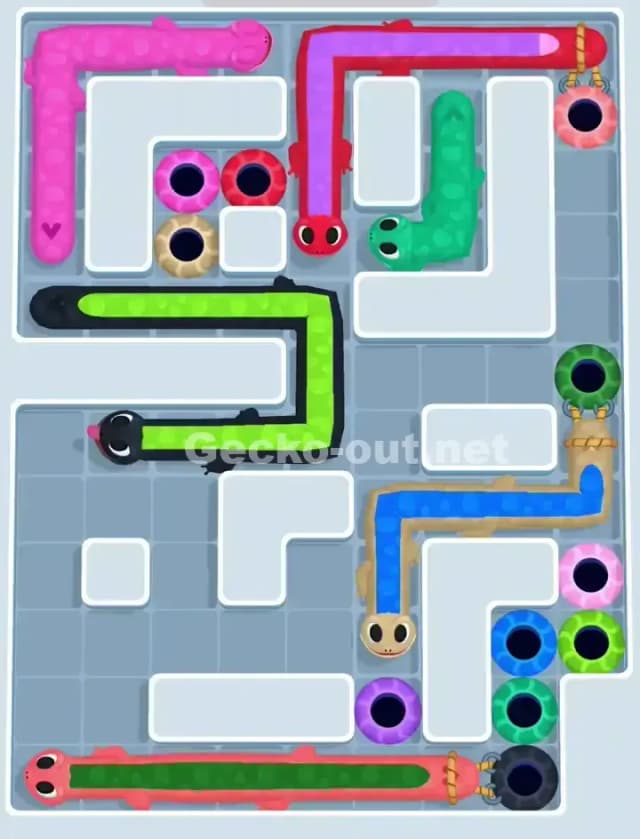
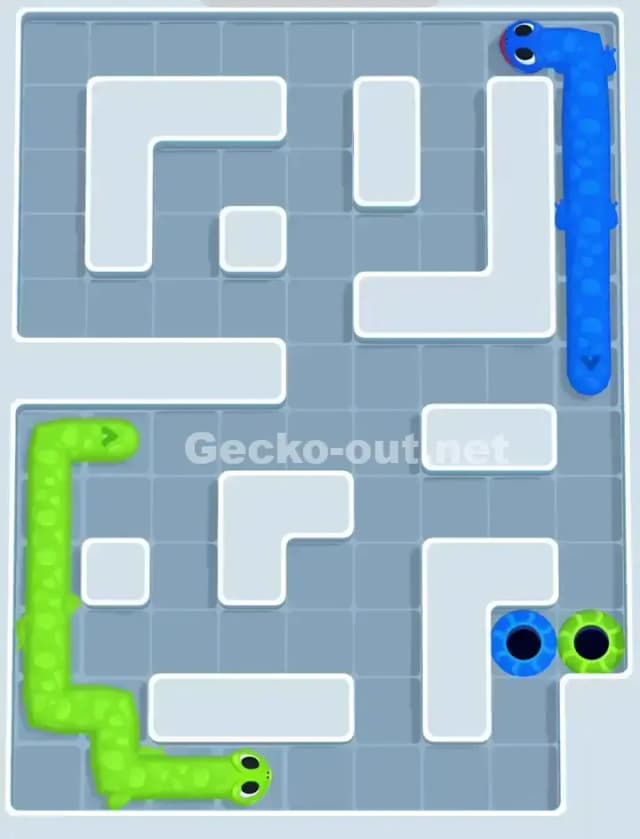
Gecko Out Level 1162: Board Layout, Rules, and Win Condition
Board Overview and Starting Setup
Gecko Out Level 1162 is a dense, multi-gecko puzzle that throws a lot at you right from the start. You're looking at six geckos of different colors—magenta, red, orange, yellow, blue, green, and pink—each with their own matching hole somewhere on the board. The layout is a chaotic mix of winding corridors, narrow passages, and walls that form a tight maze. Three of these geckos are "gang" geckos, meaning they're linked together and must move as a single unit, which immediately adds complexity. The board is divided into distinct regions by white walls, and several holes are positioned in corners or dead ends that require precise pathing to reach. The timer starts at a moderate pace, but you'll feel the pressure once you realize how many moves need to happen in sequence before anyone can escape.
Win Condition and Timer Pressure
To win Gecko Out Level 1162, every gecko must reach its matching colored hole before the timer hits zero. This isn't just about finding a path; it's about orchestrating a sequence where geckos exit in the right order to avoid blocking each other's escape routes. The body-follow rule—where the gecko's body traces the exact path you drag the head—means one careless drag can leave a gecko's tail blocking a critical corridor. You can't retry individual moves; once you drag a head, that path is locked in until the gecko either escapes or you restart. The timer encourages speed, but rushing leads to tangles that waste even more time, so you need to balance confidence with care.
Pathing Bottlenecks and Logical Traps in Gecko Out Level 1162
The Central Corridor Chokepoint
The biggest bottleneck in Gecko Out Level 1162 is the narrow central corridor running horizontally through the middle of the board. Multiple geckos need to pass through this zone to reach their holes, but it's barely wide enough for one full gecko body at a time. The yellow-and-blue gang gecko is parked right in this region, and it's the longest snake on the board. Until you move it out of the way—or route it toward its exit—you can't send any other gecko through that lane without risking a collision. This is your first critical decision: do you move the gang gecko through the corridor first, or do you find an alternate route for the other geckos? I'd say the gang gecko must go first, because it's the least flexible in terms of routing options.
The Right-Side Exit Squeeze
The right edge of Gecko Out Level 1162 has a cluster of holes—blue, green, and pink all competing for space in a tight vertical zone. The walls create a staircase pattern that forces any gecko heading to these holes to navigate a series of turns and narrow passages. The magenta gang gecko on the right side of the board has to navigate around or through this region, and its exit hole is tucked into the very top-right corner. If you misroute the magenta gecko even slightly, its body will block the exit for the blue and green geckos below it. This is a subtle trap because it's not immediately obvious that one wrong turn early on will lock you out later.
The Lower-Left Dead End and the Gang Gecko Tangle
The bottom-left corner has a blue gang gecko that's positioned in a way that makes you think it needs to exit downward, but actually that hole is blocked by walls. The real exit is up and around, requiring a long, looping path that takes up board real estate. When I first played Gecko Out Level 1162, I spent two minutes trying to brute-force the blue gecko toward the bottom corner before I realized the actual hole was on the upper-right side. That "aha" moment—when I finally saw the intended path—made the whole puzzle click. The frustration turned into clarity: you have to read the entire board's geometry before committing to moves, or you'll waste time and end up with a tangled mess.
Turn-by-Turn Path Strategy to Beat Gecko Out Level 1162
Opening: Clear the Gang Geckos First
Start by tackling the yellow-and-blue gang gecko in the center. This two-headed beast is your biggest obstacle, and it blocks the central corridor. Drag the blue head (the one on the right) upward and then to the right, routing it toward the blue hole in the upper-right region. The path should curve around the white walls to avoid the magenta corridor entirely. This move is long, but it clears the critical center lane and lets you breathe. Once the blue exit is done, the yellow head automatically follows into the yellow hole if it's adjacent, or you'll need a second path for it. Either way, getting this gang gecko off the board eliminates your biggest jam. Park any other geckos temporarily in safe side zones—don't let them wander into the central lane while you're working.
Mid-Game: Unwind the Right-Side Cluster
Next, move the magenta gang gecko from the top-right. This one is curled around the corner and its exit is just below its starting position, but the curl means you have to unwind it carefully. Drag the magenta head downward, then left, then down again, following the corridors until it reaches the magenta hole at the top-left. This path is long and serpentine, but it's safer than trying to force it through tight zones. As you move this gecko, you're also opening up space on the right edge for the blue and green single geckos that need to exit there. Keep the orange and red geckos in the upper-left zone—they're waiting for your signal.
Mid-Game Continued: Handle the Blue Bottom Gecko
The blue gang gecko at the bottom-left needs to go next. It's a long, horizontal snake, and its exit hole (blue, upper-right) is on the opposite side of the board. This is a moment where you pause and think: the path has to go up from the bottom-left, around the green gang gecko (which is still on the board), and then to the right toward the blue hole. Drag the blue head upward first, then right, making sure it doesn't collide with the green gang gecko's body. If the paths touch, you're stuck. The key is to route the blue gecko along the top edge of the board, where there's more room. This move takes time, but it's necessary to avoid the trap.
End-Game: Exit Order and Timer Management
Once the gang geckos are mostly clear, you're left with the single-headed geckos: red, orange, pink, and green. These are faster to route, but their holes are in tight clusters. Exit the red gecko first from the upper-left—its hole is nearby, so this is quick and builds momentum. Follow with the orange gecko, which also has a hole on the left side. Then move to the green gang gecko's remaining exit (the green hole on the lower-right), and finally the pink gecko, which has a hole in the bottom-right corner. By this point, the board should be relatively clear, and you're just threading the last few through their respective lanes. Watch the timer; if you're below 20 seconds and still have two geckos on the board, move faster and trust your reads of the paths.
Why This Path Order Works in Gecko Out Level 1162
Head-Drag Logic and Body-Following Mechanics
The strategy for Gecko Out Level 1162 relies on understanding that the body is a consequence, not a choice. When you drag a head, every tail pixel follows that exact route. This means long geckos (like the gang geckos) create "footprints" on the board that block other geckos from crossing. By moving the longest, most inflexible geckos first, you're erasing those footprints and opening lanes for the shorter, more maneuverable geckos to slip through later. If you tried to exit a single gecko first, its body would still occupy a narrow corridor while gang geckos pile up behind it. You'd spend the last half of your timer trying to untangle a knot that was preventable. The order matters because it's about geometry, not about which gecko is "first"—it's about which gecko is blocking the most future moves.
Balancing Speed and Caution
Gecko Out Level 1162 gives you enough timer to win, but not enough to be careless. I recommend a two-phase approach: in the first minute, spend 10–15 seconds studying the board and identifying which corridors are shared (the central lane, the right-side cluster, the lower paths). Then commit to moves decisively. Pause once per gecko to check if the path you're about to drag will block a future gecko's hole. You're not restarting every few seconds; you're making one strategic pause per gecko, which costs almost no time but prevents most disasters. Once you're on the third or fourth gecko, you can feel the timer's weight and move faster because you've already proven the sequence works.
Boosters: Optional but Helpful at Specific Moments
Gecko Out Level 1162 doesn't require boosters, but an extra-time booster can be worth using if you're at 10 seconds and have two geckos left. A hint booster is less useful here because the bottleneck is strategic (gang geckos first, singletons last), not hidden. If you find yourself stuck, a hammer tool might help break a frozen exit, but I don't recall a frozen exit being the main obstacle on this level. Save boosters for when you've executed the plan and just need a few more seconds to land the final geckos in their holes.
Mistakes, Fixes, and Logic You Can Reuse in Other Gecko Out Levels
Five Common Mistakes and How to Avoid Them
Mistake 1: Moving single geckos before gang geckos. If you try to exit the red gecko first, its body will still be occupying a corridor when the yellow-blue gang gecko needs to move through. Fix: Always identify which geckos are longest and move those out of the way first. It feels counterintuitive, but it's the core rule.
Mistake 2: Forgetting that an exit hole is behind a wall. On Gecko Out Level 1162, at least two holes are tucked behind corners. You'll drag a gecko halfway across the board before realizing the hole was in the opposite direction. Fix: Before you drag, trace with your finger or eyes from the gecko's starting position to its hole, following the actual corridors, not straight lines.
Mistake 3: Creating a body tail that bridges two corridors. When you drag a long gecko, its tail can accidentally block a narrow passage for the next gecko. Fix: When dragging, make sure the path curves away from future lanes. Don't let the body cross back over itself or hover near shared passages.
Mistake 4: Rushing the last gecko and missing the hole by one cell. With low timer, you panic-drag the final gecko and overshoot the exit. Fix: On the last gecko, drag slowly and deliberately. The few extra seconds spent on precision are faster than restarting.
Mistake 5: Not parking "waiting" geckos in safe corners. If you leave a gecko in the central lane while you work on another, you'll create collisions. Fix: As soon as you've identified a gecko's turn, move it to a corner or dead-end zone where it won't interfere.
Reusing This Logic on Similar Levels
The gang-gecko-first principle transfers directly to any Gecko Out level with multiple long, linked geckos. If a level has three gang geckos and three single geckos, always exit gang geckos in order of length—longest first. The corridor-mapping skill (tracing exits before dragging) works on every puzzle that has hidden or tucked-away holes. And the body-footprint awareness becomes second nature: you'll start thinking of every gecko you move as a temporary obstacle that opens space for the next gecko, not as an individual problem to solve.
Final Thoughts
Gecko Out Level 1162 is genuinely tough—there's no shame in finding it frustrating the first time. But it's also absolutely beatable with a clear plan. Once you understand that you're untangling a knot by removing the biggest knots first, not the smallest, the whole puzzle becomes logical instead of chaotic. You've got this. Move those gang geckos, open those lanes, and watch the board clear. Every gecko that escapes is proof the strategy works. Keep your head up, trust the sequence, and you'll send all six geckos home before that timer runs out.