Gecko Out Level 712 Solution Walkthrough | Gecko Out 712 Answer
How to solve Gecko Out level 712? Get step by step solution & cheat for Gecko Out level 712. Solve Gecko Out 712 easily with the answers & video walkthrough.
Gecko Out Level 712: Board Layout, Rules, and Win Condition
Starting Board: Geckos, Colors, and Obstacles
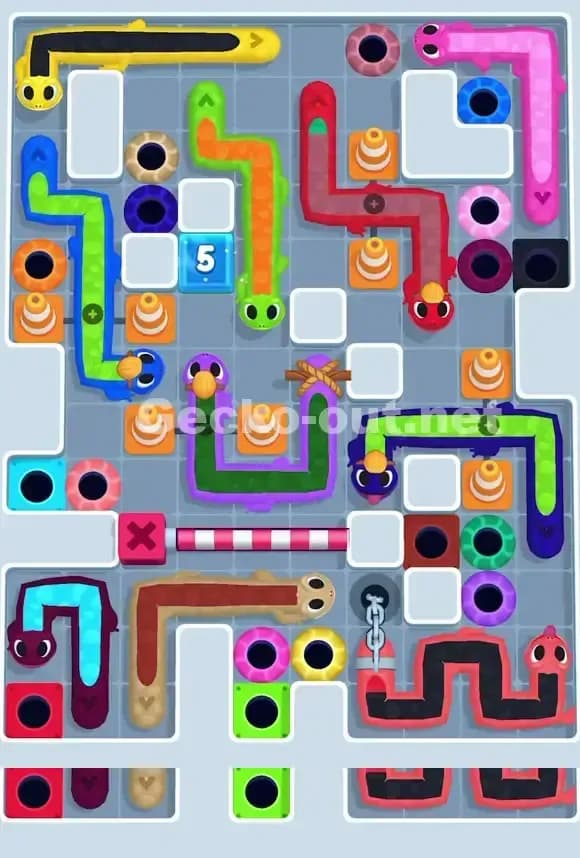
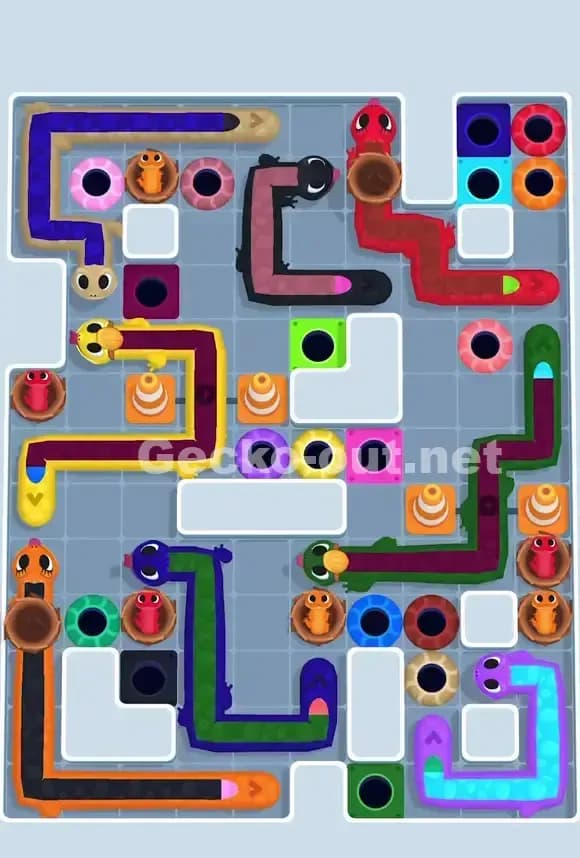
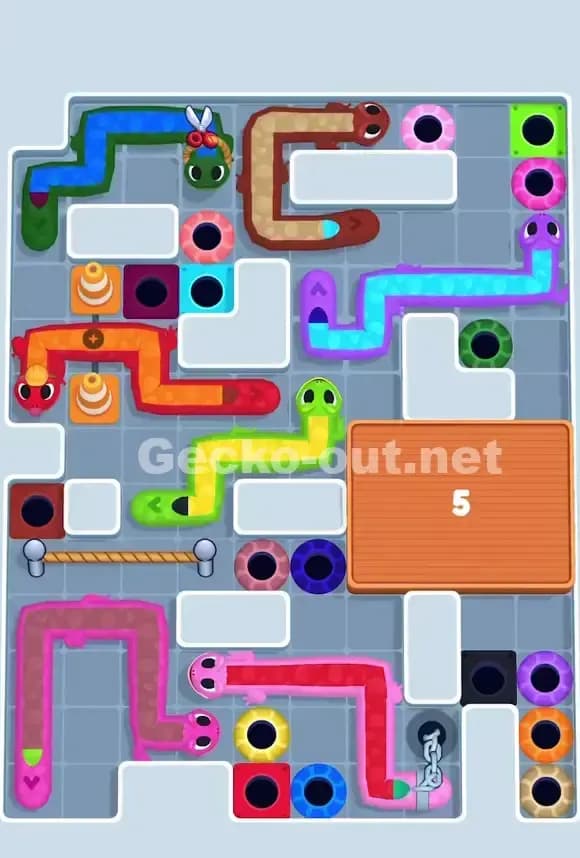
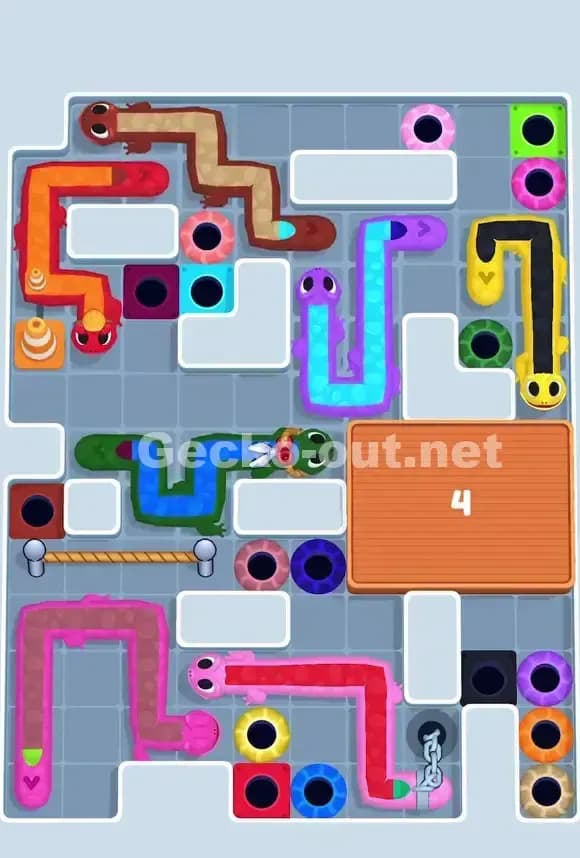
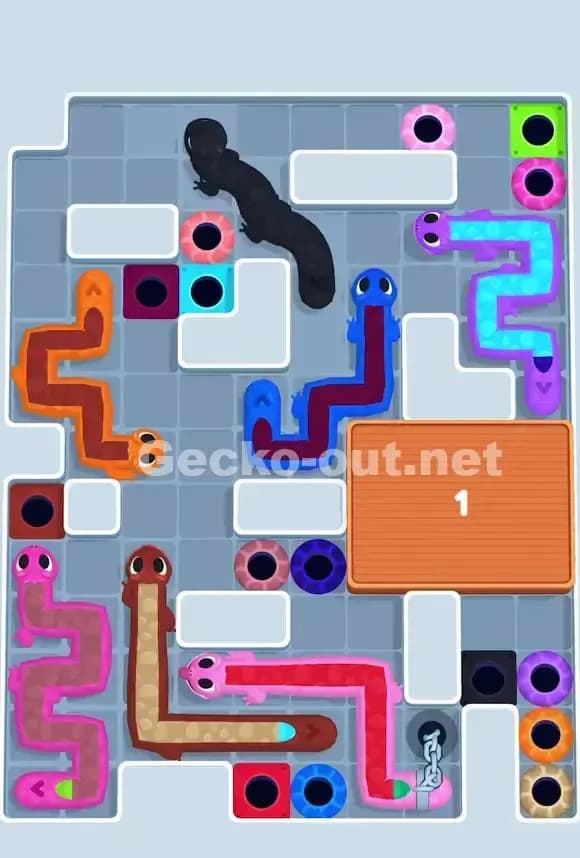
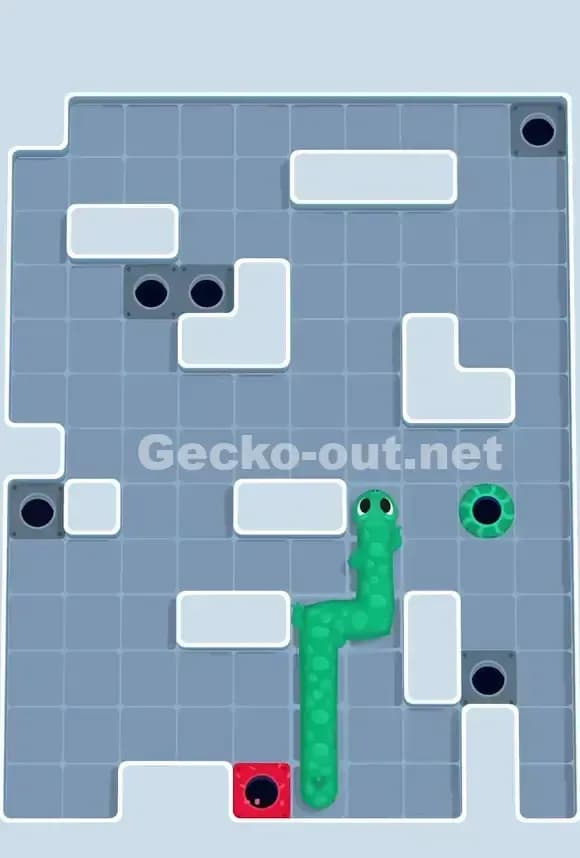
Gecko Out Level 712 is a densely packed puzzle that tests your ability to navigate multiple geckos through a tight, interconnected grid. You're working with approximately eight to ten geckos spread across the board in various colors—red, pink, blue, yellow, green, and purple among them. The board itself is dominated by white obstacle blocks scattered throughout, creating natural corridors and choke points that force you to plan your routes with surgical precision. There's also a large orange toll gate marked with a "5" on the right side of the board, which serves as both a visual landmark and a timing pressure point. Several geckos are positioned in gang-like clusters (linked together), and you'll notice frozen or icy exits scattered around the perimeter. The sheer number of colored holes means every gecko has a specific escape route, and any miscalculation sends you spiraling back to the start.
Win Condition and Timer Pressure
Your mission in Gecko Out 712 is straightforward: get every single gecko to its matching-colored hole before the timer runs out. The timer is unforgiving, and it doesn't care if you're 95% done—all geckos must escape or you fail the level. The drag-and-path mechanic means that once you commit to a route by dragging a gecko's head, its body follows that exact trajectory. This creates a spatial problem: if you're not careful, a gecko's body can block exits or corridors that other geckos desperately need. The combination of tight spacing, gang geckos that move as units, and the relentless clock makes Gecko Out Level 712 feel like a race against both time and geometry.
Pathing Bottlenecks and Logical Traps in Gecko Out Level 712
The Central Corridor Bottleneck
The biggest bottleneck in Gecko Out 712 is the central vertical corridor running down the middle of the board. Multiple geckos need to pass through or near this space to reach their exits on the left, right, and bottom sections. If you route a long gecko (especially one of the gang geckos) through this corridor first without thinking ahead, you'll create a wall that traps shorter geckos behind it. The body of that first gecko becomes an obstacle that makes it nearly impossible to thread the remaining geckos through without restarting. I found myself stuck here multiple times, watching my carefully planned routes collapse because a single red gecko's tail was blocking the only viable path for a pink gecko further down the chain.
The Gang Gecko Trap
There are linked geckos on this level that move as a single unit. These aren't your friends—they're your biggest spatial headache. When you drag one part of a gang gecko, the entire linked group follows, and their combined length can easily block multiple corridors at once. The trick is recognizing which gang gecko should move first and in what direction to minimize obstruction. If you move a gang gecko sideways before moving it out, you might accidentally seal off an entire quadrant of the board for unrelated geckos.
Frozen Exits and the Warning-Hole Trap
Gecko Out Level 712 includes frozen or icy exits that can't be used immediately. You'll see them marked clearly, and the temptation is strong to ignore them—but that's a trap. These blocked holes mean certain geckos have to take longer, more convoluted routes, which eats up time and space on the board. Additionally, there are warning holes (decoys) that look like valid exits but aren't your gecko's color. It's easy to second-guess yourself and accidentally aim a gecko toward the wrong hole, wasting precious seconds in the process.
The Moment It Clicked
I'll be honest: the first three attempts at Gecko Out 712 felt like pure chaos. I was moving geckos frantically, hoping something would work. Then I paused, stepped back, and realized the solution wasn't about speed—it was about sequencing. By identifying which geckos absolutely had to move first to unlock the board for others, the puzzle transformed from a frustrating mess into a logical puzzle I could actually solve. That "aha" moment came when I spotted the one gecko that, if moved just right, would create a domino effect opening up three other paths simultaneously.
Turn-by-Turn Path Strategy to Beat Gecko Out Level 712
Opening: Clear the Top-Left and Position Safely
Start by tackling the gecko clusters in the upper-left portion of the board. This is the least congested region, and clearing it early gives you room to maneuver the more difficult geckos later. Drag the green gecko from the top-left area first—its path is relatively straightforward, and getting it out of the way clears a natural parking space for other geckos you'll need to hold in place temporarily. Next, move the blue gecko in the upper area toward its exit. Don't rush; ensure its body doesn't block the central corridor as it exits. As you clear these initial geckos, you're essentially creating "dead zones" where bodies can rest without interfering with main traffic lanes.
Mid-Game: Untangle the Gang Geckos and Preserve the Center Lane
Once the top portion is clear, focus on the gang gecko clusters. The red and pink gang geckos are the critical ones here. Move the red gang gecko upward and out first—this clears a significant chunk of the left-center area. Then carefully position the pink gang gecko by dragging it along the outer edges of the board rather than through the center. The key here is patience: take extra moves to route around obstacles rather than trying to force through the center corridor. This preserves the central vertical lane for the smaller, more flexible geckos that come later. While these gang geckos are moving, keep an eye on the yellow and lime geckos in the middle sections—they're your wildcards. Park them temporarily in safe corners where their bodies won't interfere with the main exit routes.
End-Game: Execute a Cascading Exit Sequence
As the timer ticks down and most geckos are out, you'll typically have three to four geckos left, usually smaller or more awkwardly positioned ones. This is where sequencing becomes critical. Move the geckos positioned highest on the board first, working your way downward. This prevents bodies from falling into holes or corridors below that remaining geckos need to traverse. Aim for a cascading exit where each gecko's departure opens the path for the next one, rather than moving them in random order. If you're running low on time (say, under 10 seconds left), commit to quick, direct paths rather than trying to optimize every pixel—a "good enough" path that gets a gecko out beats a perfect path you don't have time to execute.
Why This Path Order Works in Gecko Out Level 712
How Head-Drag and Body-Follow Logic Untangles the Knot
The core of Gecko Out 712's design is that geckos' bodies follow the exact path you drag their heads through. This seems simple, but it's actually the key to untangling the knot rather than tightening it. By moving geckos from the least-congested areas first (top-left), you're essentially removing obstacles in the order that opens the most space for the remaining geckos. Each successful exit isn't just one fewer gecko—it's one fewer moving obstacle on the board. The gang geckos, despite their intimidating size, actually become tools for clearing space when you route them correctly. Their bulk, if moved outward and downward properly, actually creates a "wall" that keeps smaller geckos on their intended paths rather than getting lost in the warren of white obstacles.
Timer Management: When to Pause and When to Commit
Gecko Out Level 712 demands a specific rhythm of thinking and acting. Spend the first 15–20 seconds analyzing the board without moving anything. Identify your bottleneck (usually the central corridor), figure out which gecko needs to move first to clear it, and sketch a mental path for that gecko. Once you've committed to a move, execute it decisively—hesitation wastes time. However, pause briefly between each gecko's exit to reassess the remaining board. You don't need a full strategy for all eight geckos upfront; knowing the first two or three moves and having a general direction for the rest is sufficient. The timer is typically 90–120 seconds depending on your difficulty setting, which is tight but generous enough if you're not wasting time on failed paths or second-guessing yourself.
Booster Strategy: When They're Actually Useful
Gecko Out Level 712 is absolutely solvable without boosters if you nail the sequencing, but here's the honest truth: if you're running under 15 seconds with two geckos still on the board, an extra time booster (if available) is your safety net. Don't use it preemptively—use it only if you're genuinely going to fail otherwise. A hint booster is less valuable here because the solution is fundamentally about spatial reasoning rather than hidden mechanics. The hammer tool (if this game has it) could help you break through an icy exit if one is blocking your preferred path, but again, this should be a last resort, not a crutch. The best "booster" is actually a restart: if you realize at the 30-second mark that you've created an unsolvable knot, bail out and try again fresh rather than limping toward failure.
Mistakes, Fixes, and Logic You Can Reuse in Other Gecko Out Levels
Common Mistakes and How to Fix Them
Mistake #1: Moving the Longest Gecko First. Players often grab the most visible gecko (usually a gang gecko) and drag it immediately, thinking they're being efficient. This almost always blocks critical corridors. Fix: Start with smaller, isolated geckos on the periphery of the board. Let them clear the way for the big ones.
Mistake #2: Ignoring the Frozen Exit Until It's Too Late. You see an icy hole and think, "I'll deal with that later." Then later arrives, and you realize that gecko has no viable alternate route. Fix: Map out frozen exits at the start and identify which geckos will be affected. Plan longer routes for those geckos immediately.
Mistake #3: Threading Through the Center Corridor. The center corridor is tempting because it looks like the fastest route. In reality, it's a trap because it bottlenecks everything. Fix: Route geckos around the edges of the board, even if it adds a few extra grid squares. The time you save by avoiding collisions far outweighs the longer path.
Mistake #4: Dragging Without Previewing. You start dragging a gecko's head and realize halfway through that the body is about to collide with a wall or another gecko. Fix: Before releasing, trace the entire path mentally. Most versions of Gecko Out show you the path as you drag, so use that visual feedback to abort bad paths before committing.
Mistake #5: Panicking Under Timer Pressure. With 20 seconds left and three geckos still on board, you start moving geckos erratically. This causes collisions and failed attempts. Fix: Take a breath, identify the one gecko that must move next to unlock the others, and execute that move calmly. Panic is the real killer.
Reusing This Strategy on Similar Levels
The logic you develop on Gecko Out 712 transfers directly to gang-gecko levels, frozen-exit levels, and any puzzle with tight spatial constraints. The key principle is reverse-engineering the exit sequence: start by imagining which gecko exits last, then work backward to determine which geckos must exit first to make that possible. This "exit backward, move forward" thinking works on nearly every Gecko Out level with multiple obstacles and gang geckos. Additionally, the practice you get threading small geckos through tight corridors will make you faster and more confident on other claustrophobic levels.
Final Encouragement
Gecko Out Level 712 is genuinely tough—it's designed to make you think spatially and plan ahead—but it's absolutely beatable with a clear strategy. The geckos aren't your enemies; the board layout is. Once you recognize that clearing space is more important than rushing toward exits, the puzzle clicks into place. You've got this. Take it slow, trust the plan, and watch as that timer counts down with all eight geckos safely in their holes.