Gecko Out Level 806 Solution Walkthrough | Gecko Out 806 Answer
How to solve Gecko Out level 806? Get step by step solution & cheat for Gecko Out level 806. Solve Gecko Out 806 easily with the answers & video walkthrough.


Gecko Out Level 806: Board Layout, Rules, and Win Condition
Understanding the Board and Starting Position
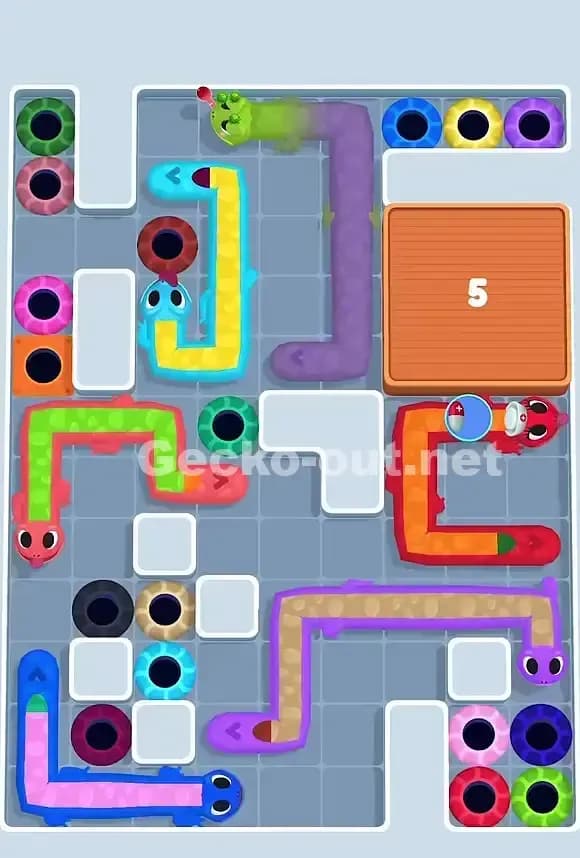
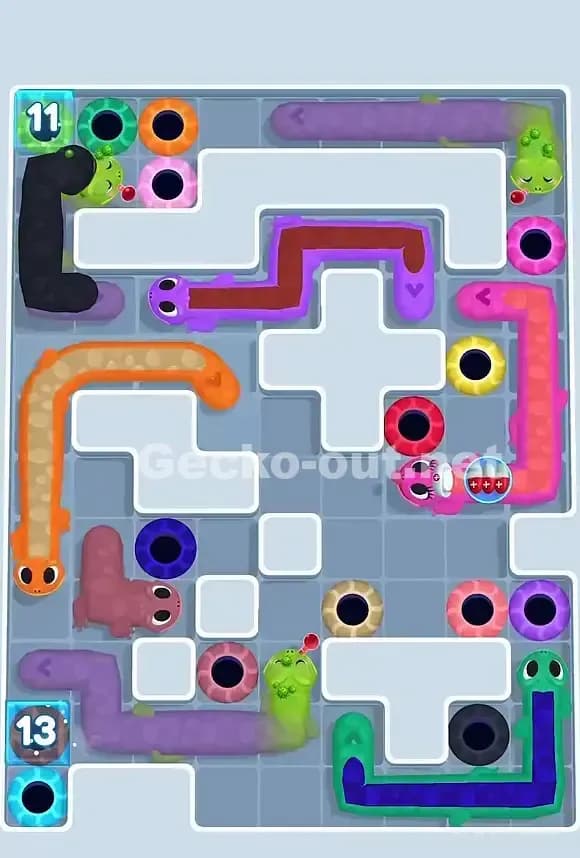
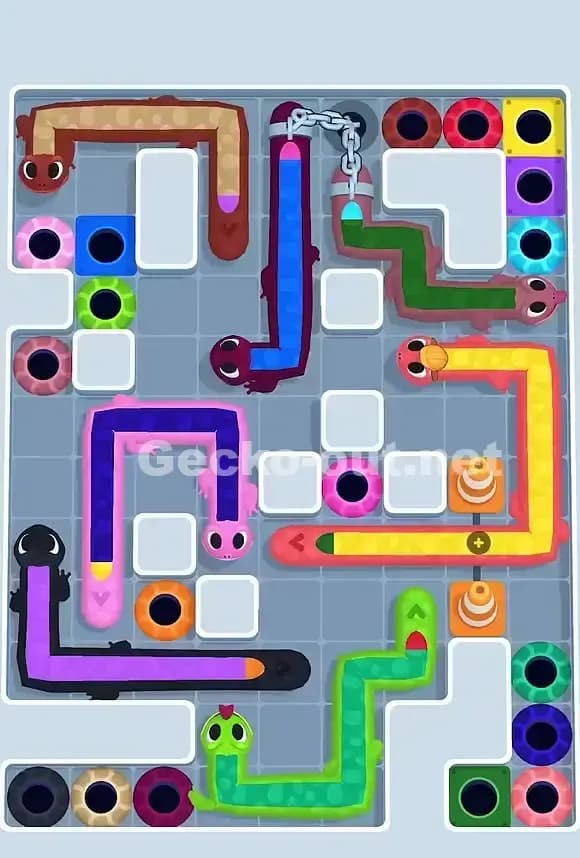
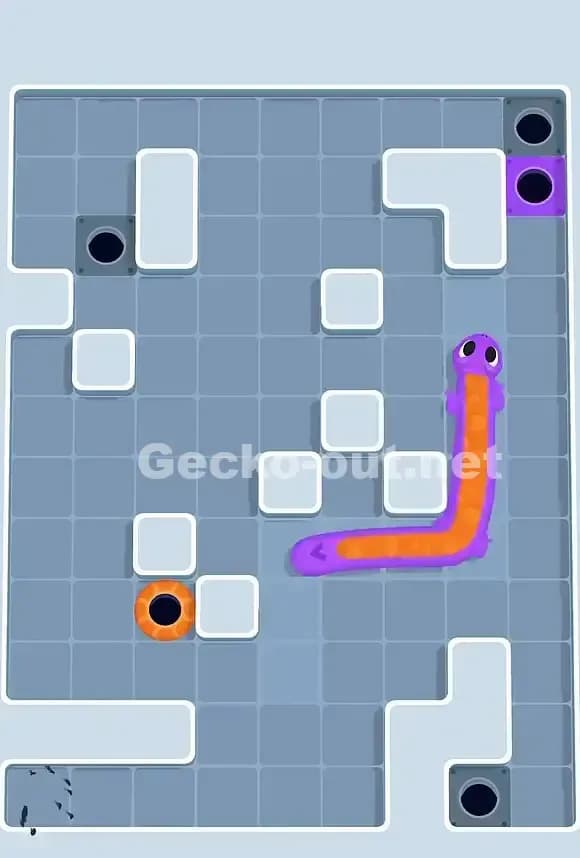
Gecko Out Level 806 is a multi-colored puzzle that tests both spatial reasoning and time management. You're working with approximately eight geckos of different colors—red, blue, green, pink, purple, orange, cyan, and yellow—each trapped in a complex maze of tight corridors and stacked exits. The board itself is a dense grid where every pixel matters; there's almost no wasted space, and walls create a labyrinthine path system that forces you to think three or four moves ahead. The geckos start scattered across the map, some isolated in corners and others dangerously close to their neighbors, which immediately signals that collision avoidance will be your biggest headache.
The key obstacles you'll face include multiple colored exit holes tucked into corners and edges, several white blocking platforms that act as walls, and a tight central corridor that's basically the only throughway for multiple geckos. What makes Gecko Out 806 particularly brutal is that several geckos are positioned in ways that suggest they were intentionally placed to create traffic jams—if you move the wrong gecko first, you'll lock others into dead ends or force them into paths so convoluted that the timer runs out before they escape.
The Win Condition and Timer Pressure
Your goal is straightforward: drag each gecko's head to guide its body through the maze and into a matching-colored exit hole before time expires. Every gecko must be safely inside a hole of its own color, or you fail the entire level. The timer adds genuine pressure here; Gecko Out Level 806 isn't a relaxing puzzle where you can experiment endlessly. You've got roughly two to three minutes depending on the exact timer value, which means inefficient routing costs you immediately. The drag-path mechanic—where the body follows the exact route you trace with the head—means that backtracking, overlapping, or creating unnecessary loops will eat up precious seconds.
Pathing Bottlenecks and Logical Traps in Gecko Out Level 806
The Central Corridor Bottleneck
The single biggest traffic jam in Gecko Out Level 806 is the central vertical corridor that connects the top-middle area of the board to the lower-middle section. This narrow lane is where at least three or four geckos need to pass through, but they can't occupy the same space simultaneously. If you're not careful about the order and timing, you'll have one gecko blocking another, forcing you to restart. The blue gecko and the pink gecko both need to traverse sections of this corridor, and if you pull blue through first without thinking about where pink needs to go afterward, you'll create a situation where pink's optimal path is suddenly blocked, forcing a longer detour that wastes time.
Secondary Trap: The Upper-Right Maze
The upper-right portion of Gecko Out Level 806 contains a series of nested rectangular paths with multiple colored exits squeezed into tight corners. The red and magenta holes are positioned so closely that dragging a gecko toward one can accidentally guide it past the correct exit and into the wrong one. This is deceptively easy to do because the drag mechanic requires you to be precise with your endpoint; if you drag just slightly past the hole, the gecko will continue following the wall and miss its escape entirely.
The Lower-Left Purple Trap
I'll admit, my first attempt at Gecko Out Level 806 had me stuck here for a solid thirty seconds. The purple gecko in the lower-left corner starts in what looks like a simple alcove, but actually reaching its purple exit hole requires navigating around several white block obstacles and then threading through a tight passage that's only wide enough for one gecko at a time. The moment I realized I needed to move the purple gecko second-to-last rather than early became the turning point in understanding the level's logic. The board wasn't actually random—it was designed with a specific order in mind, and Gecko Out 806 punishes you for ignoring that order.
Turn-by-Turn Path Strategy to Beat Gecko Out Level 806
Opening: Start with the Isolated Green Gecko
Your opening move in Gecko Out Level 806 should target the green gecko positioned in the lower-right area. Why? Because it has the clearest, most direct path to its exit hole, and moving it first clears valuable real estate without creating complications for others. Drag the green gecko's head straight toward the green exit and commit to that path immediately. This shouldn't take more than five to ten seconds, and it removes one body from the board, opening up space for the cramped middle section.
Next, tackle the yellow gecko on the right side. Its yellow exit is relatively close and accessible from its starting position. By handling these two early-game geckos quickly, you're building momentum and reducing the congestion on the board. The key is to move with confidence here—second-guessing yourself costs time without adding strategy.
Mid-Game: Manage the Central Corridor
Once you've cleared the isolated geckos, you're ready to address the central corridor. Start with the blue gecko because its path through the middle is relatively straightforward if you drag it downward first, then left, then navigate it toward the blue exit in the upper-left area. Don't rush this one; plan the exact route before you start dragging, because the body will follow your path precisely, and any wiggle or misplacement will lock you into a suboptimal route.
After blue is safely out, move the cyan gecko through the board. The cyan exit is positioned on the right side, and the cyan gecko's body is long enough that you need to give it a wide berth around the white obstacles. Drag it in a slow, deliberate curve—resist the urge to cut corners, because corner-cutting often results in the gecko's body clipping a wall and causing a path failure.
This is where you should pause for just a moment and survey the board. You've now removed four geckos, and your board should feel significantly less crowded. Take five seconds to mentally trace the remaining paths for the red, pink, purple, and orange geckos. If you see potential collision points, adjust your next move accordingly.
End-Game: Exit Order and Last-Second Precision
For the final four geckos in Gecko Out Level 806, prioritize the ones with the longest bodies first. The pink gecko is a good candidate here because its body is substantial, and its path requires careful navigation around multiple white blocks. Guide it slowly downward and then leftward toward the pink exit, making sure you're not accidentally crossing into areas where other remaining geckos still need to travel.
The purple gecko comes next. Remember that this one requires threading through a tight passage, so drag its head deliberately, giving its body room to follow without jamming. The red gecko is similarly long and should be handled with care, approaching its red exit from the correct angle to avoid overshooting.
Finally, finish with the orange gecko, which should have a clear lane by the time all others are nearly done. As you approach the final gecko in Gecko Out Level 806, watch your timer carefully. If you have more than thirty seconds remaining, you can afford a slightly slower, more cautious approach. If you're under thirty seconds, trust your instincts and execute with speed; hesitation here is more dangerous than slight imprecision.
Why This Path Order Works in Gecko Out Level 806
Head-Drag Pathing and Body-Follow Mechanics
The reason this strategy works for Gecko Out Level 806 is rooted in the game's fundamental mechanic: the gecko's body always follows the exact path traced by the head, no exceptions. By moving isolated geckos first, you're not just clearing them—you're removing potential obstacles that would force other geckos into longer, more complex paths. When you move the blue gecko through the central corridor before attempting the pink gecko, you've already confirmed that the corridor is passable and you've mentally mapped its exact route, reducing decision time when pink's turn comes.
The body-follow rule also means that dragging with intention matters enormously. Sloppy dragging in Gecko Out 806 creates inefficient paths that eat time; precise dragging ensures minimal wasted movement. This is why the order matters: each gecko's path is designed to be tight, and solving them in the wrong sequence forces backtracking or requires finding alternate routes that don't exist within the timer constraints.
Timing: When to Pause and When to Commit
Gecko Out Level 806 demands a balance between planning and action. Spend the first ten to fifteen seconds assessing the board layout, identifying the isolated geckos, and mentally flagging the central corridor as your primary challenge area. Once you've got that mental map, commit to your first move without second-guessing. There's no timer penalty for thinking, but there is a penalty for hesitation in execution.
As you move through Gecko Out 806, pause briefly after every two or three geckos to reassess. Are there any unexpected collisions forming? Is a gecko's path longer than anticipated? These micro-pauses of five to ten seconds can prevent costly mistakes that would add thirty seconds of rework to your run. The sweet spot is committing to your drag with confidence while remaining willing to restart a single gecko's path if you realize mid-drag that you've made an error.
Booster Strategy for Gecko Out Level 806
Honestly, Gecko Out Level 806 doesn't absolutely require boosters if you follow this path order perfectly. However, if you're consistently running out of time by ten to fifteen seconds, deploying an extra time booster around the halfway mark can be the difference between victory and frustration. The hammer-style booster that clears obstacles is less useful here since the obstacles are structural walls, not movable blocks. If you do purchase a booster, time-extension is your best bet, and use it when you've successfully cleared roughly four geckos and still have several complex paths ahead.
Mistakes, Fixes, and Logic You Can Reuse in Other Gecko Out Levels
Five Common Mistakes on Gecko Out Level 806
Mistake One: Moving Geckos in Random Order. Many players attempt Gecko Out Level 806 without a strategic order, hoping that any path will work. This doesn't account for the congestion created when long geckos block short ones. Fix: Always identify isolated geckos and move those first, clearing space methodically rather than randomly.
Mistake Two: Dragging Too Quickly Through Tight Passages. Speed feels good, but in Gecko Out Level 806, a quick drag through a narrow corridor often results in the body clipping a wall or overshooting the intended exit. Fix: Slow down during high-precision sections, even if the timer makes you anxious. One misplaced drag that requires a restart costs far more time than a deliberate, slower approach.
Mistake Three: Ignoring the Body's Full Length. Players often focus on the gecko's head and forget that the body extends several grid squares behind it. In Gecko Out Level 806, this causes collisions with white walls or other geckos that shouldn't happen. Fix: Before dragging, visualize the entire gecko's length and trace a path that accommodates its full body, not just the head.
Mistake Four: Overshooting Exit Holes. The colored holes are small, and dragging just slightly past the intended hole in Gecko Out Level 806 sends the gecko wall-crawling in the wrong direction. Fix: Aim for the center of the hole, and if you're unsure, drag toward the hole more slowly so you can release the head precisely when it reaches the target.
Mistake Five: Creating Unavoidable Blockages. Sometimes a seemingly efficient path for one gecko creates a situation where another gecko's only viable route is now blocked by the first gecko's body. Fix: Before committing to a drag in Gecko Out Level 806, ask yourself: "Does this path block anyone else's escape?" If yes, reconsider the order or the route itself.
Reusing This Logic on Similar Levels
The strategies developed for Gecko Out Level 806 transfer directly to other gang-gecko or knot-heavy levels. Whenever you encounter a level with multiple long geckos and tight corridors, apply this framework: identify isolated geckos, clear them first, manage central bottlenecks with intentional sequencing, and save complex body-threading for when the board has breathing room. Frozen exits and locked geckos add complexity, but the core principle remains the same—order and precision matter more than speed.
For levels with warning holes (exits that look correct but aren't), the precision dragging you practiced on Gecko Out Level 806 becomes your safeguard. The careful, deliberate approach translates directly.
Final Encouragement
Gecko Out Level 806 is genuinely tough, and if you're struggling, that's completely normal. The level is designed to punish careless planning and reward strategic sequencing. But here's the thing: once you nail the opening sequence and commit to moving isolated geckos first, the rest of Gecko Out Level 806 starts to feel like a logical puzzle with a correct answer, not a chaotic scramble. You've got this, and the satisfaction of clearing all eight geckos before the timer hits zero makes every second of planning worthwhile.