Gecko Out Level 684 Solution Walkthrough | Gecko Out 684 Answer
How to solve Gecko Out level 684? Get step by step solution & cheat for Gecko Out level 684. Solve Gecko Out 684 easily with the answers & video walkthrough.
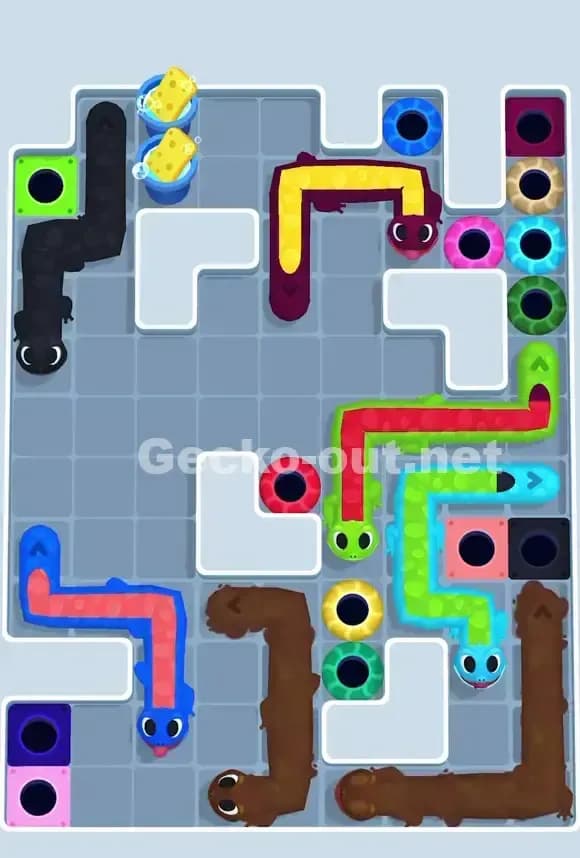
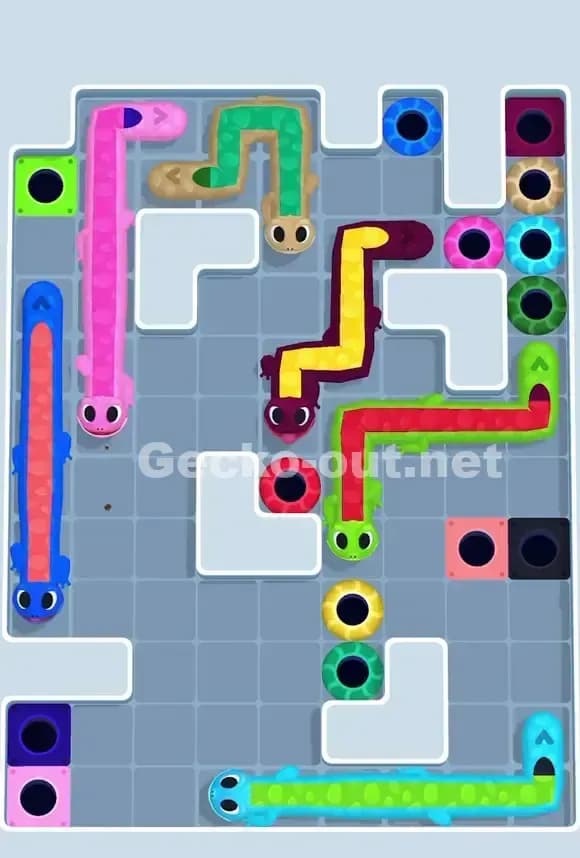
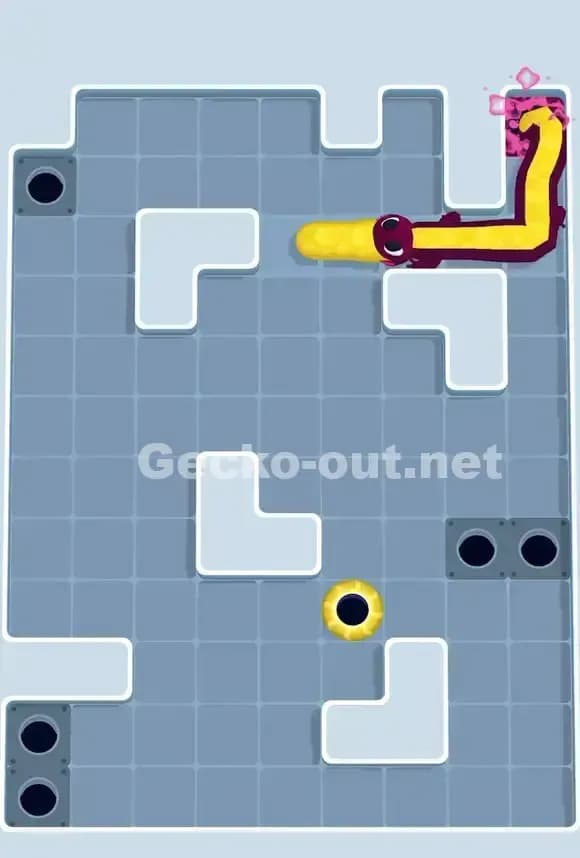
Gecko Out Level 684: Board Layout, Rules, and Win Condition
Starting Board: A Colorful Tangle of Eight Geckos
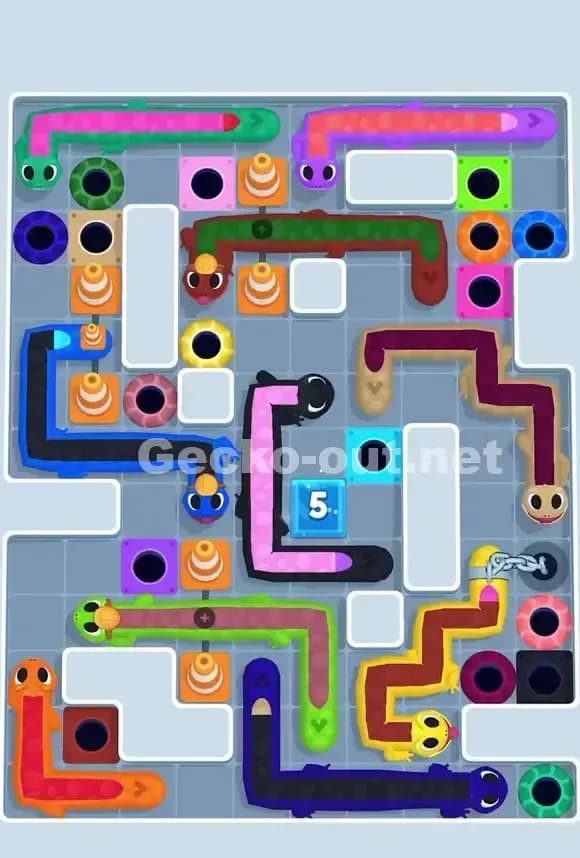
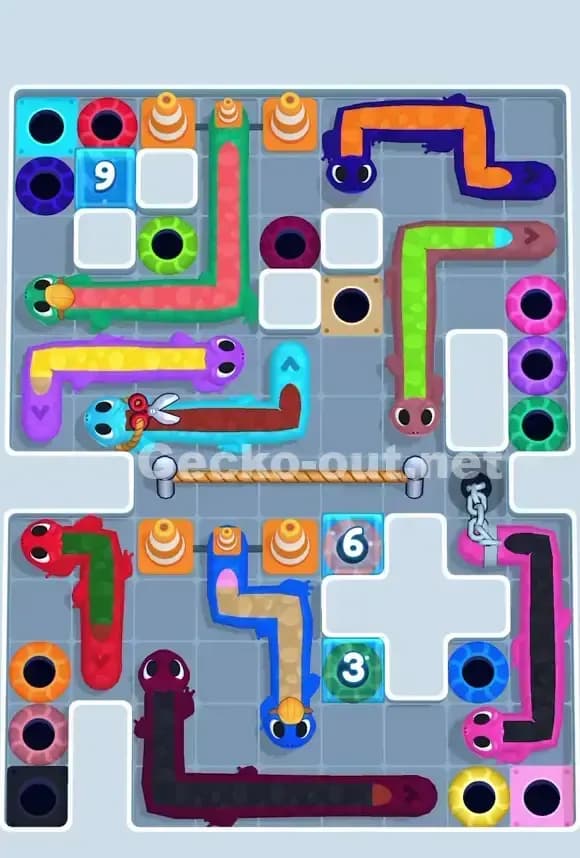
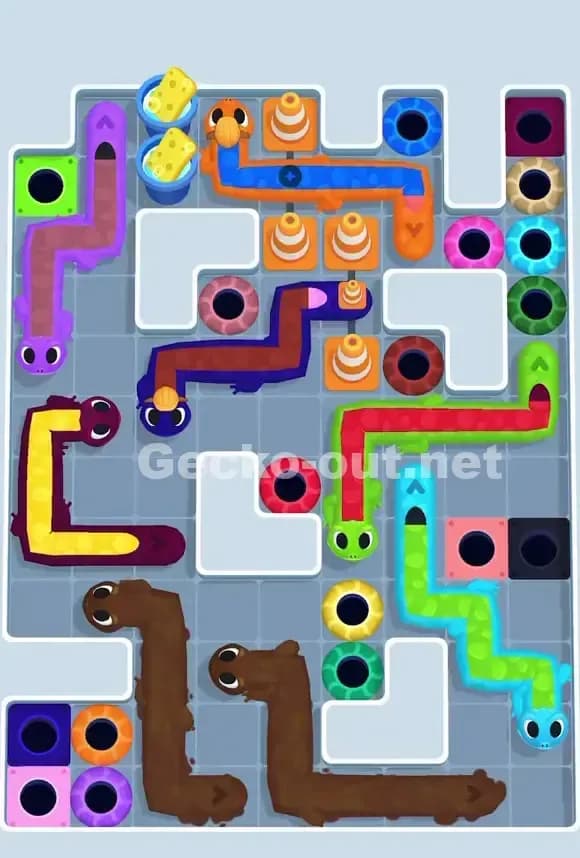
Gecko Out Level 684 drops you into a genuinely packed puzzle with eight geckos in total, each one a different color: purple, yellow, orange, blue, red, green, brown, and cyan. What makes this level immediately intimidating is that nearly every gecko is either long, gang-linked (two brown geckos at the bottom are visibly tethered together), or positioned in tight corridors that seem to block each other's natural escape routes. The board itself is a maze of white walls creating distinct zones, with colored exits (holes) scattered around the perimeter and some tucked deep inside the puzzle. You'll notice toll gates with the orange warning icons, which means certain geckos will need to pass through specific checkpoints before they can reach their holes. This isn't a level where you can just drag and go—every single move has ripple effects.
Win Condition and the Timer Crunch
Your job is to drag each gecko's head along a valid path so its body follows, and land it in a hole matching its color before the timer expires. If even one gecko is still on the board when time runs out, the level fails. The timer on Gecko Out Level 684 is tighter than it sounds because these geckos are long, their paths are convoluted, and the brown duo is effectively one massive obstacle that both must exit together. You can't overlap walls, other geckos, or frozen exits, so every path you draw has to thread through gaps that other geckos will soon occupy. That's the crux: the more geckos you move, the fewer safe routes remain for everyone else. Speed and planning are equally important here.
Pathing Bottlenecks and Logical Traps in Gecko Out Level 684
The Central Corridor Catastrophe
The single biggest bottleneck in Gecko Out Level 684 is the vertical blue corridor running down the middle-right of the board. The blue gecko itself occupies this space, and at least two other geckos (the cyan and red ones) need to snake through adjacent lanes to reach their exits. If you move the blue gecko in the wrong direction first, it'll wedge itself into a position where the cyan gecko can't squeeze past, and suddenly you're stuck. The blue gecko must exit upward toward its blue hole in the upper-right area—not down, not left. This single decision determines whether the right side of the board becomes a parking lot or a functioning escape route.
Three Subtle Problem Spots That'll Trip You Up
First, the orange gecko has two warning holes (toll gates) directly in its path. You can't just drag it straight to its exit; you have to route it through one of these gates, which adds unexpected length to its path and eats up board space while you're drawing. Second, the yellow geckos (there are two of them stacked together at the top) are locked together by being in the same column, and their hole is far away in the top-left. Getting them both to exit cleanly requires precise sequencing so their combined length doesn't block the purple gecko's escape through the left side. Third, the green gecko is a long, L-shaped piece wedged in the right-middle area, and its exit is in the bottom-right corner. Its tail curls in a way that can easily collide with the red gecko's path if you're not careful about when you move it relative to red.
The Moment It Clicked
Honestly, the first time I tackled Gecko Out Level 684, I panicked. I saw eight geckos, a 45-second timer, and thought "there's no way to untangle this mess." But then I realized: the bottlenecks aren't random—they're intentional. The puzzle is begging you to move the longest, most-constrained geckos first so they occupy space in a stable way, leaving smaller geckos more flexible routes later. Once I stopped trying to find the "perfect" path and instead focused on "which gecko, if moved now, opens up the most room for others?", the solution became visible. It's a psychological shift from puzzle-solving to spatial choreography.
Turn-by-Turn Path Strategy to Beat Gecko Out Level 684
Opening: Establish Your Escape Corridors
Start with the blue gecko. Drag its head upward toward its blue exit in the upper-right zone. This move is non-negotiable because blue occupies the central corridor and must clear it for everyone else. Don't overthink the exact path—just ensure it reaches the hole without backtracking. Once blue is gone, the vertical lane opens up, and both cyan and red have room to maneuver.
Next, move one of the two yellow geckos. Since they're stacked and linked in behavior (though not physically locked), move them as a pair by dragging the top head leftward toward the yellow exit in the top-left area. This clears the top portion of the board and prevents them from interfering with the orange gecko's toll-gate sequence later.
Finally in the opening, handle the purple gecko on the far left. Drag it downward along the left edge. It's a straightforward path to its purple exit, and it precludes any collisions once the brown duo starts moving.
Mid-Game: Keep Critical Lanes Open and Reposition Carefully
With blue, yellow, and purple out of the way, the board is suddenly much less congested. Now tackle the orange gecko. This one's path will wind through a toll gate (the warning hole), so you'll need to drag its head downward and rightward, making sure it passes through the orange warning icon before hooking toward its orange exit. Don't rush this; take a second to trace the path mentally and confirm it doesn't trap any other gecko.
Next, move the red gecko. It'll need to thread through the now-open middle lanes to reach its red exit on the right side. Red is moderately long, so plan a smooth curve that avoids colliding with green (which is still on the board and doesn't appreciate sharing space). Once red is out, green has a much clearer corridor.
Now for the green gecko. Its L-shaped body fits better when moved in a specific sequence: drag its head down and right toward the bottom-right green exit. Make sure its tail doesn't wrap around and block the brown duo's exit lane.
End-Game: Precision Over Speed
At this point, you've got three geckos left: the brown duo (two connected geckos acting as one giant mass) and the cyan gecko. Cyan is smaller and more flexible, so move it first. Drag it rightward from its middle position toward the blue area, then down toward the cyan exit. Cyan's shorter length means it can slip into gaps that the brown duo never could.
Finally, the brown duo. These two are connected and long, requiring a careful, deliberate path. Drag the front head downward and leftward in a wide arc that avoids all remaining walls and obstacles. Because they're locked together, moving them is like moving a single super-long gecko—every tile of their path matters. Direct them toward their brown exits in the bottom-left corner. If you've cleared the board well enough, there should be just enough space for them to snake through and escape.
Watch your timer as you execute the last two moves. If you're under 15 seconds, don't panic—just keep drawing and trust that the paths you've cleared are valid. Hesitation costs more time than a slightly suboptimal path.
Why This Path Order Works in Gecko Out Level 684
Untangling Through Head-Drag Sequencing
The genius of this path order is that you're using the head-drag mechanic to your advantage. When you drag blue upward first, you're not fighting against it; you're using its long body as a temporary barrier that naturally stays in place once it exits, clearing the corridor for everyone else. The yellow geckos exit next, freeing the top zone. Purple exits via the left edge, securing that flank. By the time you reach orange and red, the board is less like a knot and more like a partially solved puzzle with open corridors. The body-follow rule means each gecko's path is locked in once you commit, so moving geckos in order of constraint (most constrained first) prevents situations where a short gecko blocks a long gecko's only escape route.
Timing: Know When to Pause and When to Commit
Gecko Out Level 684 gives you 45 seconds, which sounds tight because it is. However, you don't need to constantly move at 100% speed. Pause for 2–3 seconds after moving blue, yellow, and purple to visually confirm the board state and identify the next gecko's optimal path. This deliberate pause prevents you from creating a dead-end situation that costs 10–15 seconds to undo. Once you hit the mid-game (orange, red, green), you can pick up the pace because the board is more open and paths are clearer. In the end-game, slow down again for cyan and brown, even if you're under 20 seconds. A premature collision forces you to restart that gecko's path, which is much more costly than a few extra seconds spent planning.
Boosters: Optional, Not Required
Gecko Out Level 684 doesn't require boosters to beat, but if you've failed it two or three times and feel like the timer is your bottleneck (not the puzzle logic), consider using an extra-time booster on your next attempt. Add 15 seconds to your clock, and suddenly you have breathing room to move cyan and brown without rushing. A hint booster is less useful here because the challenge isn't finding a path—it's ordering your moves correctly. If you do purchase a booster, the extra-time one is your best bet, and deploy it right before you tackle the brown duo so you can move them with zero pressure.
Mistakes, Fixes, and Logic You Can Reuse in Other Gecko Out Levels
Five Mistakes You're Probably Making (and How to Fix Them)
Mistake #1: Moving the brown duo too early. If you try to move brown in the opening phase, it'll clog the board because it's so long and slow to position. Fix: Always move brown in the final two moves, after smaller geckos have cleared their zones.
Mistake #2: Not routing orange through the toll gate. Players often try to drag orange in a straight line, forgetting it must pass through the warning hole. The path ends up invalid, or you waste time redrawing. Fix: Before dragging orange, mentally trace its path through the warning icon to its exit hole. Confirm this path on the screen before committing.
Mistake #3: Letting yellow block the left edge. Yellow is tall, and if you position it poorly, it prevents purple from exiting down the left corridor. Fix: Move yellow leftward and upward toward the top-left hole so it exits before purple moves. This ensures the left edge stays clear.
Mistake #4: Dragging blue downward. Blue sits in the central vertical corridor, and dragging it downward tightens the knot. Fix: Blue must go upward toward its blue exit in the upper-right. This is non-negotiable and immediately opens the critical corridor.
Mistake #5: Moving geckos in random order. Some players move whichever gecko they see first, leading to situations where cyan can't access its exit because red is still in the way. Fix: Create a mental list of gecko moves in the order I outlined: blue, yellow, purple, orange, red, green, cyan, brown. Follow this order every time, and you'll avoid creating artificial bottlenecks.
Reusing This Logic on Similar Levels
This strategy—moving constrained geckos first, clearing critical corridors, and sequencing exits to maximize board space—applies to any Gecko Out level with gang geckos, frozen exits, or toll gates. If you encounter another level with two connected geckos (like the brown duo), move them last. If a gecko sits in a central corridor, move it early so others can flow around it. If a gecko has a toll gate, always route it through the warning icon first and verify the full path before dragging. These principles are universal and will save you countless retries on future levels.
Final Encouragement
Gecko Out Level 684 is genuinely tough—eight geckos, a short timer, and a tangled board is a recipe for frustration. But it's absolutely beatable. The puzzle isn't punishing you for being slow; it's rewarding you for thinking strategically. Once you nail this level with a clear plan, you'll have the confidence and pattern recognition to handle even messier puzzles ahead. You've got this.