Gecko Out Level 792 Solution Walkthrough | Gecko Out 792 Answer
How to solve Gecko Out level 792? Get step by step solution & cheat for Gecko Out level 792. Solve Gecko Out 792 easily with the answers & video walkthrough.
Gecko Out Level 792: Board Layout, Rules, and Win Condition
Starting Board: Geckos, Colors, and the Challenge Ahead
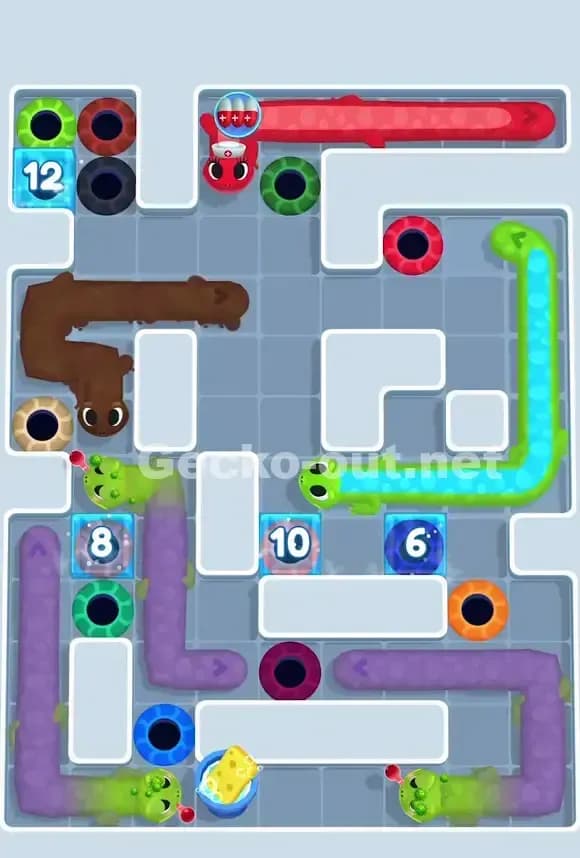
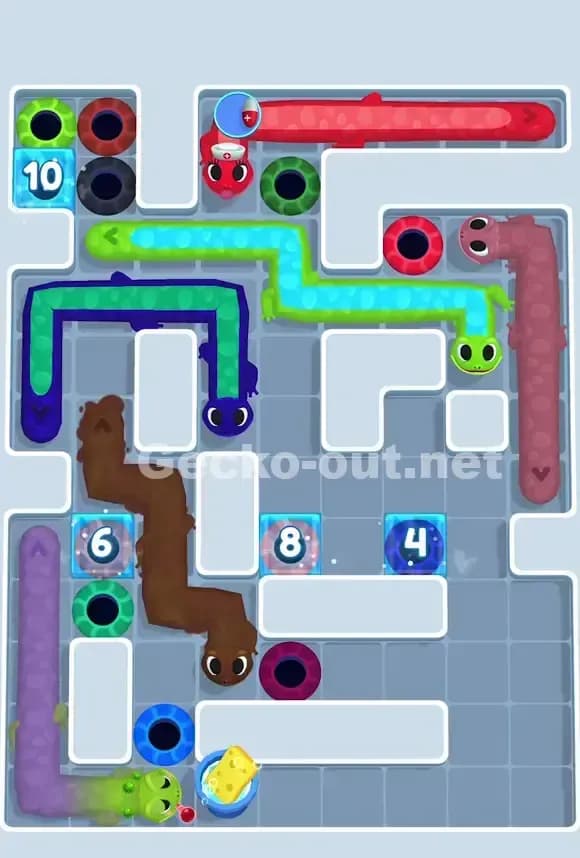
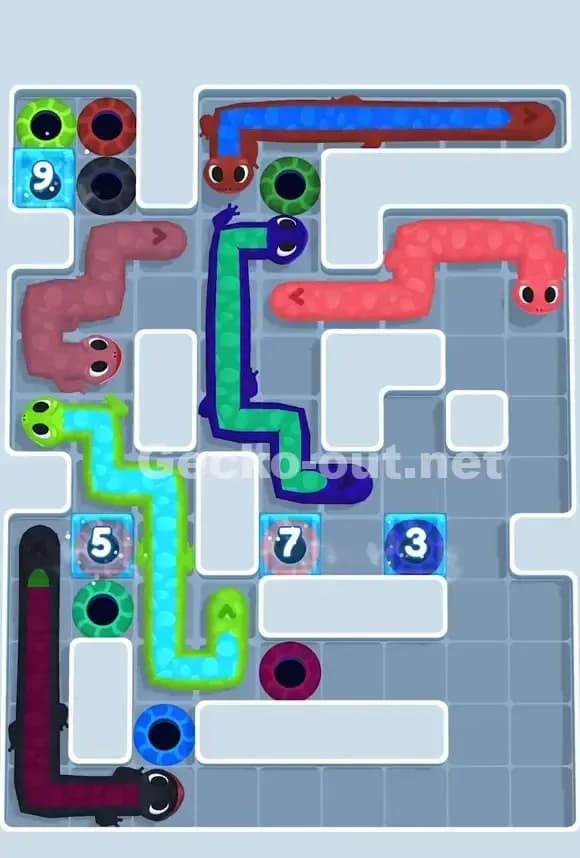
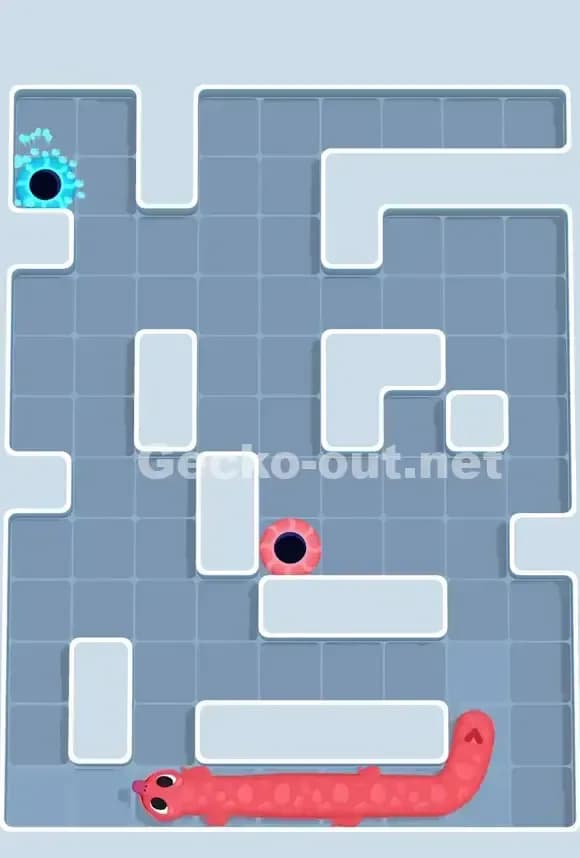
Gecko Out Level 792 is a tightly packed puzzle that'll test your spatial reasoning hard. You're managing five geckos across a labyrinth of white walls and narrow corridors, and the timer shows you've got just 12 seconds to get everyone home. On the left side, you'll see a yellow gecko (marked with "12") and a red gecko stacked near the top. The right side features a red gecko with a white stripe, a green gecko, and a cyan gecko forming a gang-like unit across the top corridor. Meanwhile, the lower board hosts a brown gecko, a purple gecko (labeled "8"), a green gecko, a lime gecko, a blue gecko, and an orange gecko scattered across multiple levels. Each gecko needs to reach a matching-colored exit hole, and those holes are frozen or blocked in ways that'll force you to think several moves ahead.
Win Condition and the Timer Pressure
You win Gecko Out Level 792 when all five or six geckos have successfully exited through their color-matched holes before the 12-second timer runs out. The tricky part? The board's layout forces geckos into bottlenecks where their bodies physically block one another's paths. Since you drag each gecko's head and its body follows the exact route you draw, a poorly planned path early on can jam up the entire board and make later moves impossible. This isn't a level where you can brute-force your way through—you need a strategic sequence that opens corridors instead of closing them.
Pathing Bottlenecks and Logical Traps in Gecko Out Level 792
The Critical Choke Point: The Center Corridor
The single biggest bottleneck in Gecko Out Level 792 is the horizontal corridor running through the center-right of the board. The red gecko with the white stripe, the green gecko, and the cyan gecko are all bunched in that area, and they've got to exit to the right while other geckos need to navigate through nearby lanes. If you send the red gecko's body through this corridor first without clearing a safe "park" zone, you'll trap the green and cyan geckos behind it, and they'll run out of time or have nowhere valid to go. The cyan gecko's exit is particularly tight—it sits on the far right edge, which means you've got almost no margin for error when routing it there.
Subtle Problem Spot #1: The Left-Side Stack
The yellow gecko and the red gecko are stacked vertically on the far left. Neither of them has a direct, obvious path to their respective exits. The yellow gecko's hole is somewhere in the middle-left area, and the red gecko needs to find its way around or through other geckos. If you move the red gecko first without having a clear exit route planned, you'll accidentally block the yellow gecko's path, and now you're in a deadlock.
Subtle Problem Spot #2: The Lower-Level Gang
The purple gecko (marked "8") and the green gecko below it are in a tight corner with limited exit options. The purple gecko's hole is along the left wall, and the green gecko's hole is somewhere in the center-lower region. Moving one of them too early can create a jam that prevents the other from reaching its exit hole, especially since the walls around them are narrow and leave almost no room for backtracking.
Subtle Problem Spot #3: The Frozen or Locked Exits
Several of the exit holes appear to be frozen or have a toll-gate mechanic (you see the "6" and "10" indicators, which likely represent locked exits that need to be cleared in sequence). Gecko Out Level 792 won't let you just rush geckos out in random order—you'll hit an invisible wall if you try to send a gecko to a locked exit before the gate opens. This means the timer pressure is compounded by the need to hit exits in a specific sequence, not just any valid color match.
My Personal Take
I'll be honest: my first attempt at Gecko Out Level 792 felt overwhelming. The board's visual density made it hard to see which gecko could move without creating a collision. But then I realized the solution wasn't about moving the most blocked gecko first—it was about identifying which gecko had a clear, long exit path and using that movement to free up space for everyone else. Once I spotted the cyan gecko's route to the far right, everything else started falling into place. That "aha moment" made the level feel brilliant instead of frustrating.
Turn-by-Turn Path Strategy to Beat Gecko Out Level 792
Opening: Unlock Space by Moving the Freest Gecko First
Start with the cyan gecko on the upper right. This gecko has a relatively clear path down and to the right—its exit hole is on the far right edge, and moving it out of the way immediately opens up the upper corridor for the red and green geckos. Drag the cyan gecko's head smoothly down the right side of the board and into its exit. This takes maybe 2 seconds and removes a huge blocker. While the cyan gecko is exiting, the rest of the board stays frozen, so you're not racing against time during this drag.
Next, move the green gecko. Its hole is somewhere in the center-right area, and now that the cyan gecko is gone, the path is clearer. Drag the green gecko's head along a route that doesn't loop back through the space the cyan gecko just vacated. You want to create a clear lane from the upper corridor down toward the center-right exit.
Mid-Game: Reposition Long Geckos and Keep Critical Lanes Open
Now tackle the red gecko on the upper right (the one with the white stripe). It's still in the upper corridor, and its exit is likely in the upper-middle or middle area. Since you've already cleared the cyan and green geckos, the red gecko has more room to maneuver. However, be careful not to route its body through a space that the yellow gecko or left-side geckos will need later. A good strategy is to drag the red gecko's head down and to the left, creating a path that exits in the upper-middle region without cutting off the lower board.
After the red gecko is out, move the yellow gecko (marked "12"). Its exit is somewhere on the left-middle side. The 12-second timer indicator suggests this gecko might have special significance, but treat it like any other gecko—find a clear path from the left-side stack down to its color-matched hole. The main risk here is that the brown gecko (the large one on the left side) might be in the way. If it is, you'll need to move the brown gecko first, parking it somewhere neutral.
End-Game: Exit Order and Last-Second Avoidance
By now, you should have 3–4 geckos left on the board, and the timer is probably at 5–7 seconds. Move the brown gecko next if you haven't already. Its exit is on the left side, and its body takes up a lot of space, so getting it out unclogs the entire left corridor.
Finish with the purple gecko, the green gecko (the lower one), the blue gecko, and the orange gecko. At this stage, the board should be so clear that each remaining gecko has a direct, unobstructed path to its exit. If you're running low on time, don't hesitate—commit to each drag quickly. The geckos' bodies follow your drag path exactly, so even fast drags are accurate. If you find yourself with fewer than 2 seconds left and geckos still on the board, you've likely miscalculated the order. Don't panic; use a time-booster if available (see section 4 for details), and retry with the order adjusted.
Why This Path Order Works in Gecko Out Level 792
Head-Drag Pathing and the Body-Follow Mechanic
The order I've outlined—cyan, green, red, yellow, then the left-side and lower geckos—works because it respects the body-follow rule in Gecko Out Level 792. When you drag a gecko's head, its body traces the exact route you draw, which means each gecko occupies the cells along that entire path. By moving the freest geckos first, you ensure that their bodies don't accidentally block the exit routes of trapped geckos later. The cyan gecko, for example, starts in an upper position and its exit is on the opposite side—removing it immediately opens up lateral space that the red and green geckos need.
Timing and Board Reading
You've got 12 seconds total, which sounds impossibly tight until you realize that most of that time is spent actually dragging (which is real-time) rather than thinking. The strategy here is to pause and read the board for the first 1–2 seconds, identifying the exit sequence I described above. Then, commit to quick, confident drags. Don't second-guess yourself mid-drag; if you've planned the path, execute it. If you make a mistake partway through, you can tap the undo button (if available) and adjust. The key is reading first, then moving, rather than moving hesitantly and reading as you go.
Booster Strategy in Gecko Out Level 792
Boosters aren't necessary to beat Gecko Out Level 792 if you follow this path order. However, if you find yourself stuck with 2–3 geckos left and only 1–2 seconds remaining, a time-extension booster is your safety net. Use it only if you're out of time but have a clear path for the remaining geckos—don't use it as a crutch to retry with a bad order. A hint booster might also help if you're uncertain about which gecko to move first on your first attempt; it'll highlight the optimal starting gecko. A hammer or blast tool isn't necessary here since there are no breakable walls or icy exits blocking your primary path, so skip those boosters and save your coins.
Mistakes, Fixes, and Logic You Can Reuse in Other Gecko Out Levels
Common Mistake #1: Moving Blocked Geckos First
Players often start by moving the gecko that looks most "trapped" (like the left-side yellow or red gecko), hoping to untangle it. In Gecko Out Level 792, this backfires because those geckos' exit paths are long and winding, and moving them first actually blocks other geckos that have shorter, clearer routes. Fix: Always identify which gecko has the fewest obstacles between its head and its exit hole, and move that one first. This clears board space as a side effect.
Common Mistake #2: Dragging Bodies Through Future Exit Zones
You might drag a gecko's body through a corridor because it seems to work, but that body now occupies cells that a later gecko needs to reach its exit. In Gecko Out Level 792, the center corridor and upper lanes are shared resources. Fix: Before dragging, mentally trace the path of the gecko you're moving AND the path of the next gecko you'll move. Make sure the first gecko's body doesn't loop back into the second gecko's exit route.
Common Mistake #3: Ignoring the Frozen or Locked Exit Mechanic
The "10" and "6" indicators suggest that some exits are locked until specific conditions are met (perhaps you need to exit geckos in a certain order or tap a switch). If you drag a gecko toward a locked exit, it'll get stuck or refused. Fix: Identify which exits are frozen (they'll usually have a visual indicator like ice or a lock icon) and skip those until you've cleared the easier exits. The game will often give you a visual or audio cue when an exit becomes available.
Common Mistake #4: Rushing Without a Full Plan
With only 12 seconds, it's tempting to start dragging immediately. But a 1-second pause to map out the full exit sequence will save you 5 seconds later because you won't need to retry. Fix: Spend the first 1–2 seconds identifying the order, even if it feels like you're wasting time. Write it down or mentally rehearse it.
Common Mistake #5: Not Using Diagonal Paths to Avoid Collision
Geckos can move diagonally, and Gecko Out Level 792's corridors often have diagonal pockets where you can "park" a gecko's body temporarily without blocking others. If you drag only horizontally or vertically, you might miss these shortcuts. Fix: Look for diagonal or L-shaped paths that let you move geckos off the main lanes. A gecko parked in a diagonal corner takes up less board space than one stretched horizontally.
Reusing This Logic on Similar Levels
The prioritization strategy in Gecko Out Level 792—move the freest geckos first, identify locked exits, avoid body-collision traps—is gold for any level with gang geckos, tight corridors, or frozen exits. Whenever you see a level with 4+ geckos and a tight timer, ask yourself: Which gecko's path least interferes with the others? Move that one first, and build your strategy from there. Levels that feature linked geckos (where two geckos must move together) follow the same principle: move the linked pair first if one of them has a clear exit, or move other geckos to create a lane for the pair.
Final Encouragement
Gecko Out Level 792 is genuinely tough, but it's not unfair. The 12-second timer is tight, the board is dense, and the exit sequence matters—but once you see the solution, it feels elegant and almost inevitable. You've got this. Start with the cyan gecko, trust the order I've outlined, and commit to quick, confident drags. You'll beat Gecko Out Level 792 in your next attempt or two.