Gecko Out Level 166 Solution Walkthrough | Gecko Out 166 Answer
How to solve Gecko Out level 166? Get step by step solution & cheat for Gecko Out level 166. Solve Gecko Out 166 easily with the answers & video walkthrough.
Gecko Out Level 166: Board Layout, Rules, and Win Condition
Starting Layout And Key Obstacles
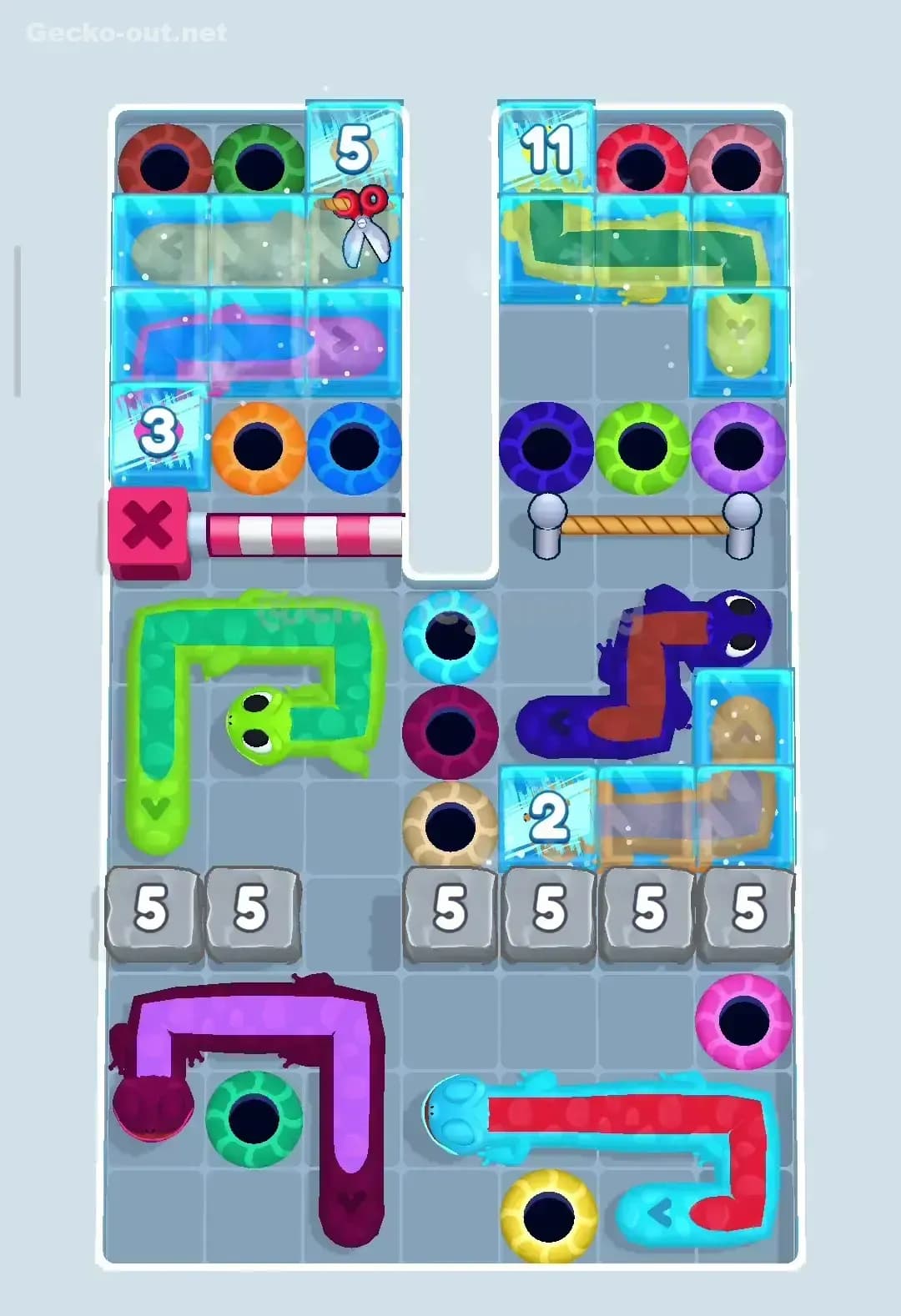
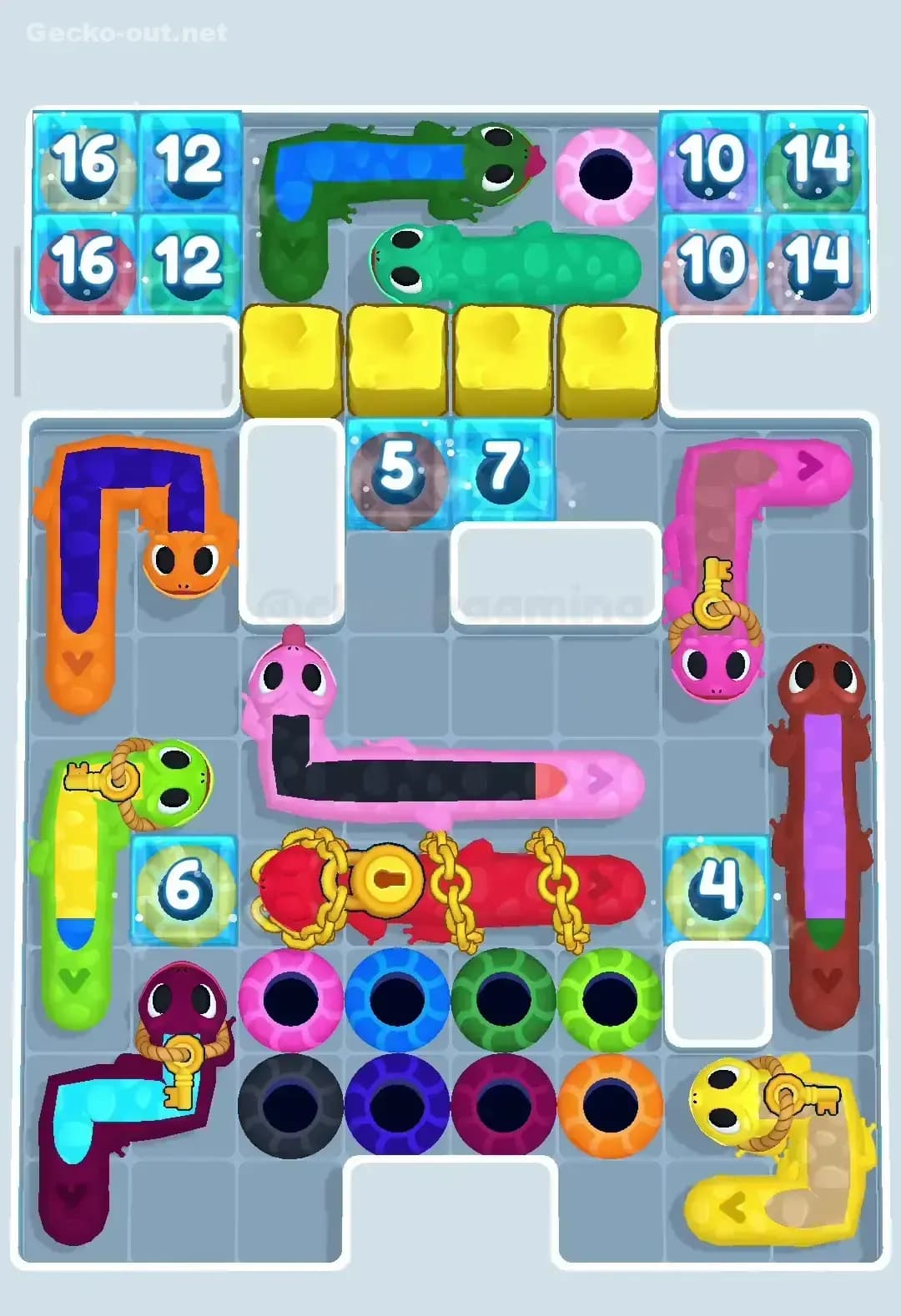
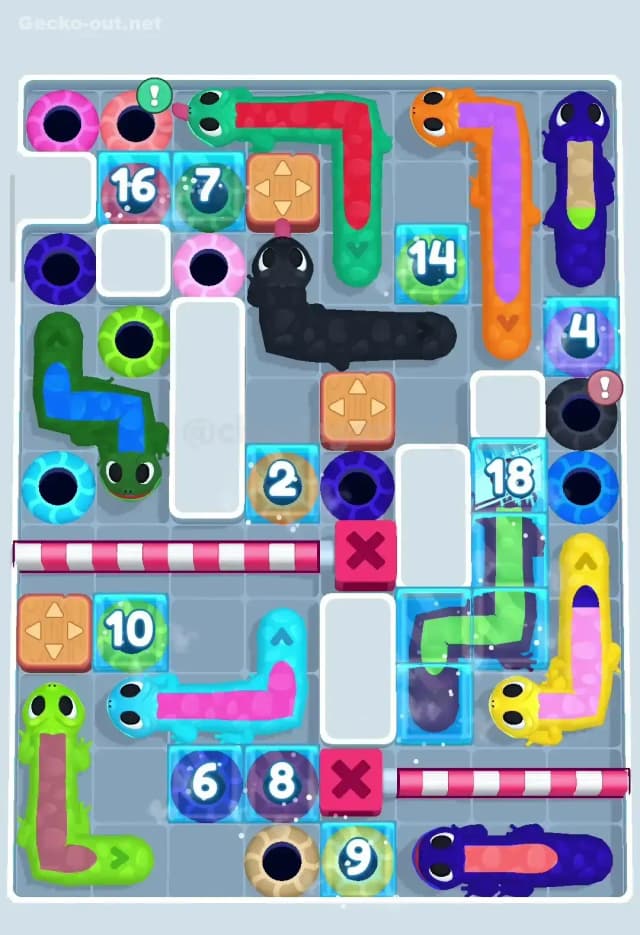
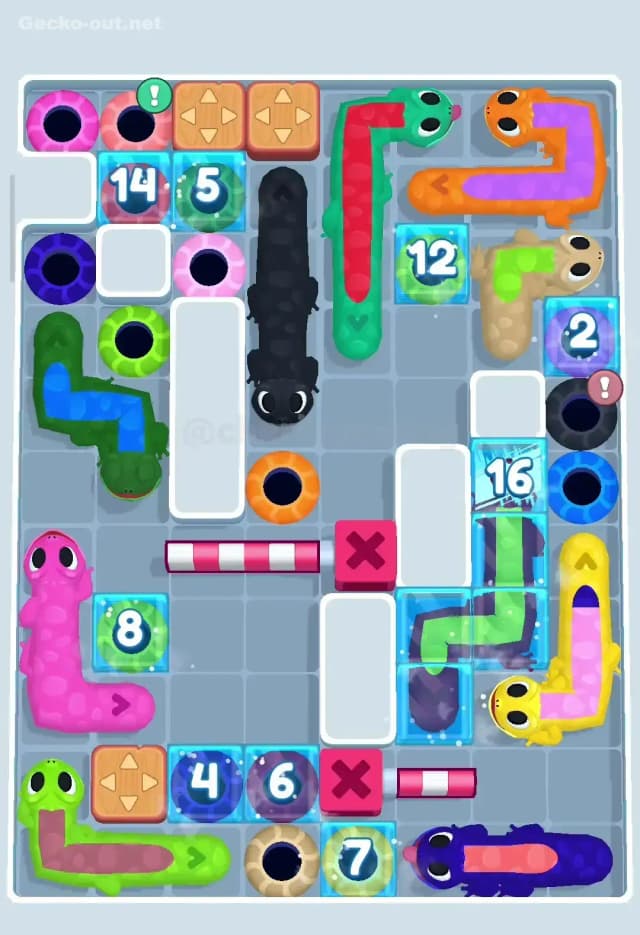
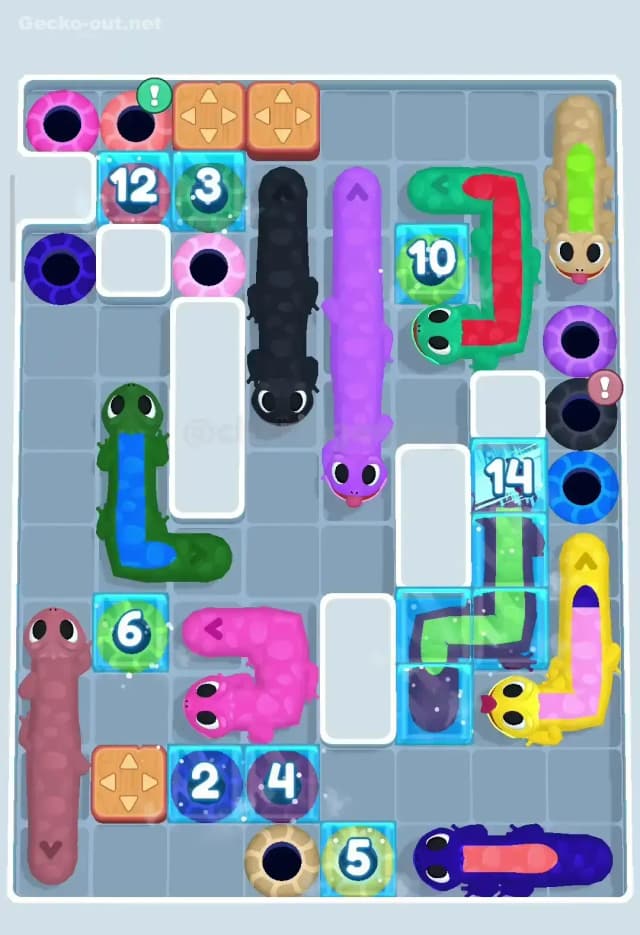
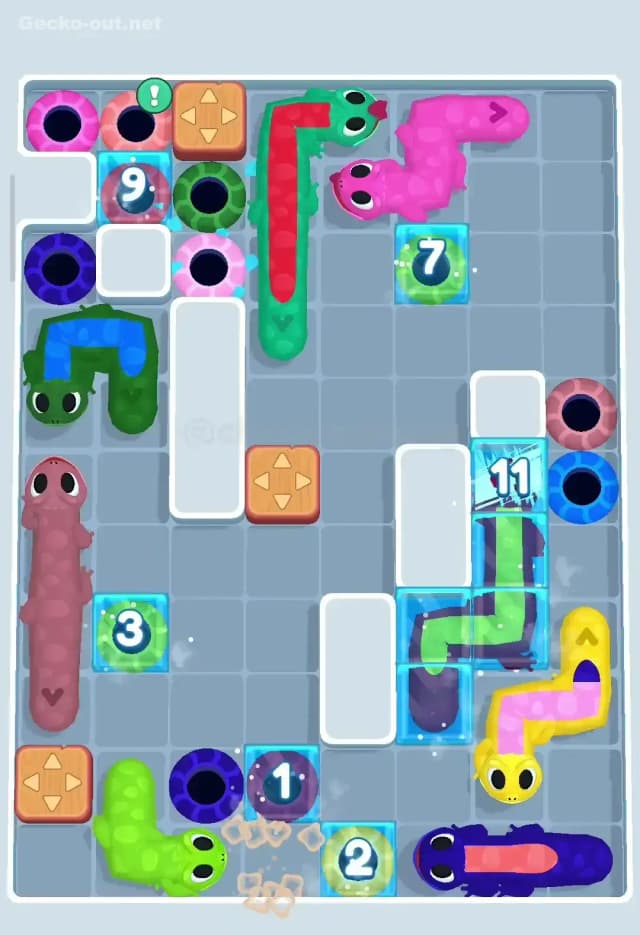
Gecko Out Level 166 throws you into a very cramped board with a lot going on at once. You’ve got a crowd of geckos in almost every color: green, blue, yellow, orange, black, and purple, plus a couple of short geckos and a few extra‑long L‑shaped ones. Most of them start already twisted around each other in narrow channels, especially in the top center and bottom‑right corner.
Several exits are frozen with blue ice and big numbers on them. Those tiles only become usable once the count has ticked down, so early on they’re effectively walls. You also have a couple of warning holes marked with exclamation icons. Using those too early tends to backfire, so think of them as “do this near the end” exits.
The board is sliced up by red X blocks and candy‑stripe toll bars, plus a few arrow crates in the middle and bottom-left. All of that means the level isn’t just about color matching; Gecko Out 166 is really about threading long geckos through one‑tile corridors without trapping anyone else.
How The Timer And Path Rules Change The Puzzle
The win condition in Gecko Out Level 166 is simple: get every gecko into the hole of its own color before the global timer hits zero. Because movement is path‑based, you’re not just sliding pieces. When you drag a gecko’s head, the body traces the exact route, turn by turn. Any sloppy zigzag wastes time and can lock you out of later paths.
On Gecko Out 166 the strict timer and frozen exits interact in a nasty way. You can’t simply wait around for everything to thaw, but if you rush and fill early exits, you’ll block the corridors you need when those icy exits finally open. The trick is to spend the first part of the timer rearranging, parking geckos in safe holding spots and only claiming exits when they don’t cut off another color’s route.
Pathing Bottlenecks and Logical Traps in Gecko Out Level 166
The Main Bottleneck Corridor
The single biggest bottleneck in Gecko Out Level 166 is the central vertical shaft framed by the red X blocks and the candy‑stripe bars. The black gecko and the long orange gecko both want to use that same space to reach their exits, and several bottom geckos also need to pass through that lane later.
If you let the orange gecko snake through first and leave it sitting across that shaft, the black gecko can’t reposition, and the lower geckos are stuck. Likewise, if the black gecko curls in the middle of the board, it basically becomes a wall. Your whole strategy needs to keep that central corridor as empty as possible until the very end.
Subtle Problem Spots To Respect
There are a few less obvious traps in Gecko Out 166:
- The top-left cluster with the green/red gecko and the frozen exits looks harmless, but exiting anything there too early clogs the only route out of the top row. Park those geckos along the edges until you’re ready.
- The bottom-right trio (yellow, green, and dark blue/pink geckos) is easy to misplay. If you send the yellow gecko out first, its path often cuts off the green one’s angle to the purple/black exits.
- The small blue gecko near the lower middle, sitting on ice by numbered holes, can accidentally draw a path that blocks the toll bar approach. Keep its first move short and straight so you don’t “lace” the board with unnecessary body segments.
When The Level Starts To Make Sense
I’ll be honest: my first attempts at Gecko Out Level 166 were just chaos. I’d clear a couple of easy exits, feel smart for ten seconds, then realize I’d turned the center of the board into a knot and there was literally no way for the last two geckos to cross.
The run where it clicked was the first time I forced myself to treat the opening as setup only. Once I focused on parking geckos along walls and around corners instead of exiting them immediately, I started seeing how each long body could temporarily act as “movable walls” to guide others through. From there, the level stopped feeling unfair and turned into a pretty satisfying routing puzzle.
Turn-by-Turn Path Strategy to Beat Gecko Out Level 166
Opening: Safe Parking And Clearing Space
Here’s a reliable way to open Gecko Out 166:
- Start in the top-right. Drag the long orange gecko straight down along the right edge, then bend it to rest near the lower-right corner without touching any exits yet. You’re just freeing the upper-right area.
- With that space open, move the short purple gecko beside it into its purple hole; it’s a quick clear and removes a blocker from the right wall.
- Next, deal with the black gecko in the middle. Drag its head either up and tightly along the very top row or down along the bottom of the central section so its body hugs an outer edge. Don’t send it to its exit yet; think of it as a parked truck.
- In the top-left, gently untangle the green/red gecko and park it horizontally along the top or vertically against the left side. Again, no early exits here—keep the upper corridor as open as possible.
By the end of the opening, you want: right side freed, black gecko pinned to a wall, and all long bodies shaping lanes instead of occupying the central shaft.
Mid-game: Protecting Lanes And Repositioning Long Geckos
Mid‑game in Gecko Out Level 166 is where you win or lose.
- As some frozen exits thaw, start exiting the short, central geckos first—especially the blue and smaller green ones in the lower-left and mid‑board. Use straight, minimal paths that don’t zigzag across corridors.
- Watch the candy‑stripe toll bars. Plan your routes so geckos crossing them don’t curl back and block them from the other side. If an exit requires crossing a bar, make sure any gecko that still needs that lane is handled beforehand.
- The bottom-right corner is next. Use the space you freed earlier to route the yellow gecko out in a tight curve that hugs the right and bottom walls, leaving a clean lane for the green and dark-blue geckos to follow.
- Only once most short geckos are gone should you start sending the black and orange geckos to their exits. When you do, draw their paths so they leave the central shaft empty behind them—no spirals, just narrow L or J shapes that disappear into their holes.
If at any point you notice bodies crisscrossing more than once through the same corridor, that’s a red flag; undo and redraw more cleanly.
End-game: Exit Order And Low-Time Recovery
In the final phase of Gecko Out Level 166:
- Clear any remaining geckos in the top-left and top-right while the central area is relatively empty.
- Leave warning holes for last unless a specific path can’t be done without them. Using them late guarantees they don’t spawn or reveal something that blocks earlier routing.
- Finish with whichever long gecko is still hugging an edge (often the black one). Its final path should be almost trivial because everyone else is gone.
If you’re low on time, prioritize geckos that need the central shaft or toll bars. Corner exits usually take fewer moves, so they’re safer to leave for the final seconds.
Why This Path Order Works in Gecko Out Level 166
Using Head-Drag Pathing To Untangle, Not Tighten
The strategy for Gecko Out 166 leans into the body‑follow rule. By parking long geckos along walls first, you turn them into predictable “fences” instead of unpredictable knots. Every time you draw a path:
- You keep curves minimal to avoid stretching bodies across future lanes.
- You favor using outer walls, so the middle of the board stays open for later reroutes.
- You send short geckos through contested corridors before long ones, so you don’t have to thread needles around massive bodies.
That order gradually reduces the number of moving parts; each exit simplifies the remaining puzzle instead of making it harder.
Managing The Timer: When To Think, When To Move
On Gecko Out Level 166, you actually save time by pausing at the start. Spend 10–15 seconds just visualizing: which geckos must share corridors, which exits are frozen, and where you can park safely. Once you’ve decided your opening, commit and move quickly—don’t second‑guess every drag.
A good rhythm is: plan big groups of moves (all early parking, then all central exits, then edge clean‑up) and execute each group confidently. Undo only when you clearly see a future block, not out of vague worry.
Booster Use: Optional, But Here’s How To Use Them
You can beat Gecko Out Level 166 without boosters, and I’d recommend trying that first. If you’re stuck:
- A time booster is best used right before the mid‑game, after you’ve parked the long geckos but before clearing the crowded center. That’s the phase with the most precise routing.
- A hammer‑style block remover is overkill but can bail you out if a red X or toll bar keeps ruining your routes. Use it on the obstacle that restricts the central shaft the most.
- Hints are okay to see one or two key exits, but don’t rely on them every run; they won’t teach you the overall lane‑management idea that makes Gecko Out 166 repeatable.
Mistakes, Fixes, and Logic You Can Reuse in Other Gecko Out Levels
Common Mistakes And How To Fix Them
Players usually struggle on Gecko Out Level 166 in a few predictable ways:
- Exiting the first easy gecko immediately. Fix: treat the first 2–3 moves as pure repositioning; don’t exit anything unless it obviously frees space.
- Letting long geckos sit in the middle. Fix: always pin long bodies to outer walls as early as possible.
- Overdrawing paths. Fix: aim for the fewest turns needed; if a route crosses the same corridor twice, redraw tighter.
- Triggering warning holes early. Fix: reserve any hole with an exclamation mark for the last third of the level.
- Ignoring frozen exits. Fix: plan paths assuming frozen tiles are walls, then update your routes once they thaw instead of panicking when they open.
Reusing This Logic In Other Knot-Heavy Levels
What you learn from Gecko Out 166 carries over well:
- On gang‑gecko levels, park the linked group along a wall first just like the long single geckos here.
- On frozen‑exit levels, route around the ice as if it’s permanent, then recheck for “shortcut” exits once the counters drop.
- On dense knot levels, always identify the main shared corridor (like the central shaft in Gecko Out Level 166) and schedule it carefully: short geckos first, long ones last.
If you keep thinking in terms of lanes and parking spots instead of “which exit is closest,” you’ll find a lot of tricky Gecko Out stages suddenly feel manageable.
Final Encouragement For Gecko Out 166
Gecko Out Level 166 looks overwhelming at first—so many colors, timers, and obstacles jammed into one board—but it’s absolutely beatable once you respect the central bottleneck and treat the opening as setup. Park your long geckos, clear the middle with clean, efficient paths, then sweep the edges. With that plan in mind, you’ll go from “no way this is possible” to clearing Gecko Out 166 consistently.