Table of Contents

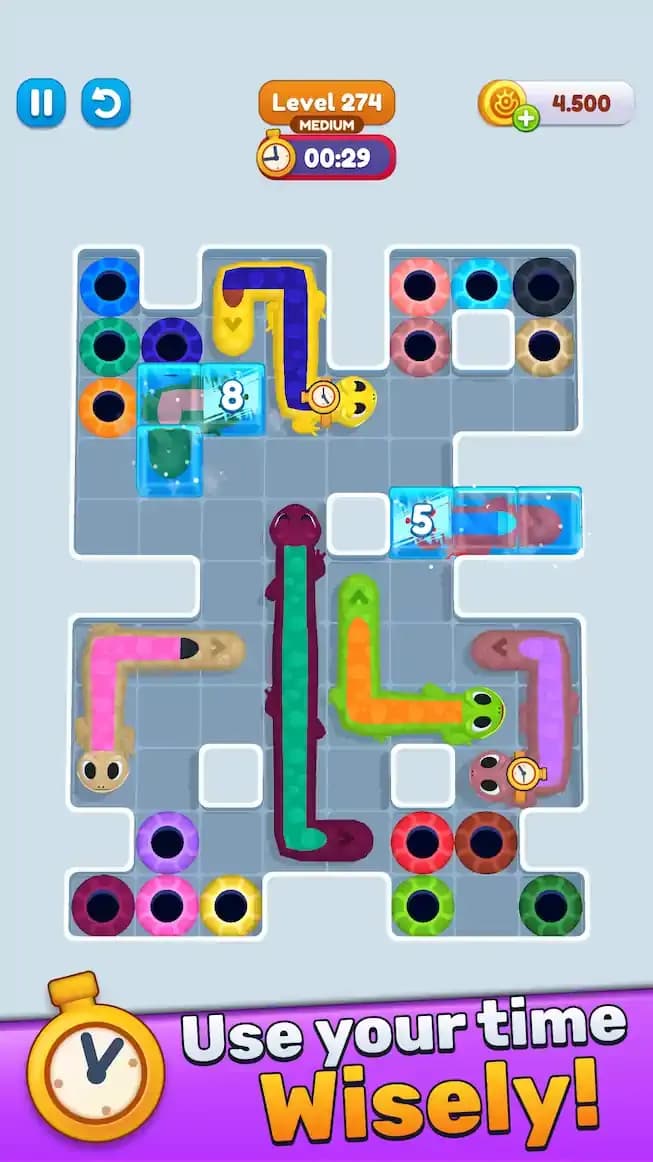
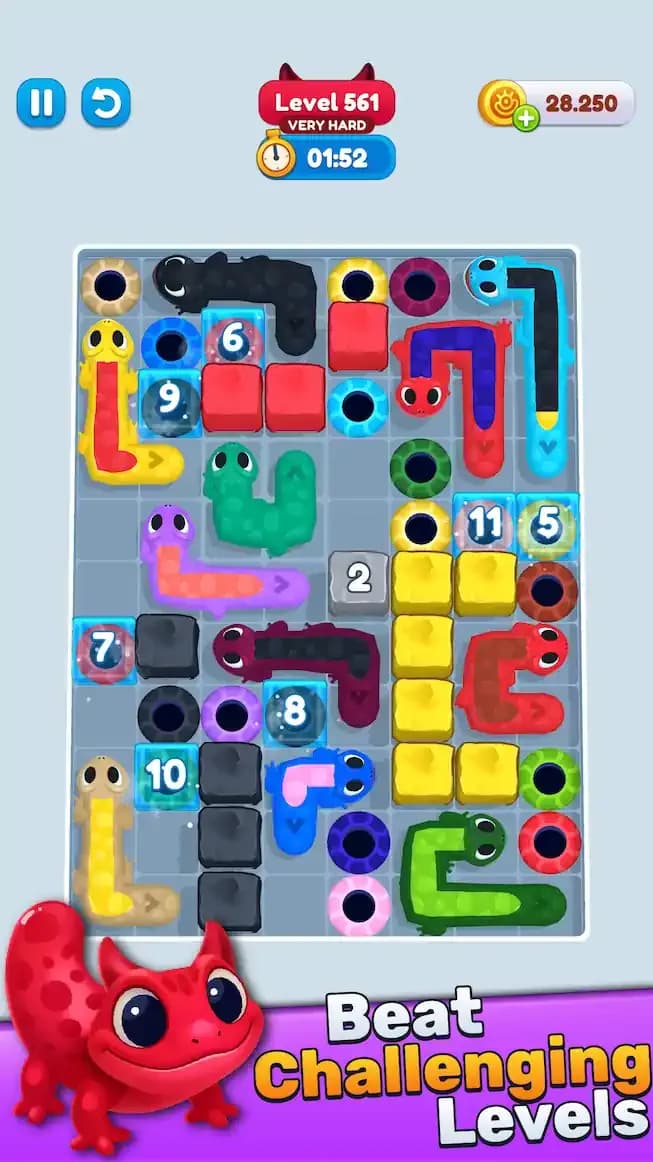
Gecko Out looks simple on the surface: drag colorful geckos to matching holes before the timer tanks your run. But past the early levels, the board gets crunchy fast—tight corridors, weird knots, frozen exits, and that constant ticking clock.
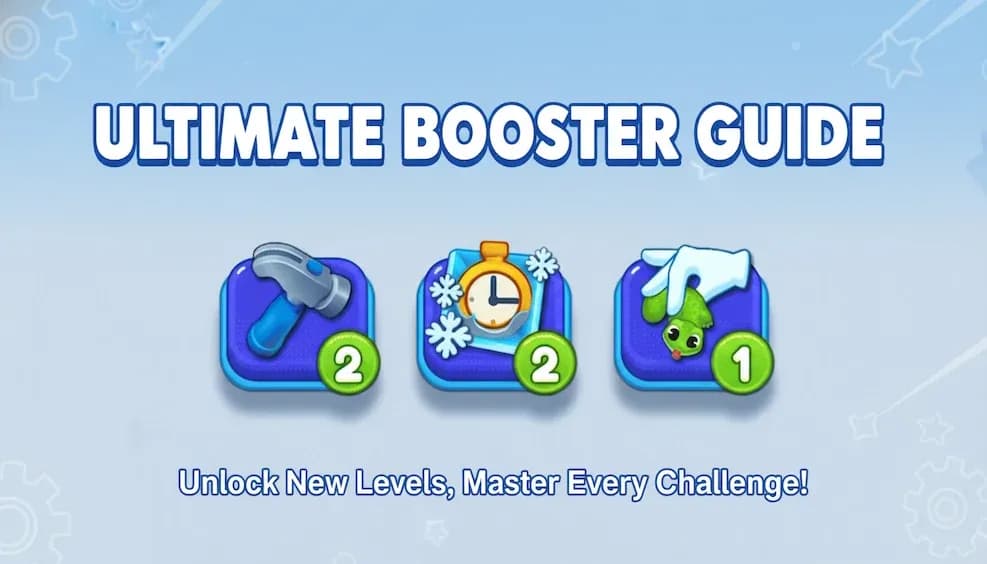
That’s where boosters come in. Officially, they’re “special tools that give you an advantage when levels get tough,” and there are three core ones in the game: Hammer, Picker, and Time Freeze.
In practice, boosters are your emergency tools when the puzzle stops being about logic and starts being about raw pressure: a single wall ruining your whole line, a gecko stuck in a nightmare knot, or a timer that’s bleeding out while you know the solution but can’t physically drag fast enough.
Important detail: every level can be beaten without boosters at all. The devs explicitly call that out. So boosters aren’t a requirement; they’re accelerators. They smooth over mistakes, shave frustration off the hardest layouts, and turn a “this level sucks” moment into a satisfying save.
I treat them like limited spells in an RPG: powerful, but you’ll regret burning them on trash mobs instead of bosses.
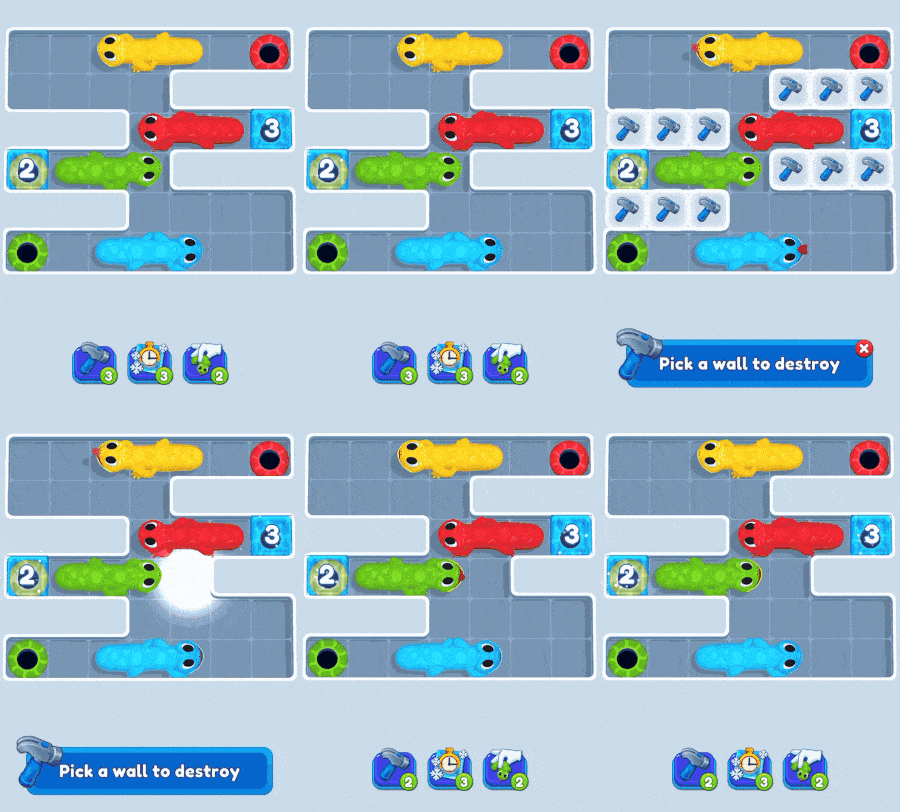
What it does: Hammer destroys a wall that’s blocking your path, opening up new routes on the grid.
In Gecko Out terms, that’s huge. The levels are already tight; a single wall can turn a clean snake path into a full deadlock. Sometimes you’ve done everything right, but the layout itself just doesn’t give you the wiggle room to untangle a key gecko.
When I actually use it:
If the board has multiple problem zones, using Hammer on the first annoying wall you see is usually a waste. I like to play out a mental “what if I open this?” scenario before I tap it. If I can’t see a clear chain reaction that leads toward an exit, I hold the booster.
Think of Hammer as a precision tool, not a temper tantrum.

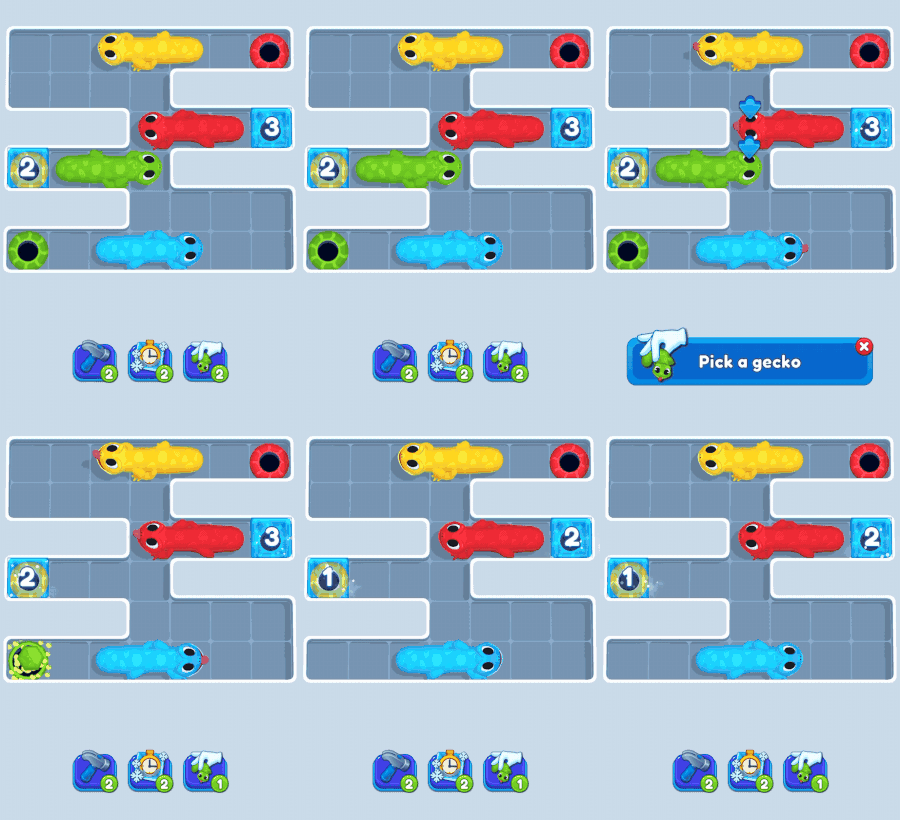
What it does: Picker grabs a gecko and drops it straight into its matching hole.
That’s basically a “skip this unit” button. It doesn’t magically solve the level, but it removes one puzzle piece from the chaos and frees up valuable board space.
When it shines:
I really like Picker for space control. By deleting a long or awkward gecko from the board, you effectively resize the puzzle into a simpler variant. The board breathes more, pathing becomes easier to read, and you’re less likely to block your own routes.
If Hammer is about destroying terrain, Picker is about removing a problem unit from the economy.

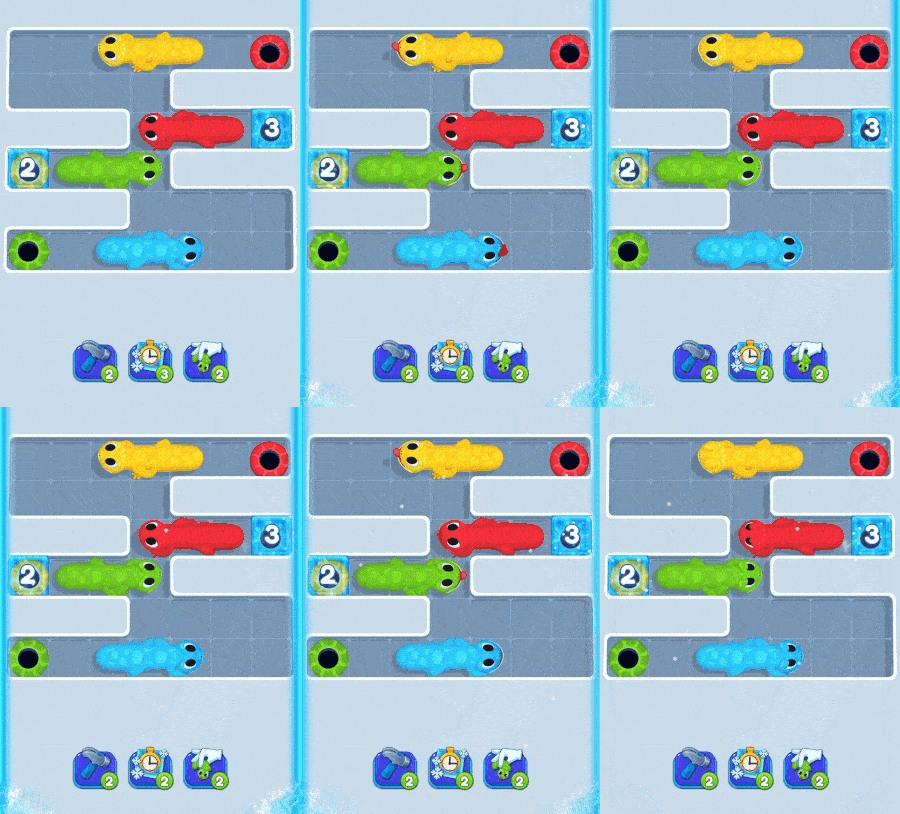
What it does: Time Freeze stops the timer for 10 seconds, giving you more breathing room to finish the level.
On paper that sounds small, but 10 seconds is a lot when you’ve already pre-planned some moves. The real power of Time Freeze is that it converts a mechanical constraint (“I can’t drag fast enough”) into a pure puzzle moment (“I know exactly what to do; just let me do it”).
How I use it:
Time Freeze is at its worst when you pop it before you understand the board. You just burn ten seconds panicking more slowly.
The ideal pattern is:
Boosters aren’t only something you trigger mid-level. Gecko Out also leans on pre-boosters and streak-based bonuses that buff you before the round even starts—things like starting with extra seconds on the timer or having a free booster ready to go at the bottom of the screen.
The basic idea:
I really like these as a puzzle player because they reward consistency, not just spending. If you’re on a heater and you’re clearing level after level, the game gives you a little momentum—more time to think, or a safety net if a layout suddenly spikes in difficulty.
The flip side is psychological: once you’re on a streak with pre-boosters stacked, failing a level hurts more. You’re not just losing; you’re losing your buffs. That’s exactly when you’re more tempted to burn a mid-level booster or pay for a revive to “protect the streak.” Smart design, slightly evil.
The best mindset is: treat pre-boosters as a nice bonus, not something to panic over. Use them to experiment with riskier plays and tighter pathing, not as a crutch you’re terrified of losing.
In the early levels, you don’t need boosters. At all. The boards are small, the timer’s generous, and most mistakes are fixable just by backing up mentally and re-pathing. If you’re burning Hammer or Picker before the game starts throwing complex knots and icy mechanics at you, you’re just draining your account for no reason.
Where boosters start to earn their keep:
General rule I follow: If I fail a level and feel like, “Okay, I misplayed that; I can do better,” I retry without boosters. If I fail and think, “Even with perfect play, that last wall or that buried gecko is absurd,” that’s when I consider dropping Hammer or Picker.
There’s one habit that makes boosters way more valuable: don’t rush your first move.
The game’s timer kicks in once you interact with the screen, so you effectively get a free planning window at the start of every stage.
Use that to:
If, after that mental scan, everything looks doable with clean sequencing, I go in raw—no boosters. If I can already tell there’s a single choke wall or one ridiculous gecko that’s going to be a nightmare, I mentally mark them as “potential Hammer target” or “maybe I Picker you later.”
Boosters are strongest when you already understand the puzzle and you’re using them to surgically reduce complexity, not to brute-force your way past reading the board.
The nastiest situations in Gecko Out are mutual deadlocks: Gecko A blocks Gecko B’s path; Gecko B blocks Gecko C; and C loops back and blocks A. You chase your tail, the timer melts, and nothing actually exits the board.
In those setups:
I like to treat a deadlock as a graph: if I can identify a single node (wall or gecko) whose removal frees multiple others at once, that’s where the booster goes.
If removing something only helps one gecko and leaves the rest still jammed, I hold the booster. You want maximum cascade value.
Sometimes the puzzle is solved; the timer just refuses to cooperate. That’s where Time Freeze feels like cheating—in a good way.
The mistake many players make is firing Time Freeze reactively (“I’m low, panic now”). That usually just gives you ten more seconds of flailing. Instead:
On big, sprawling grids, the physical act of dragging long geckos takes measurable time, even if your routing is perfect. Time Freeze plugs that gap between your brain and your fingers. It’s less of a puzzle solution and more of a mechanical assist.
Used this way, it feels satisfying, not cheap—like landing the clutch tool use at the end of a tight roguelike run.
Let’s be real: boosters exist partly to help you and partly to monetize you.
On the fair side:
On the harsher side:
Is it pay-to-win? For a puzzle-head, no. The actual logic of every level can be cracked without buying anything. But it is pay-to-skip-frustration. If you hate being stuck, boosters are basically a fast-forward button on the suffering.
I’d recommend treating paid boosters as a last-resort quality-of-life thing, not your default. If you start leaning on them for every slightly spicy stage, the whole puzzle loop loses its teeth.
Sometimes you do everything right—buy a pack of boosters—and then they just… don’t show up. That’s not a you problem; that’s a store or connection hiccup. The official guidance is pretty straightforward:
Step 1: Basic checks
A lot of purchases just get delayed in processing and quietly arrive once the game properly syncs.
Step 2: Contact support if they still haven’t appeared
From inside the game:
Main menu → Settings (⚙️) → Support → Chat with Us → Billing & Purchases
Or via email:
From there, their team can verify the transaction and either push the boosters to your account or compensate you so you’re not just out money and tools.
If you’re spending real cash, don’t just shrug and move on when boosters go missing. Treat it like any other digital purchase: if it doesn’t arrive, escalate.
Boosters in Gecko Out aren’t a magic key that turns you into a puzzle god. They’re more like a tiny tool belt strapped onto an already solid logic game:
Layer that on top of streak-based pre-boosters and you’ve got a system that rewards clean play but also loves to tempt you in your weakest moments. Used well, boosters turn a brutal level into a satisfying clutch clear. Used badly, they just drain your inventory and teach you nothing.
If you care about the puzzle side of Gecko Out, I’d say: solve first, boost second. Let boosters highlight your best runs, not hide your worst habits.